The wrong crane costs you twice. If it is too small, the lift stops. If it is too big, you pay for capacity you never use.
Good crane rental in Jeddah starts with one question: what is the heaviest load at the longest reach? This guide shows you how to answer it. It covers tall building sites and seaside sites, where ground, wind and salt air all change the plan.
If you need the machine itself, see our options for heavy equipment rental in Jeddah.
What does crane capacity planning mean?
Crane capacity planning means matching a crane to your heaviest and hardest lifts before you hire it. You check the load weight, the reach, the height and the ground. Then you choose a crane that can do every lift with a safe margin. It is done on paper first, not on site.
Five numbers drive every decision:
- Load weight: the heaviest single item you will lift.
- Rigging weight: hook block, slings, shackles and spreader beams.
- Radius: the distance from the crane’s centre of rotation to the load.
- Hook height: how high the load must go, plus clearance.
- Ground capacity: how much pressure the ground can take under the crane.
Miss one of these and the rest of the plan does not hold.
Why is a crane’s headline tonnage not its real capacity?
A crane’s rated tonnage is its maximum lift at the shortest radius, with full counterweight and ideal setup. As the load moves further out, capacity drops quickly. A “50 tonne” crane may lift only a small part of that at 20 metres. The manufacturer’s load chart shows the true figure.
This is the most common mistake in crane hire. People order by the number on the side of the crane.
Always ask the rental company for the load chart for the exact setup you will use. The chart changes with boom length, counterweight, outrigger spread and jib angle. Use the version that matches your site, not the best case.
How do you work out the crane size you need?
Start with your hardest lift, not your heaviest item. Add the rigging weight to the load. Measure the real radius on the site plan. Then find a crane whose load chart covers that weight at that radius with spare capacity. Finally, check the ground and the wind limit.
Here is the process in order:
- List every major lift on the programme.
- Mark the worst case. This is usually a heavy item at long reach.
- Add rigging weight to the load weight.
- Measure radius from where the crane can actually stand.
- Confirm hook height, including slings and clearance over obstacles.
- Check the load chart. Keep a safety margin.
- Check ground bearing pressure under each outrigger or track.
- Note the wind speed limit for that configuration.
- Write the lift plan and agree it with the site team.
Many lift planners aim to keep routine lifts at or below about 75% of chart capacity. Lifts above that level are often treated as critical lifts. Critical lifts need a written plan and closer supervision. Your company procedures and the crane supplier set the exact rule.
A simple worked example
You need to lift a precast panel weighing 6 tonnes. The rigging adds 0.4 tonnes. The total is 6.4 tonnes.
The crane can only stand 22 metres from where the panel must go. So you need a crane that can lift well over 6.4 tonnes at 22 metres.
At a 75% target, the chart must show at least 8.5 tonnes at that radius and boom length. A crane that looks big enough by its headline tonnage may fail this test. That is why the chart matters more than the name.
Which crane type suits a high-rise project?
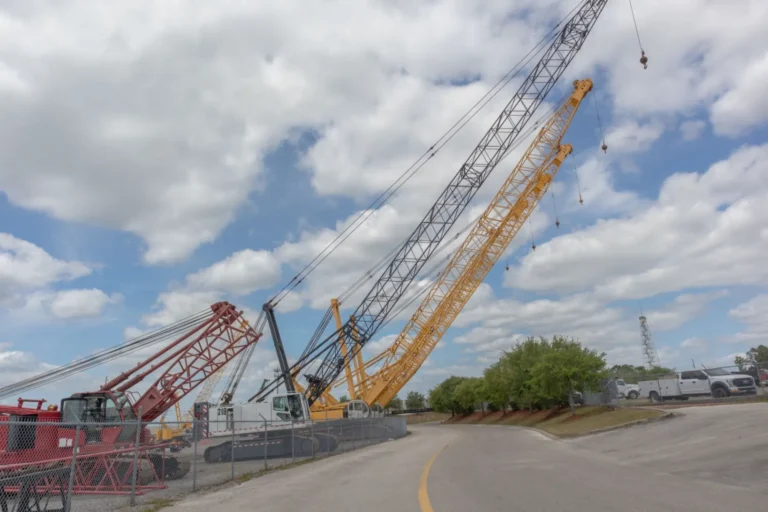
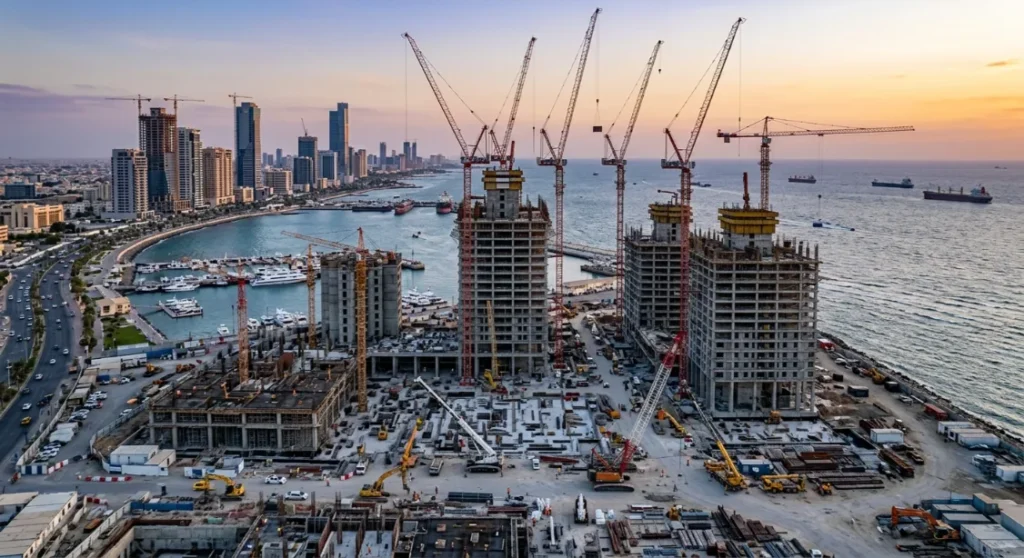
For most tall buildings, a tower crane does the daily lifting and a mobile crane handles short, heavy jobs. Tower cranes give height and reach for months. Mobile cranes set up fast for single days. The right mix depends on plot size, building height and how long the frame takes.
| Crane type | Best for | Watch out for |
|---|---|---|
| Tower crane (hammerhead) | Long frame programmes, open plots | Needs foundation, erection and dismantling |
| Luffing jib tower crane | Tight plots with neighbours close by | Lower speed, higher cost |
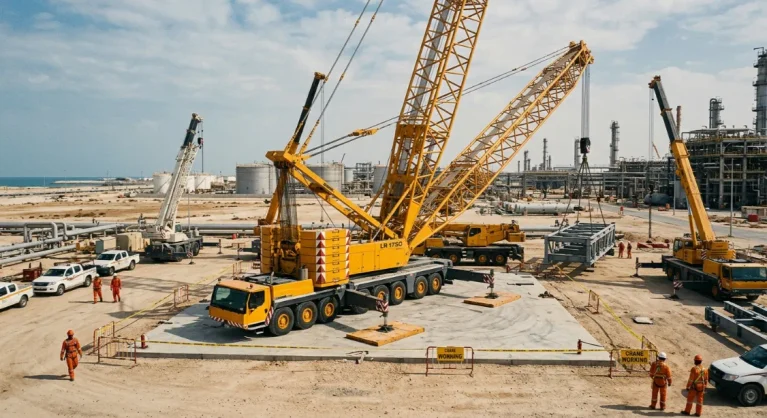
| All-terrain mobile crane | Short heavy lifts, rooftop plant, crane assembly | Needs firm, level ground for outriggers |
| Crawler crane | Long stays on soft or uneven ground | Slow to move between sites |
| Truck-mounted crane | Quick light lifts and deliveries | Limited reach at height |
On tall buildings, hook height keeps growing as floors go up. Many tower cranes climb with the structure. Plan the climbing points and dates early, since they affect the core and slab programme.
On narrow plots, a luffing jib can keep the boom inside your site boundary. This reduces conflict with buildings next door.
What changes when the site is on the waterfront?
Waterfront sites add three risks: weaker ground, stronger and changing wind, and salt air. Each one can reduce what a crane can safely lift. Plan for all three before you sign the rental order, not after the crane arrives.
Ground conditions near the sea
Coastal ground is often sandy, with water close to the surface. Some sites sit on filled or reclaimed land. This ground may not carry the high pressure under a crane’s outriggers.
Ask for a ground bearing check before setup. Use timber or steel mats to spread the load. Keep cranes back from quay walls, trenches and fresh backfill unless an engineer has checked them.
Crane pads often need proper site preparation and enabling works first. Compaction and a firm platform save days of delay later.
Sea breeze and wind
Wind near the coast often builds through the day. Large flat loads, like panels and glazing units, act like sails. They can swing hard even in moderate wind.
Every crane has a wind limit in its manual and load chart. Fit or check the anemometer. Plan big surface area lifts for calmer hours, often early morning.
Salt air and humidity
Salt and moisture speed up corrosion. Wire ropes, pins, sheaves and electrical parts suffer first.
On long hires near the sea, ask how often the supplier inspects and lubricates the crane. Ask to see recent inspection records before the crane starts work.
How does Jeddah’s climate affect lifting work?
Jeddah’s long hot and humid season affects people and machines. Operators tire faster. Hydraulic systems run hotter. Shade and rest breaks matter. Many sites move heavy or critical lifts to the early morning, when it is cooler and wind is often lighter.
Build this into your programme. A lift plan that only works at midday is a weak plan.
How long should you rent a crane for?

Rent for the length of the work, plus a small buffer for weather and delays. Short peaks suit daily or weekly mobile crane hire. Long structural programmes usually suit a monthly tower crane. Idle days still cost money, so tie the rental to the lift schedule.
Simple rules help:
- Group heavy lifts together so a large mobile crane comes once, not three times.
- Agree standby rates in writing before work starts.
- Check mobilisation and demobilisation costs. Large cranes may need several trucks.
- For tower cranes, include erection and dismantling dates in the main programme.
What should a crane rental quote include?
A clear quote lists the exact crane model and setup, not just a tonnage. It states what is included, such as the operator, rigger, transport and inspection papers. It also shows standby rates and working hours. Compare quotes line by line, not by the daily rate alone.
Check that your quote covers:
- Crane make, model, boom length and counterweight
- Load chart for your planned setup
- Operator, rigger and banksman (signaller)
- Transport, mobilisation and setup
- Recent third-party inspection certificate
- Insurance cover
- Lift plan support for critical lifts
- Working hours, overtime and standby rates
- Fuel and maintenance terms
How FSAK supports crane rental in Jeddah
FSAK Contracting is a Riyadh-based construction contractor with more than 20 years in Saudi construction. We mobilise teams and machinery from our Riyadh base to projects in Jeddah.
We do more than supply a machine. We can prepare the crane platform, provide the lifting crew and support the lift plan. One team, one point of contact.
You can see examples of our past project work. For large builds, our full civil contracting team can also handle earthworks, roads and utilities on the same site.
Frequently asked questions
Can a mobile crane work on sandy coastal ground?
Yes, if the ground is prepared and checked. Use mats under outriggers and confirm ground bearing pressure. On very soft ground, a crawler crane or a compacted crane pad is often the safer choice.
Do I need a lift plan for every crane lift?
Every lift needs some planning. Routine lifts may use a standard method statement. Heavy, tandem, or near-capacity lifts need a written, site-specific lift plan approved before work starts.
What wind speed stops crane work?
There is no single number for every crane. The limit comes from the manufacturer’s load chart for that setup, and it drops for large surface area loads. Your lift plan should state the stop limit clearly
How early should I book crane rental in Jeddah?
Book large mobile cranes and tower cranes as early as possible, ideally once your lift schedule is set. Bigger cranes are in demand and need transport planning.
Is the operator included in the rental?
It depends on the supplier and the contract. Always confirm in writing whether the operator, rigger and banksman are included, and who is responsible for the lift plan.
Plan your next lift with FSAK
Send us your heaviest loads, radius and site plan. Our team will help you choose the right crane and plan the lift safely.