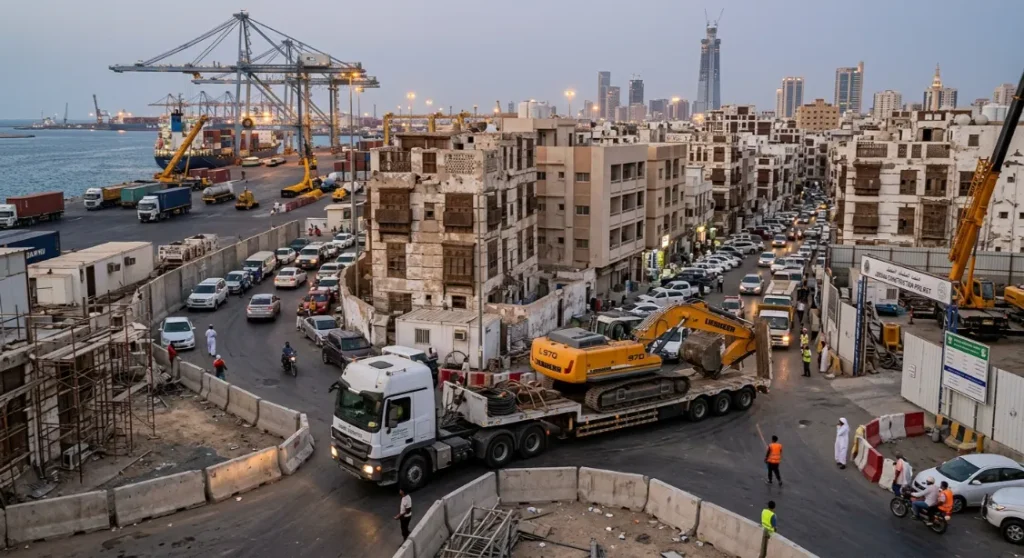
A machine that arrives late can stop a whole site. In Jeddah, delays rarely come from the machine. They come from the journey. Port handling, city traffic, narrow access roads and small plots all decide when an excavator or crane can start work.
This guide explains how equipment logistics in Jeddah works and where projects usually lose time. It also shows how to plan each move so your machines arrive ready to work.
What makes equipment logistics in Jeddah different?
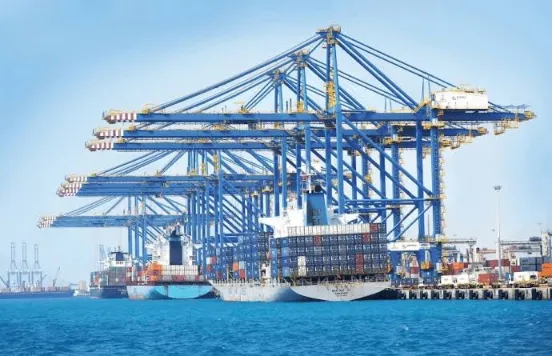
Jeddah combines a busy commercial seaport with a dense, growing city. Heavy machines often arrive by sea or by long road haul, then travel through crowded streets to reach the site. Each step has its own timing rules, paperwork and physical limits. Missing one step can delay the next.
Most cities have one main challenge. Jeddah has three working together.
First, a large share of new machinery and spare parts comes through the port. Second, the city is crowded, so large trucks cannot move freely at all hours. Third, the coastal climate is hot, humid and salty, which affects how machines are stored and maintained.
Good planning treats these as one chain, not three separate problems.
How does port access affect equipment delivery to Jeddah sites?
Port access affects timing more than anything else. Imported machines must be cleared, unloaded and released before they can move. Delays at any point create storage fees and push back your start date. Contractors who plan clearance and collection early usually avoid most of these problems.
Imported machines need clearance time
New or specialist equipment shipped from abroad must pass customs clearance before release. Missing or incorrect documents are the most common cause of delay. Commercial invoices, packing lists and technical specifications should match exactly.
Ask your supplier or freight agent for a clear timeline before the ship arrives. Build some spare time into your programme, because clearance times can change.
Waiting costs money
Once cargo lands, the clock starts. Containers and cargo left too long may attract demurrage or storage charges. These costs grow daily and are easy to overlook in a budget.
The simple fix is to book transport from the port before the machine arrives. Do not wait for release to start looking for a low-bed trailer.
The move from port to site
Large machines rarely drive themselves through the city. They travel on low-bed trailers, often with escort vehicles. Oversized loads usually need movement permits and approved routes.
Your logistics provider should handle permits, but you should confirm who is responsible in writing. Unclear responsibility is a common reason machines sit idle at the port.
Which urban constraints slow heavy machinery in Jeddah?
City conditions limit when, where and how big machines can travel. Traffic peaks, truck movement windows, narrow streets, overhead lines and small plots are the main issues. Each one can add hours or days if nobody checks it before the move.
| Constraint | What it causes | How to plan for it |
|---|---|---|
| Peak-hour traffic | Slow moves and missed delivery slots | Schedule heavy transport at night or early morning |
| Truck movement windows | Trucks held back on main roads at certain hours | Check current rules with your transport provider before booking |
| Narrow access roads | Trailers cannot turn or reverse safely | Survey the route and site entrance in advance |
| Overhead cables and bridges | Height clashes with tall loads | Measure load height and check clearances on the route |
| Small or shared plots | No space to unload or store machines | Agree a laydown area before delivery |
| Neighbouring buildings | Noise, dust and access complaints | Plan working hours and dust control early |
Night moves are often the most practical choice. Roads are quieter, and the loads face fewer conflicts with other traffic. They do need extra lighting, trained banksmen and clear communication with the site team.
How should you plan the route from yard or port to site?
Start with a route survey, then confirm permits, delivery time and unloading space. Share the plan with everyone involved. A short written plan prevents most last-minute problems and keeps the driver, site team and supervisor working from the same information.
A practical sequence looks like this:
- List every machine. Note its weight, length, width and height when loaded.
- Survey the route. Check turns, slopes, height limits and road surface.
- Confirm permits. Make sure oversized loads have approval for the chosen route.
- Check the site entrance. Confirm the gate width and turning space for the trailer.
- Prepare the ground. Make sure the unloading area can carry the weight.
- Book the delivery window. Choose a time that avoids traffic peaks.
- Assign a site contact. One person should receive the load and guide unloading.
- Inspect on arrival. Check the machine before it starts work and record its condition.
Ground preparation is often missed. A crane or heavy excavator on soft or uneven ground is a safety risk. Outrigger mats or a compacted pad may be needed. This links closely with site preparation and enabling works, which should be finished before heavy machines arrive.
How do climate and coastal conditions affect machines on site?
Jeddah’s heat, humidity and salty air put extra stress on machinery. Engines run hotter, filters clog faster and metal parts corrode more quickly. Regular checks, shaded storage where possible and a sensible maintenance plan keep machines working and reduce breakdowns.
Heat affects both machines and people. Cooling systems work harder, and hydraulic fluids thin out at high temperatures. Operators also need rest breaks during the hottest hours.
Salt in the air speeds up rust on exposed steel, electrical contacts and moving parts. Machines working near the coast benefit from frequent washing and greasing.Dust is another factor. Air filters need more frequent cleaning or replacement on busy, dusty sites.
When you rent equipment, ask how the supplier maintains machines for these conditions. A well-maintained fleet reduces downtime more than any other single factor.
Should you bring equipment from outside Jeddah or rent locally?
It depends on the machine, the project length and availability. Common machines are often easier to arrange close to the site. Specialist or large equipment may need a longer haul. Compare total cost, including transport, permits and idle time, not just the daily rate.
| Factor | Long-haul mobilisation | Equipment arranged closer to site |
|---|---|---|
| Transport time | Longer, needs careful scheduling | Shorter, easier to adjust |
| Transport cost | Higher per move | Lower per move |
| Best for | Specialist machines, long projects, bundled scopes | Short jobs, standard machines |
| Flexibility | Lower once moved | Higher for quick swaps |
| Main risk | Delays on the road | Limited availability at busy times |
For long projects, one well-planned mobilisation can work out cheaper than many short rentals. For short jobs, transport costs can outweigh the rental itself.
What should a Jeddah equipment logistics checklist include?
A good checklist covers documents, route, site readiness, people and safety. It should be completed and signed off before any heavy machine leaves the yard or port. This turns planning into a clear record that the whole team can follow.
- Machine dimensions and weights confirmed
- Import and clearance documents checked (for imported units)
- Transport booked before cargo release
- Route surveyed and permits approved
- Delivery window agreed and shared
- Site entrance and laydown area ready
- Ground checked for bearing capacity
- Lifting plan approved for cranes and heavy lifts
- Certified operators assigned
- Pre-start inspection form ready
- Emergency contacts listed for the move
How FSAK supports equipment mobilisation for Jeddah projects
FSAK Contracting is a construction contractor based in Riyadh with more than 20 years of work across Saudi Arabia. We serve Jeddah projects by mobilising machines, operators and site teams from our Riyadh base.
Because we operate our own equipment fleet, we plan the move as well as the rental. That means route planning, delivery timing and site readiness are handled by one team. You get a single point of contact instead of separate suppliers for machines, transport and site works.
You can see the kind of work we deliver on our project portfolio. If your scope goes beyond equipment, our full contracting capability covers civil works, roads and site preparation across the Kingdom.
Frequently Asked Questions
How early should I book transport for imported equipment?
Book transport before the cargo arrives at the port. Waiting until release often leads to storage charges and lost days. Give your logistics provider the shipping details as soon as you have them.
Can heavy machinery move through Jeddah during the day?
Sometimes, but movement of heavy trucks on main roads is often limited at busy hours. Night or early morning moves are usually safer and faster. Always check the current rules with your transport provider before booking.
Who is responsible for oversized load permits?
This depends on your contract. In most cases, the transport or rental provider arranges permits. Confirm responsibility in writing so the machine is not held up on the day.
What if my site is too small to unload a low-bed trailer?
Plan a nearby laydown area or unload in stages. A site visit before delivery shows whether the trailer can turn, stop and unload safely. In some cases, smaller transport or a different delivery time solves the problem.
Ready to plan your Jeddah equipment move?
Tell us your machine list, site location and start date. Our project team will review access, timing and site readiness before quoting.