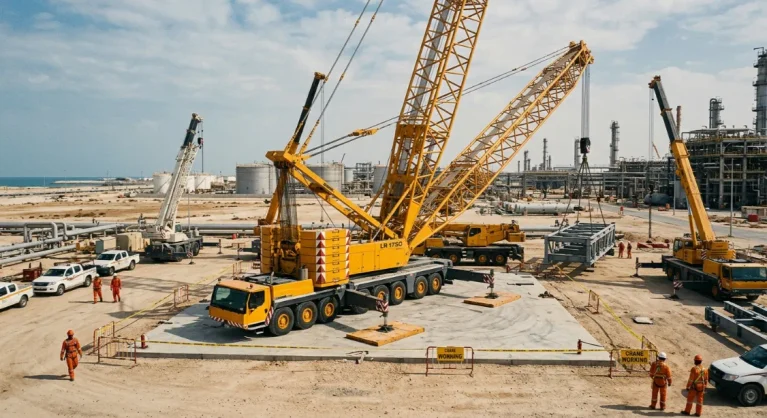
A mobile crane drives to site on wheels and sets up fast. A crawler crane moves on tracks, handles far heavier loads, but needs time to assemble. The right choice depends on your load weight, ground conditions and how long the crane needs to stay on site. Get this decision wrong and you pay for capacity you never use. Or you under-spec a lift and create a safety risk.
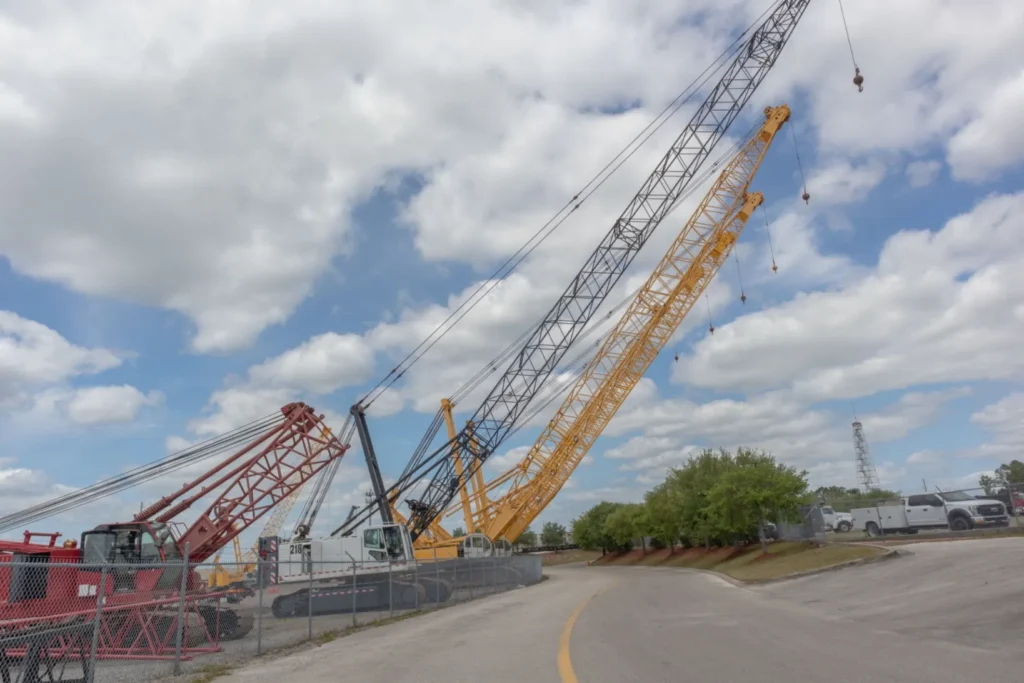
This guide breaks down the real differences between mobile and crawler cranes. Use it to brief your crane rental supplier with confidence, not guesswork.
What Actually Separates a Mobile Crane from a Crawler Crane?
A mobile crane runs on rubber tyres and drives under its own power between sites. A crawler crane runs on steel tracks and is usually built up on site rather than driven there. That single design choice shapes almost everything else about how each crane performs.
Mobile cranes cover truck-mounted, all-terrain and rough-terrain models. They steer like a road vehicle, then deploy outriggers once in position to create a stable lifting base. A crew can often have one working within an hour of arrival.
Crawler cranes arrive in pieces on several low-bed trailers. The base, tracks, boom sections and counterweights are assembled on site with a smaller assist crane. Everything is tested before lifting starts. That process can take anywhere from a day to several days, depending on the crane’s size.
How Do Their Lifting Capacities Compare?
Crawler cranes generally out-lift mobile cranes once you move into heavy or long-boom work. Mobile cranes typically range from around 20 to 500 tonnes. Crawler cranes often start near 40 tonnes and climb well past 1,000 tonnes on the largest models.
That gap matters less than it first appears. Most construction lifts, including structural steel, precast panels and plant equipment, sit comfortably within a mobile crane’s range. Crawler cranes earn their keep on sustained heavy-lift programmes. Think large tanks, long-span bridge girders, wind turbine components and process equipment at industrial plants.
The number that actually matters is capacity at your working radius, not the crane’s maximum rated load. A crane rated at 300 tonnes might lift only a fraction of that once the load sits far from the machine. Always ask a supplier for the load chart figure at your exact radius and height, not the headline tonnage.
Which Crane Handles Soft or Uneven Ground Better?
Crawler cranes cope better with soft, sandy or uneven ground. Their tracks spread the machine’s weight over a much larger footprint. Mobile cranes concentrate their full working load through four outrigger pads. They need firmer, more level ground to operate safely.
This matters more in practice than most comparisons admit. A site with loose backfill, recently placed fill or sandy soil can look flat and solid. It can still be too soft to carry a mobile crane’s outrigger loads without matting or ground improvement. A crawler crane, or a mobile crane working on properly engineered steel mats, handles these conditions far more reliably.
Before booking either crane type, ask what ground bearing capacity the site offers and share that with your supplier. A short site walk with the crane provider, checked against the actual soil conditions, avoids a stand-down on lift day.
How Long Does Each Crane Take to Set Up?
Mobile cranes are ready to lift soon after arrival. This usually takes under an hour once outriggers are levelled and the boom is raised. Crawler cranes need proper assembly time. This can run from one day for a smaller unit to several days for a large, long-boom configuration.
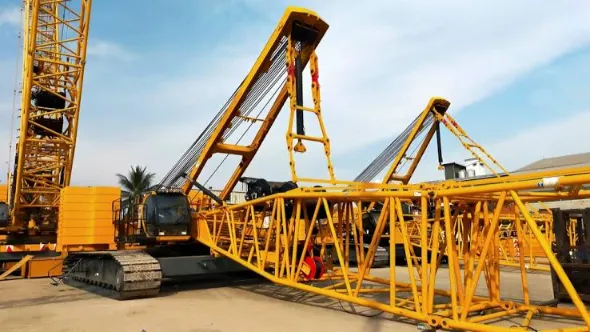
That lead time changes how each crane fits into a programme. A mobile crane suits tight-notice work, frequent repositioning, or a lift that only needs the crane on site for a few hours. A crawler crane suits a fixed location where it stays for weeks or months. The assembly cost is then spread across a longer, heavier work scope.
Factor assembly and disassembly into your schedule, not just the lifting days themselves. A crawler crane booked for a one-week job may still need three or four extra days either side. That time gets it on and off site safely.
Which Crane Costs Less to Hire?
Mobile cranes are usually the lower-cost option for short, straightforward lifts. There is no assembly crew, no extra low-bed transport and no standing charge while the crane is built up. Crawler cranes cost more to mobilise. That cost is justified once the lift demands capacity a mobile crane cannot reach.
The real cost comparison depends on more than the daily rate. Several factors affect the final bill. These include transport distance, trailer loads needed, assist-crane hire for assembly, and how long the crane sits idle between lifts. Compare a mobile crane hired for an afternoon with a crawler crane mobilised for six weeks. Rate alone will not give you a fair picture.
Ask any supplier for the full mobilisation and demobilisation cost, not just the daily or weekly rate. That is the number that decides which crane type actually works out cheaper for your project. Both crane types sit within our wider equipment rental fleet, alongside excavators, loaders and other site machinery.
Matching the Crane to the Work
| Factor | Mobile Crane | Crawler Crane |
|---|---|---|
| Typical capacity | Around 20 to 500 tonnes | Around 40 tonnes upward, often 1,000 tonnes plus |
| Set-up time | Under an hour in most cases | One to several days |
| Ground needs | Firm, level ground under outriggers | Copes with soft or uneven ground |
| Best suited to | Short lifts, repositioning, multi-site work | Long programmes, sustained heavy lifting |
| Site footprint | Smaller, compact outrigger spread | Larger, tracks and counterweight area |
| Travel between sites | Drives on its own wheels | Needs disassembly and trailer transport |
A general contractor moving between several small lifts in a week usually reaches for a mobile crane. A project installing heavy process vessels or erecting a tower crane usually plans around a crawler crane from the start. Teams often book weeks ahead so transport and site preparation are ready on day one. Our construction contracting services cover both scenarios, from single-day lifts to months-long, heavy-lift programmes.
A Short Checklist Before You Book Either Crane
Work through these points with our project team before confirming a booking.
- What is the exact weight and dimensions of the heaviest item you need to lift.
- What radius and height does that lift need, not just the maximum capacity you think you require.
- What is the ground like at the crane’s working position, and has it been tested for that load.
- How much notice does the crane need, including transport and, for a crawler crane, assembly time.
- How long will the crane realistically stay on site, including any standby days.
- Is there enough clear access for the crane itself, or for the trailers delivering a crawler crane’s components.
- Who is providing the lift plan, and has a qualified person checked it against the load chart.
Common Mistakes When Choosing Between the Two
Most crane selection problems come from a handful of repeat mistakes. We have worked through them across projects of every size.
Choosing by maximum rated capacity, instead of capacity at the actual working radius, is the most common one. A crane that looks oversized on paper can still be wrong once boom length and radius are factored in.
Underestimating crawler crane lead time is another frequent issue. Teams sometimes book a crawler crane expecting it to work the same week. They then discover assembly alone needs several days before the first lift can happen.
Skipping a proper ground assessment causes real delays. A site that looks firm can still be unsuitable for outrigger loads. Finding this out on lift day costs far more than checking it during planning.
Overlooking site access is a problem specific to crawler cranes. Low bridges, narrow roads or tight gate widths can block trailer access entirely, forcing a late change of plan.
Treating crane hire as a single-day cost, rather than a full mobilisation-to-demobilisation cost, leads to budget surprises. This hits crawler crane hires hardest, where transport and assembly can outweigh the daily lifting rate.
A clear brief to your crane supplier, covering load, radius, ground conditions and programme duration, removes most of these risks early.
Getting the Right Crane on Site
Choosing between a mobile and a crawler crane comes down to three questions. How heavy is the lift at your actual working radius? What can the ground support? How long does the crane need to stay?
Answer those honestly and the right crane usually becomes obvious. FSAK Contracting works through this brief with every client before recommending a crane type, drawing on more than 20 years of running lifts across construction and industrial projects.
Our construction and contracting teams plan the lift alongside the rest of the programme. That way, crane selection fits the wider project instead of standing apart from it.
Frequently asked questions
Can one project use both a mobile crane and a crawler crane?
Yes. Many programmes use a mobile crane for early, lighter lifts and a crawler crane once heavier structural or plant items arrive. Running both side by side is common on larger sites, as long as each crane has its own clear working area.
How much notice should I give for a crawler crane booking?
Book as early as possible, ideally several weeks ahead. Crawler cranes need transport scheduling for multiple trailer loads, plus assembly time on site, so late notice often means a longer wait than a mobile crane would need.
Does a mobile crane need a paved surface to work safely?
Not necessarily paved, but it does need firm, level, well-compacted ground under each outrigger. Loose fill, soft sand or recently disturbed soil can be unsafe without matting, even if the surface looks solid.
Is a bigger crane always the safer choice?
No. An oversized crane working near the edge of its chart at a given radius can be less safe than a correctly specified smaller one. Matching capacity to the actual load and radius matters more than choosing the highest-rated machine available.
Who decides which crane type a project needs?
The site team, main contractor and crane supplier should agree together, based on load weight, radius, ground conditions and programme length. A qualified lift planner should confirm the final choice against the load chart before work begins.