Building a factory, warehouse or plant support facility on the east coast brings problems that inland projects rarely face. Salty ground, shallow water, fierce summer heat and busy live plants all shape the schedule and the budget. This guide explains industrial construction in the Eastern Province in plain terms.
You will learn what to plan for in Dammam, Jubail, Al Ahsa, Dhahran and Khobar. We also cover what drives cost and how to judge a contractor before you sign. It is written by the project team at FSAK Contracting, a Saudi contractor with over 20 years in civil and infrastructure work.
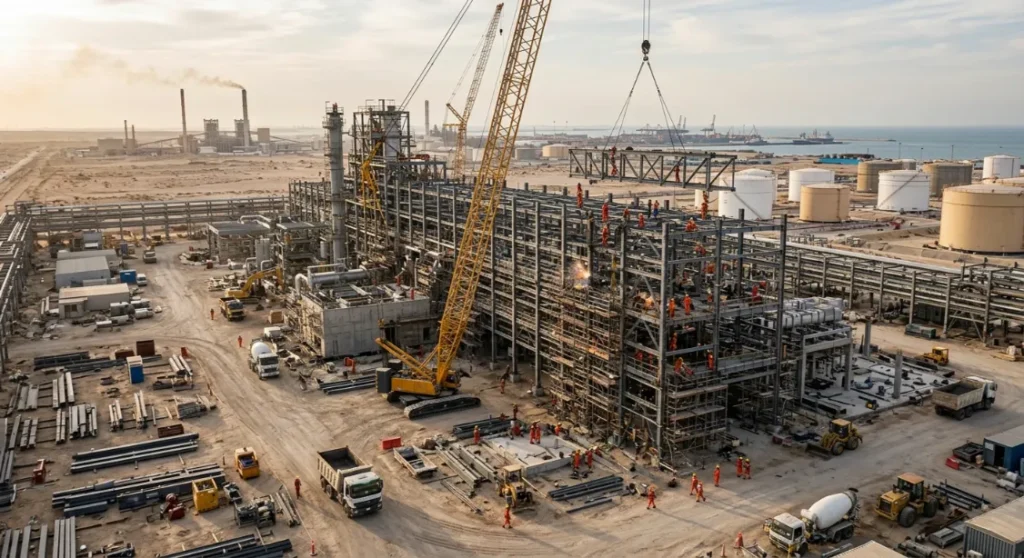
What does industrial construction in the Eastern Province include?
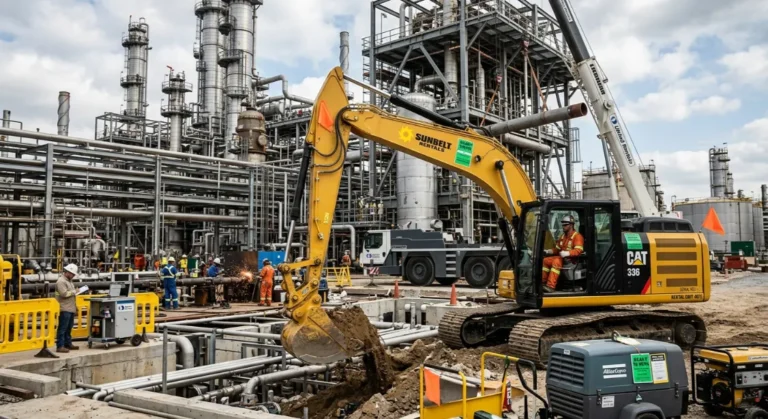
It covers the civil and structural work that lets an industrial facility run. That means site preparation, foundations, steel and concrete buildings, internal roads, utility lines, yards and drainage. Most projects are factories, warehouses, workshops, storage buildings and support facilities for the energy, manufacturing and logistics sectors.
A typical industrial scope includes:
Factory and warehouse buildings, often steel frame or pre-engineered
Heavy foundations and plinths for pumps, compressors and storage tanks
Foundations for pipe racks and cable trays
Laydown yards, hardstanding and internal roads built for heavy trucks
Water, drainage, sewer, power and telecom lines inside the plot
Boundary walls, gatehouses, site offices and workforce facilities
Industrial jobs follow the same discipline as any building contract. The difference is the extra focus on heavy loads, tight tolerances and safety. The way our Riyadh contracting team manages general building work is a useful reference for how a full scope should be run
Why is the Eastern Province harder to build in than inland regions?
Three things make the region different: aggressive ground, a harsh climate and many live industrial sites. Coastal soil often holds salt and sits above shallow groundwater. Summers are very hot and humid. Many plots border running plants, so permits and safety rules are strict. Each one adds planning time and cost.
What makes coastal ground so difficult?
Large parts of the coast sit on sabkha. Sabkha is a flat salt crust over soft, wet soil. It can lose strength when it gets wet, and its salts attack concrete and steel. Near the shore, groundwater can be very close to the surface.
This usually means a proper soil investigation before design starts. It is often followed by ground improvement and dewatering during excavation. Buried concrete then needs sulphate resisting cement and protective coatings. Skipping these steps risks early cracking and rusting rebar.
How do heat, humidity and dust affect the work?
Summer air temperatures in the region often pass 45°C, and the coast adds heavy humidity. Concrete sets too fast in this heat. So pours are planned for night or early morning, often with chilled water or ice in the mix.
Crews also work under the summer midday outdoor work restrictions, which cut productive hours. Salt in the air corrodes exposed steel faster than inland. That is why coating specifications matter more here than they do in Riyadh.
What changes when you build next to a live plant?
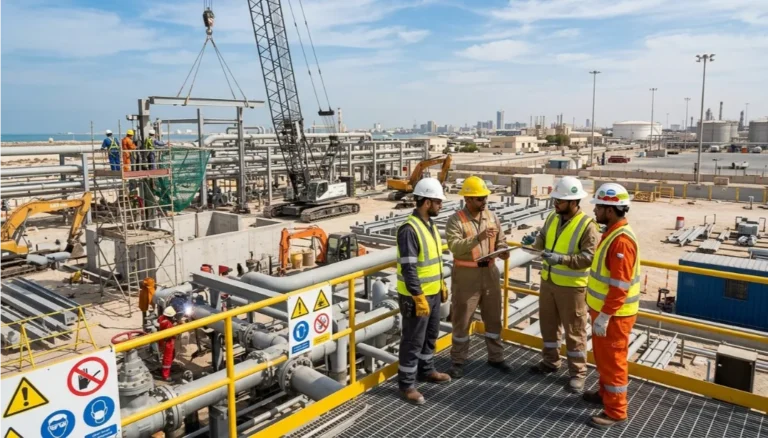
Many industrial plots sit beside operating facilities. Work there needs permits to work, gas testing, hot work controls and fully inducted crews. Contractors must fit around the owner’s shutdown windows and site rules. On these jobs, delays often come from paperwork and gate access rather than the building work itself.
How do Dammam, Jubail, Al Ahsa, Dhahran and Khobar compare?
Each city has its own mix of industrial work. Jubail leans towards heavy process industry. Dammam has many factories and logistics warehouses. Khobar and Dhahran carry workshops, service yards and support buildings. Al Ahsa sits inland with food, farming and materials businesses. Ground conditions also change as you move away from the coast.
| City | Common industrial work | Site conditions to plan for |
|---|---|---|
| Dammam | Factories, warehouses, cold stores, logistics yards | Salty soil in low areas, heavy truck traffic, busy industrial districts |
| Jubail | Support buildings for process plants, fabrication yards, tank and equipment foundations | Coastal sabkha, high groundwater, strict permits beside live plants |
| Al Ahsa | Date and food processing, cold storage, farm storage, building materials | Inland soils, raised groundwater near irrigated land in some areas, longer haul routes |
| Dhahran | Workshops, service yards and support facilities for energy firms | Controlled site access, security checks, coastal humidity |
| Khobar | Light industrial units, maintenance workshops, warehouses, showrooms with service bays | Coastal groundwater, limited laydown space in built up areas |
What are the main stages of an industrial build?
Most industrial projects move through seven stages. They run from ground investigation and design through enabling works, foundations, structure and utilities, then testing and handover. The early stages decide most of the final cost. A weak soil report or rushed enabling works usually costs more later than it saves at the start.
| Stage | What happens | A good question to ask your contractor |
|---|---|---|
| 1. Ground investigation | Boreholes, lab tests for salts and sulphates, groundwater readings | What did the soil report change in the design? |
| 2. Design and permits | Structural design, building and work permits | Which permits sit with us and which with you? |
| 3. Enabling works | Clearing, levelling, ground improvement, dewatering, access roads | How will you keep the excavation dry? |
| 4. Foundations | Piles or rafts, equipment plinths, protected concrete | Which cement type and coatings will you use? |
| 5. Structure | Steel or concrete frame, cladding, roofing | Who fabricates the steel and who erects it? |
| 6. Utilities and external works | Water, drainage, power, telecom, roads and yards | Are lines tested before backfilling? |
| 7. Testing and handover | Inspections, snag list, as built drawings | What documents will we receive at handover? |
Stage three is where many schedules slip. Solid site preparation and enabling works set up everything that follows.
Plan the utility lines inside your plot early as well. Trenches drawn late often clash with foundations and force costly rework.
What affects the cost of an industrial project in the region?
Cost depends mostly on ground conditions, building size and loads, site access, crew and machine time, and summer working limits. On the coast, ground treatment and concrete protection can take a real share of the budget. The only reliable price is a bill of quantities priced against your drawings and soil report.
| Cost driver | Why it matters |
|---|---|
| Ground improvement and dewatering | Soft, wet ground may need replacement fill, compaction or piles, plus pumps running during excavation |
| Concrete protection | Sulphate resisting cement, coatings and membranes cost more than standard mixes |
| Equipment time | Excavators, rollers, cranes and pumps are billed by the day or month, so delays add up fast |
| Manpower | Crew size, housing, transport and site inductions all carry cost |
| Site access and permits | Live plant rules can limit hours and slow deliveries |
| Season | Midday limits and night pours lower daily output in summer |
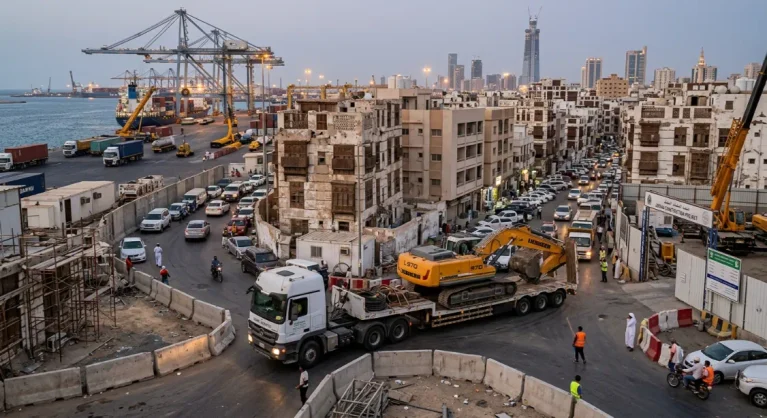
Machine availability is a hidden cost driver. A contractor waiting on hired machines can lose days. If you already have a main contractor, renting heavy equipment directly for the earthworks phase can close that gap.
How do you choose the right industrial contractor?
Pick a contractor who has built on similar ground and can show real past projects. They should own or control key machines and supply trained crews quickly. Ask how they manage safety on live sites. Then check that the quote follows your bill of quantities line by line, with no vague lump sums.
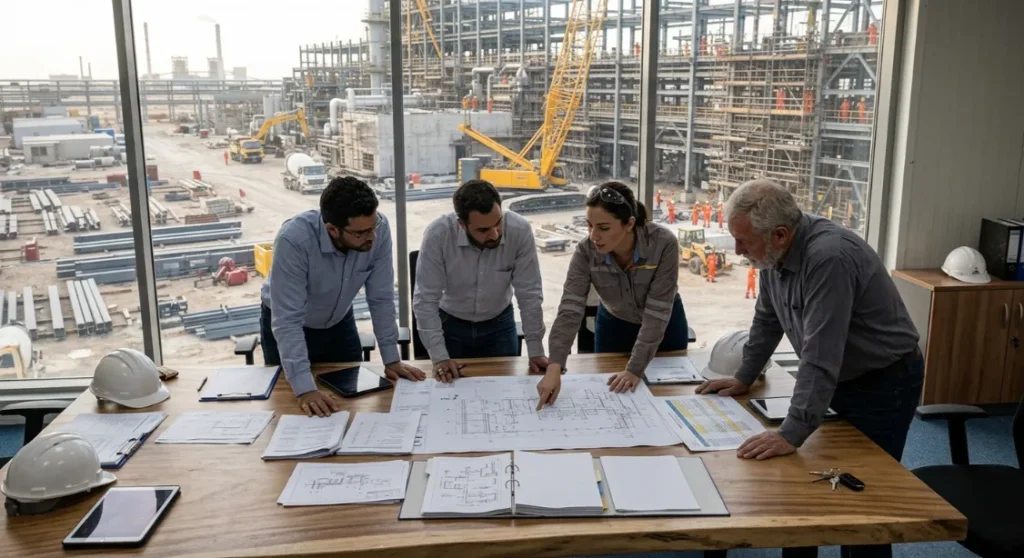
Use this checklist when you shortlist bidders:
Similar work: ask for industrial projects with photos, scope and dates.
Ground experience: ask how they dealt with sabkha or high groundwater before.
Fleet: find out which machines they own and which they hire.
Manpower: check crew skills, safety training and valid documents.
Safety: ask for a site safety plan and their permit to work experience.
Pricing: look for clear rates, listed exclusions and fair payment terms.
Communication: expect one named project manager and reports in Arabic and English.
Always review a contractor’s completed projects before inviting them to tender. Photos and scope details tell you more than a brochure.
It also helps to know what a full scope should look like. The breadth of our general contracting work shows how civil works, utilities, machines and crews can sit under one contract. That setup makes industrial construction in the Eastern Province easier to control, because one party answers for the whole job.
How does FSAK Contracting support Eastern Province projects?
FSAK Contracting is a Riyadh-based contractor with over 20 years of experience. We serve industrial clients in Dammam, Jubail, Al Ahsa, Dhahran and Khobar. We mobilise crews and our own machines from our Riyadh base. One team can handle earthworks, civil works, utilities, equipment and manpower under a single contract.
Our work on industrial sites covers site levelling, excavation, ground preparation, foundations, internal roads, yards and utility networks. Because we run our own fleet, we are not waiting on outside rental firms to start a phase.
Plants and factories that need extra hands can also draw on our skilled and general manpower during busy build periods.
Frequently asked questions
How long does industrial construction in the Eastern Province usually take?
A simple steel warehouse can take a few months from enabling works to handover. Larger facilities with heavy foundations and many utilities take longer. Soil conditions, permits and summer limits all shift the timeline, so ask for a programme built on your own drawings.
Can a Riyadh contractor work on sites in Jubail or Al Ahsa?
Yes. Contractors with their own fleet and crews move men and machines along the main highway routes to eastern sites. Ask how they plan crew housing, transport and machine servicing for the length of your project.
Can work continue during the summer months?
Yes, but hours change. Outdoor work pauses at midday in peak summer, and concrete pours move to night or early morning. A realistic programme builds these limits in from day one.
Do I need a soil investigation for a small warehouse in Dammam?
Yes. Even small buildings can suffer from salty, wet ground near the coast. A soil report tells the designer which foundation type and concrete protection you need. It usually costs far less than fixing cracked slabs later.
Ready to plan your industrial project?
Planning a factory, warehouse or plant support building in Dammam, Jubail, Al Ahsa, Dhahran or Khobar? Send us your drawings or soil report. Our project team will review the scope, visit the site where needed and price it against your bill of quantities.