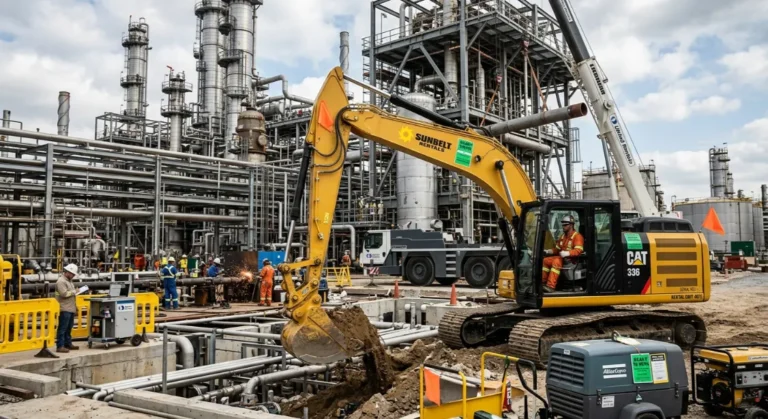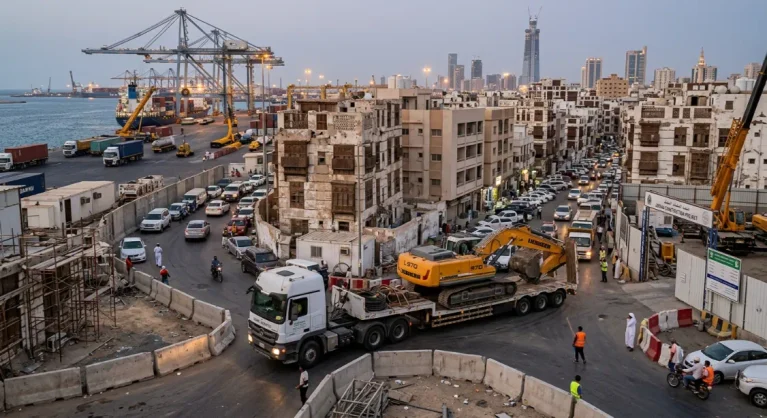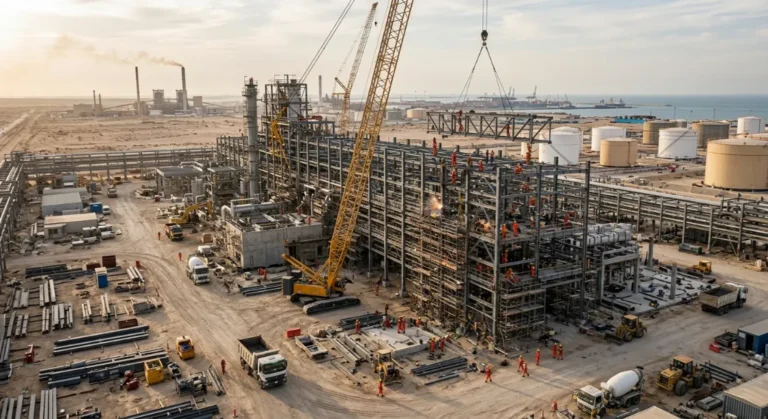
Construction project planning in Saudi Arabia is carried out in six structured stages: feasibility and budgeting, regulatory approvals and permits, design and the bill of quantities, contractor and procurement selection, scheduling and mobilisation, and finally execution with handover.
When these stages are followed in order, a building project in the Kingdom can be delivered on time, kept within budget, and fully aligned with the Saudi Building Code and Vision 2030 standards. This guide explains how each stage is managed, what approvals are required, and how risk is controlled from the first feasibility study through to final handover.
Table of Contents
Construction Project Planning at a Glance
Before any work is mobilised, the planning roadmap below is recommended for projects across Riyadh, Jeddah, Dammam, and the Giga-Project zones.
| Stage | What Is Decided | Typical Owner |
| 1. Feasibility & Budget | Viability, ROI, funding, site selection | Client / Investor |
| 2. Permits & Approvals | Building permit, municipality and Baladi clearances | Consultant / Contractor |
| 3. Design & BOQ | Drawings, specifications, bill of quantities | Engineer / Consultant |
| 4. Procurement | Contractor selection, RFQ, tender award | Client / Procurement |
| 5. Scheduling & Mobilisation | Programme, manpower, equipment, HSE setup | Main Contractor |
| 6. Execution & Handover | Construction, inspections, snagging, warranty | Main Contractor |
Why Careful Project Planning Matters in KSA
Construction across the Kingdom is being driven at an unprecedented pace by Vision 2030, with major investment flowing into housing, tourism, industry, and infrastructure. As a result, project owners are competing for materials, skilled labour, and reliable contractors simultaneously. In this environment, weak planning is quickly exposed through delays, budget overruns, and rework.

When a project is planned thoroughly from the outset, the opposite outcome is achieved. Costs are forecast accurately, approvals are secured without surprises, and the right resources are reserved in advance. For developers and government buyers alike, structured construction planning in Riyadh and across KSA is therefore treated as the foundation on which a successful build is delivered.
Step 1: Feasibility Study and Budget Planning
Every successful build begins long before the first machine arrives on site. At this stage, the commercial and technical viability of the project is tested so that costly mistakes are avoided later. The following questions are typically answered first:
- Is the proposed site suitable for the intended use, and is the ground condition known?
- What is the realistic total budget, including a contingency of 10 to 15 percent?
- What return on investment is expected, and over what timeline?
- Are funding and cash flow secured for each project milestone?
A clear budget framework is established here, broken down across land, design, permits, materials, labour, plant, and supervision. For anyone learning how to start a building project in KSA, this first stage is where the project is either set up for success or quietly set up to fail.
Step 2: Permits, Approvals, and Legal Compliance
Once feasibility is confirmed, the regulatory path must be cleared. In Saudi Arabia, construction is closely governed, and work cannot legally begin until the correct approvals have been obtained. The key approvals usually include the following:
| Approval | Issued / Governed By | Purpose |
| Building Permit | Municipality via the Baladi platform | Authorises construction to begin |
| Saudi Building Code (SBC) | Saudi Building Code National Committee | Sets safety and engineering standards |
| Land & Ownership Deed | Ministry of Justice | Confirms legal title to the site |
| Utility Connections | Water, electricity, and telecom authorities | Approves service connections |
| Environmental Clearance | Relevant environmental authority | Required for larger or industrial works |
Because requirements differ between residential, commercial, industrial, and government projects, the approval route is best confirmed with an experienced local contractor or consultant. A guide on how to choose a construction contractor in Saudi Arabia can help at this point, since the right partner will already understand the local permitting landscape.
Step 3: Design, Engineering, and the Bill of Quantities
With approvals progressing, the technical design is being developed by licensed engineers and architects. During this stage, the concept is turned into precise drawings and specifications that the contractor can price and build. Three documents are produced and relied upon throughout:
- Architectural and structural drawings define the layout, loads, and finishes.
- Technical specifications set out materials, standards, and quality requirements.
- Bill of quantities (BOQ) lists every measured item so accurate quotations can be obtained.
Where complex or engineered elements are involved, specialist input is brought in early so that buildability is confirmed before tendering. Strong design discipline at this stage prevents the variations and disputes that so often inflate construction costs later.
Step 4: Contractor Selection and Procurement
With a priced BOQ in hand, the procurement stage is reached. This is where the main contractor is appointed, usually through a request for quotation (RFQ) or a formal tender. Effective project management of construction in Saudi Arabia depends heavily on choosing a contractor with the right capacity, not simply the lowest price.
The following factors are assessed before any award is made:
- Verified licensing, registration, and insurance cover.
- A track record on projects of similar scale and type.
- In-house manpower and an owned equipment fleet rather than heavy reliance on third parties. FSAK, for example, combines manpower supply and heavy equipment rental in Riyadh under one roof.
- A clear, itemised quotation with assumptions and exclusions stated.
- Documented health, safety, and quality procedures.
A contractor that delivers earthworks and enabling works, civil construction, roads, and utilities together can simplify procurement considerably, because fewer interfaces have to be coordinated on-site.
Step 5: Scheduling, Mobilisation, and Resource Planning
After the contract is awarded, a detailed project programme is prepared. Tasks are sequenced, dependencies are mapped, and realistic durations are assigned so that progress can be tracked against clear milestones. At this point, the following are locked in:
- A master schedule is often built using a critical path or Gantt approach.
- Manpower mobilisation plans matched to each phase of work.
- Equipment and plant reservations to avoid on-site shortages.
- A site-specific health, safety, and environment (HSE) plan.
- A procurement schedule for long-lead materials.
For giga-project locations such as NEOM, Qiddiya, and the Red Sea developments, mobilisation logistics deserve special attention, because remote sites require labour accommodation, transport, and supply chains to be planned well in advance.
Step 6: Execution, Quality Control, and Handover
During execution, the plan is brought to life under close supervision. Work is carried out in line with the approved drawings, while quality and safety are monitored continuously. A disciplined delivery process usually follows this sequence:
- Construction is progressing phase by phase against the programme.
- Inspections and quality checks are completed at each milestone.
- A snagging list is raised and cleared before completion.
- Final handover is made, supported by as-built documentation.
- A defect liability or warranty period is observed after handover.
Throughout this final stage, transparent reporting keeps the client informed, and a single point of contact ensures that decisions are made quickly. Completed works can be reviewed on the FSAK projects portfolio, which illustrates the standard applied across the Kingdom.
Common Construction Planning Mistakes to Avoid
Even experienced developers can be caught off guard. The pitfalls below are seen most often and can be prevented through disciplined planning:
- Starting work before permits are fully secured.
- Underestimating the budget by omitting a contingency.
- Selecting a contractor on price alone rather than on capacity.
- Leaving the schedule loosely defined, with no critical path.
- Overlooking ground conditions and the earthworks phase.
Why FSAK Contracting Is Trusted Across Saudi Arabia
With more than twenty years of operational history, FSAK Contracting supports clients at every stage of construction project planning, from early feasibility through to final handover. As a Riyadh-headquartered Saudi company with an owned equipment fleet, in-house engineers, and bilingual project management, FSAK is positioned to deliver civil works, infrastructure, manpower, and equipment under one accountable partner.
To discuss a project, the team can be reached through the contact page, or you can learn more about the company on the about us page and explore the full range of construction services available across the Kingdom.
Planning a construction project in Saudi Arabia? Request a quotation or book a site visit with the FSAK project team today.
Frequently Asked Questions
How long does it take to plan a construction project in Saudi Arabia?
The planning phase typically takes between two and six months, depending on the size and type of project. Feasibility and design can be progressed quickly, while permit approvals through the municipality and Baladi platform often determine the overall timeline. Larger or government projects usually require longer planning periods than private residential builds.
What permits are required before construction can begin in KSA?
A building permit issued by the local municipality is the core requirement, supported by a valid land deed, Saudi Building Code compliance, and approved utility connections. Industrial and larger developments may also need environmental clearance. The exact set of approvals depends on the project type and location.
How much contingency should be included in a construction budget?
A contingency of between 10 and 15 percent of the total budget is generally recommended for projects in Saudi Arabia. This allowance absorbs price fluctuations, ground-condition surprises, and minor design variations, helping the project to stay financially controlled from start to finish.
Should a single contractor handle planning and execution?
Appointing one experienced contractor across planning and execution can reduce coordination risk, because fewer interfaces have to be managed on site. A contractor offering earthworks, civil construction, manpower, and equipment together provides a single point of accountability, which is particularly valuable on complex or fast-tracked projects.
What is the first step in starting a building project in Riyadh?
The first step is a feasibility study combined with realistic budget planning. The site is assessed, the intended use is confirmed, and the total cost is forecast before any design or permit work begins. Getting this foundation right is the most reliable way to keep a Riyadh building project on time and on budget.