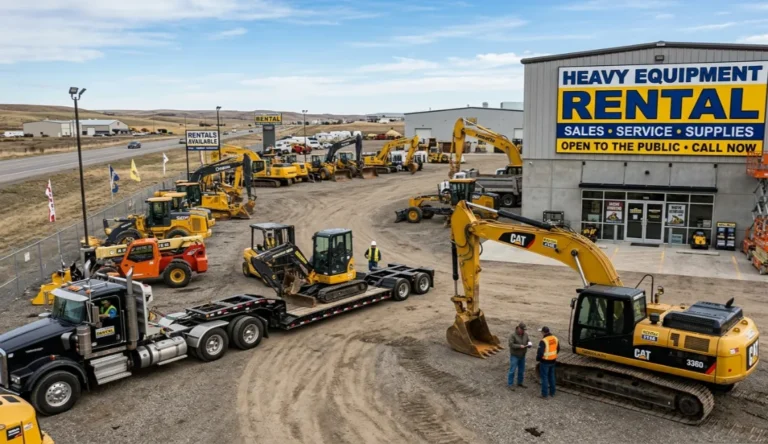
On a petrochemical site, a rented machine is judged before it does any work. The plant checks its papers, its safety fittings and its operator at the gate. If one item is missing, the machine waits outside while your schedule slips.
This guide explains how equipment rental for petrochemical construction works in the Eastern Province. It covers the machines each project stage needs and what plant sites check. It also explains how the coastal climate affects a hire and what drives cost.
Already know the machines you need? Our page on heavy equipment rental in Dammam lists fleet sizes and the documents that come with each hire.
What makes petrochemical construction different for rented equipment?
Petrochemical construction often happens beside live process units that hold flammable gas and liquids. That changes the rules for every rented machine. Plants control who enters, which engines may run near process areas and how lifts are approved. Equipment must arrive ready for those checks, not be fixed after it reaches the gate.
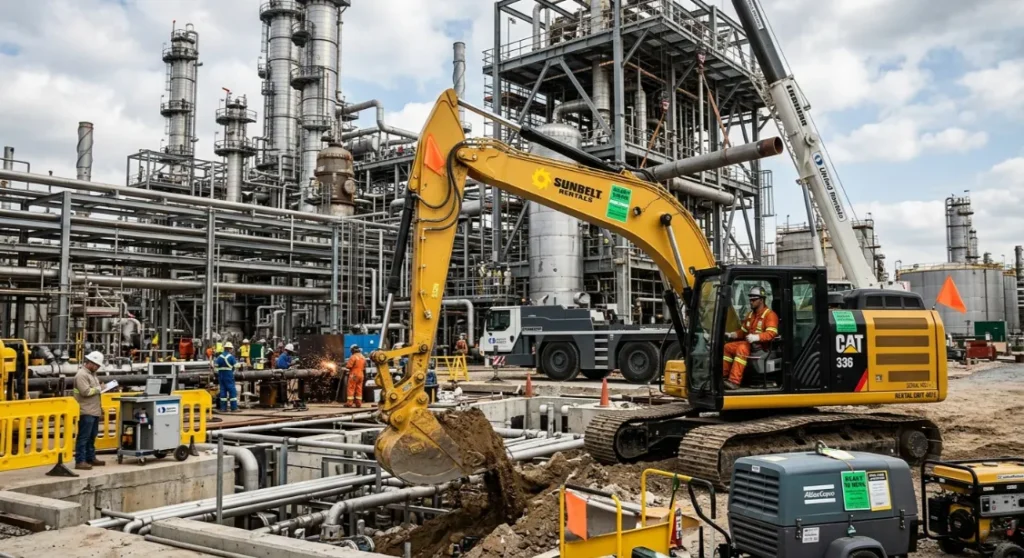
The plant next door is still running
Many projects are expansions, tie-ins or new units built next to a working plant. A diesel engine is a possible ignition source if gas escapes nearby. So sites mark zones where engines need extra fittings. In some zones they cannot run at all without a gas test and a permit.
Every dig and every lift needs approval
Most plants use a permit-to-work system. Digging near buried lines, hot work and heavy lifts each need their own approval. A rented machine that stands idle while a permit is signed still costs money. Good planning keeps those waits short.
The work changes in phases
A new plant starts with earthworks and foundations. Later it needs cranes for steel, pipe racks and vessels. A shutdown or turnaround needs a different mix again, often inside a short and busy window. Your rental plan should follow those phases rather than one fixed machine list.
Which machines does a petrochemical project need at each stage?
Early stages need earthmoving plant to clear, level and compact the site. Foundation work adds excavators, concrete pumps and dump trucks. Setting steel and equipment depends on mobile cranes with a lift crew. Generators and lighting support every stage, and matter most on night shifts during a shutdown.
| Project stage | Typical machines | What to plan for |
| Site preparation and pads | Dozers, motor graders, wheel loaders, rollers, dump trucks | Fill import, compaction testing, dust control |
| Trenches and underground services | Mini to heavy excavators, dump trucks | Buried line surveys and hand digging near live services |
| Foundations and concrete | Excavators, concrete pumps, generators | Pour sequence and night pours in summer |
| Steel, pipe racks and equipment setting | Mobile cranes with lift supervisor and rigger | Lift plans, ground bearing, exclusion zones |
| Internal roads and yards | Graders, rollers, dump trucks | Traffic routes inside the plant fence |
| Shutdown and tie-in support | Cranes, generators, lighting | Short windows, round-the-clock shifts, standby cover |
FSAK rents excavators, mobile cranes, dozers, graders, loaders, dump trucks, rollers, concrete pumps and generators from its own fleet. If your scope also needs access platforms or forklifts, list them in the first enquiry. That way the whole package is checked against the site rules at once.
What safety fittings do plant sites ask for on diesel machines?
Plants often ask for a spark arrestor, an air intake shut-off valve and a battery isolator on diesel machines working near process areas. Reversing alarms, beacons and a fire extinguisher are usually expected too. Each site sets its own list, so ask for the HSE specification before you book.
| Fitting | What it does |
| Spark arrestor | Traps hot particles in the exhaust so they cannot reach flammable vapour |
| Air intake shut-off valve | Stops the engine if gas is drawn into the air intake and makes it overspeed |
| Battery isolator | Cuts electrical power quickly when the machine is parked or in an emergency |
| Reversing alarm and beacon | Warns people on foot in crowded plant areas |
| Fire extinguisher | Gives the operator a first response to a small fire |
| Valid inspection sticker | Shows the machine passed a recent third-party check |
How do heat, humidity and salty air affect rented equipment?
Eastern Province summers bring extreme heat and high humidity, and the coastal air carries salt. Heat strains engines, hydraulics, tyres and batteries. Salt speeds up rust on wire rope, pins and exposed steel. Plan servicing, shift times and inspections around these conditions so machines keep working through the hire.
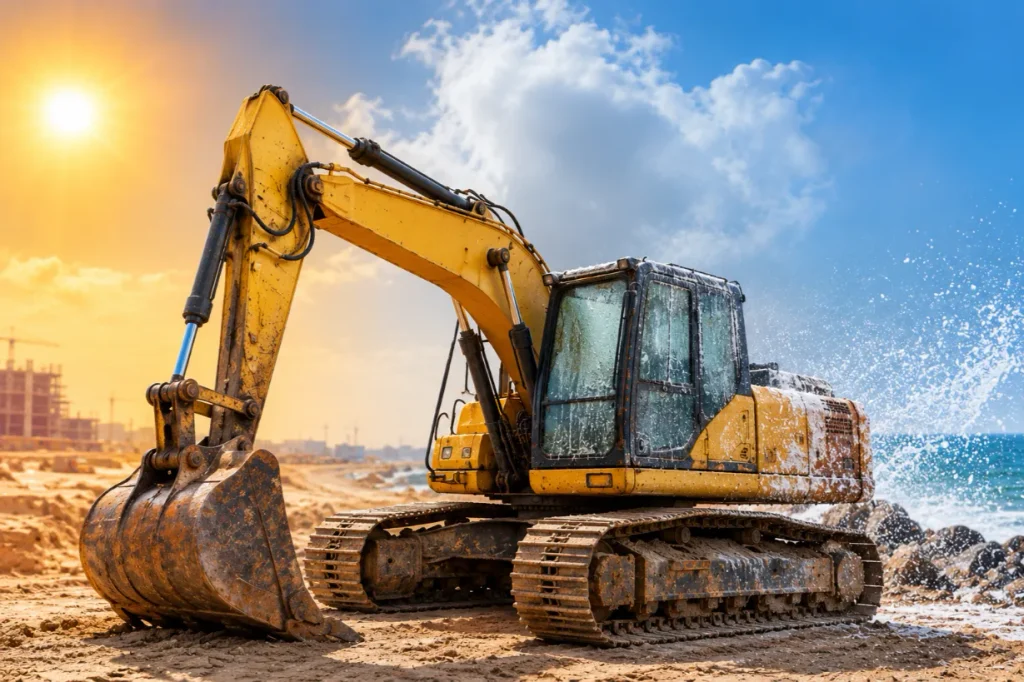
• Cooling systems. Dust and sand block radiators. Daily cleaning keeps engine and hydraulic temperatures in range.
• Shift timing. Midday outdoor work limits apply in summer. Many contractors move heavy work and concrete pours to early morning or night.
• Wire rope and pins. Salt and humidity attack crane wire rope and greased pins. Ask how often they are inspected while the crane is on hire.
• Ground. Coastal sabkha ground loses strength when wet. Cranes may need outrigger mats or a built pad, which our site preparation and enabling works crews can build.
• Operator welfare. Shade, water and cooled cabs keep operators alert. Fatigue in heat is a real lifting risk.
How should hire terms match each project phase?
Match the hire term to the work, not to the whole project. Earthworks and foundations usually suit monthly hire. Crane lifts for vessels or tie-ins often suit daily or weekly hire with a lift crew. Shutdowns need short, fixed windows with standby and replacement terms agreed in writing.
Operated hire is usually the safer choice inside a plant. The operator already knows the machine, and the site approves one crew instead of two. Bare hire suits contractors who have their own operators with valid site cards.
Some scopes are easier to hand over as a works package. A cleared and compacted laydown yard is one example. FSAK is one of the construction contractors in Riyadh that also owns its fleet. So we can quote the finished result instead of separate machines.
For a side-by-side view of the options, see bare, operated and works package hire in Dammam
How far ahead should you book equipment for a plant site?
- Send the scope. Machine type, duty, location, dates and the site HSE specification.
- Confirm class and fittings. Match the size to the duty and agree any safety fittings.
- Pre-approve the paperwork. Inspection certificates, load charts, operator licences and insurance go to the site for review.
- Book inductions. Operators and riggers attend site safety training and collect their passes.
- Transport. The machine travels by lowbed, under a permit if it is oversized.
- Gate check and start. The site inspects the machine, then work begins under your permit system.
FSAK mobilises from Riyadh, about 400 km from Dammam by highway. We plan each move around your gate rules and induction dates.
What drives the cost of equipment rental on a petrochemical site?
Cost depends on machine size, hire length, operator and lift crew, safety fittings and transport. On plant sites, standby time matters too. Machines often wait for permits, gas tests or alarms to clear. Agree how standby hours are charged before work starts, so the final invoice holds no surprises.
| Cost driver | Why it matters on a plant site |
| Machine class and size | Bigger cranes cost more to hire, move and set up |
| Hire length | Longer hires usually lower the day rate |
| Operator, lift supervisor and rigger | Adds crew cost but removes approval risk |
| Safety fittings | Add time and cost before mobilisation |
| Transport and permits | Distance, lowbed size and oversize permits |
| Standby time | Hours lost to permit waits, gas alarms or weather |
| Shift pattern | Night shifts and round-the-clock shutdowns add crew cost |
| Fuel | Who supplies it and how refuelling works inside the fence |
What should you check before signing a rental agreement?
Check that inspection certificates stay valid for the whole hire, not just the first day. Confirm the operator licence covers that machine class. Then read the breakdown, standby, insurance and fuel terms. These clauses decide what happens when the plant changes your plans.
- Inspection expiry dates fall after the planned hire end
- Load charts and lift plans match the actual crane set-up
- Operator and rigger certificates match the machine and the site rules
- Breakdown response and replacement terms are written down
- Standby, weather and stop-work clauses are clear
- Third-party insurance cover and limits are stated
- Fuel, consumables and refuelling inside the fence are assigned
- Demobilisation date, notice period and final hours sign-off are agreed
You can see the kind of civil and site work our crews handle in our recent project portfolio.
How does FSAK support petrochemical construction in the Eastern Province?
FSAK Contracting is a Riyadh-based contractor with more than 20 years in Saudi Arabia. We rent machines from our own fleet and run the same machines on our own contracts. Cranes, excavators, dump trucks and concrete pumps come with an FSAK operator, and crane hire includes a lift supervisor and rigger.
• Own fleet. Machines come from our yard, not from a broker.
• Paperwork first. We prepare the document pack before the machine leaves Riyadh.
• Lift planning. A lift supervisor checks the load chart and drafts a lift plan for your site to approve.
• One team. Labour and civil works come from the same company through our manpower supply service.
• Two languages. We work with your site team in Arabic and English.
Frequently asked questions
Can a rented diesel machine work inside a live process area?
Only if the site allows it. Most plants require a gas test, a permit and extra fittings such as a spark arrestor and an air intake shut-off valve. Some zones ban diesel engines completely. Share the site area classification so the right machine is sent.
Do I need different equipment for a shutdown than for new construction?
Usually, yes. New construction relies on earthmoving plant over several months. A shutdown needs cranes, lighting and generators for a short, fixed window, often around the clock. Shutdown hire also needs standby and replacement terms agreed in advance, because every lost hour costs more.
Is it better to rent or buy equipment for a petrochemical project?
Renting usually suits phased projects, because machine needs change as the work moves on. You avoid storage, inspection and resale costs between jobs. Buying makes more sense when the same machine will work full time on your sites for years.
How are hire charges handled when work stops for a gas alarm or permit hold?
That depends on the rental agreement. Many agreements set a standby rate for hours when the machine is on site but cannot work. Agree what counts as standby, how it is recorded and who signs the timesheet before work starts.