Urban road upgrades in Jeddah are the works that make existing city roads wider, safer and better drained. In 2026, most of this work falls into a few groups: widening busy roads, fixing junctions, adding drainage, resurfacing old asphalt and rebuilding sidewalks. Each of these jobs needs a contractor with the right machines, trained crews and a clear plan for keeping traffic moving.
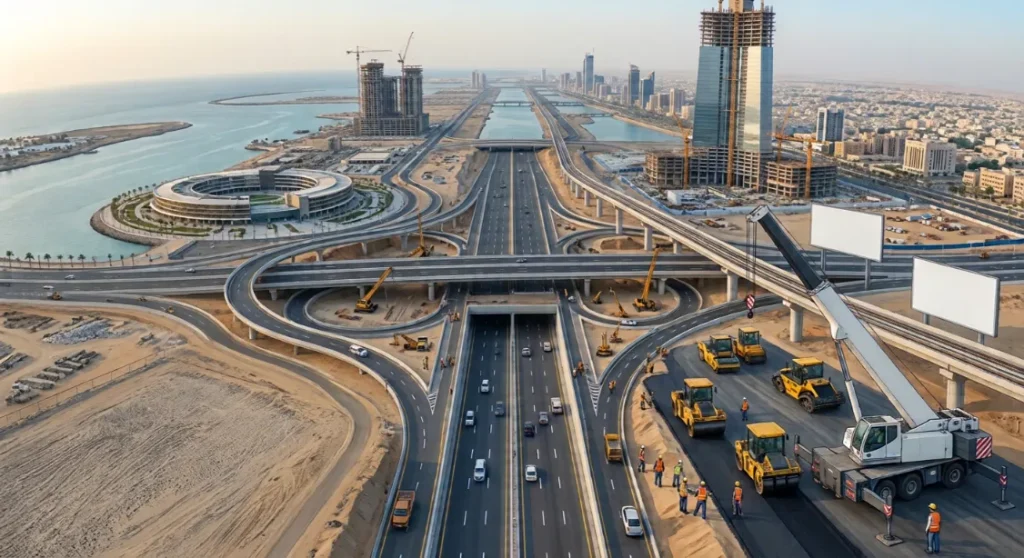
This guide explains the main types of road upgrade work in Jeddah, how a typical project runs, and what you should check before you give the job to any contractor. If you manage projects, buy services for a developer or run a subcontracting firm, you can use it as a simple checklist.
What Are Urban Road Upgrades?
An urban road upgrade is work done on a road that already exists inside a city. It is very different from building a new highway across open land.
On a new road, the crew starts on empty ground. On a city road, the crew works next to homes, shops, schools and live traffic. Pipes and cables already run under the road. People still need to drive, walk and park while the work goes on.
That is why city road work is slower and needs more care. The digging may look the same, but the planning is not.
Typical upgrade work includes:
- Adding lanes or widening the road
- Rebuilding junctions and turning lanes
- Installing or fixing stormwater drains
- Removing old asphalt and laying a new surface
- Building new curbs, sidewalks and interlock paving
- Moving or protecting underground utilities
- New line marking, signs and street lighting
Why Jeddah Roads Need Regular Upgrades
Jeddah is a big coastal city that keeps growing. New housing areas, malls and business zones bring more cars onto roads that were built for less traffic. When a road carries more vehicles and heavier trucks than it was designed for, the asphalt cracks, ruts form and junctions get blocked.
The city also has some local conditions that make road work harder than in inland areas.
Coastal Soil and High Groundwater
Large parts of Jeddah sit on low coastal land. In many areas the groundwater is close to the surface, and some soils hold a lot of salt. Wet, salty ground can weaken the layers under a road and damage concrete and steel over time.
Before an upgrade starts, crews often need to pump water out of trenches and treat weak ground. You can read more about this in our guides on dewatering techniques for Jeddah construction sites and treating sabkha soil before you build.
Heat, Humidity and Heavy Loads
Summer heat softens asphalt. When loaded trucks stop and start at junctions on hot afternoons, the surface can push up and form ruts. Sea air also speeds up rust on steel parts like drain covers, barriers and sign posts. A good upgrade uses an asphalt mix and materials chosen for these conditions, not a standard mix copied from another region.
Rain That Comes All at Once
Jeddah does not get rain often. When it does, it can be heavy and fast, and roads without proper drains can flood quickly. Standing water seeps into the road layers and turns small cracks into potholes. For this reason, drainage is now part of most road upgrade jobs in the city instead of an extra.
Key Types of Urban Road Upgrades in Jeddah for 2026
Here are the main kinds of road upgrade projects you will see across Jeddah this year. We have kept them general, because every project has its own owner, design and scope.
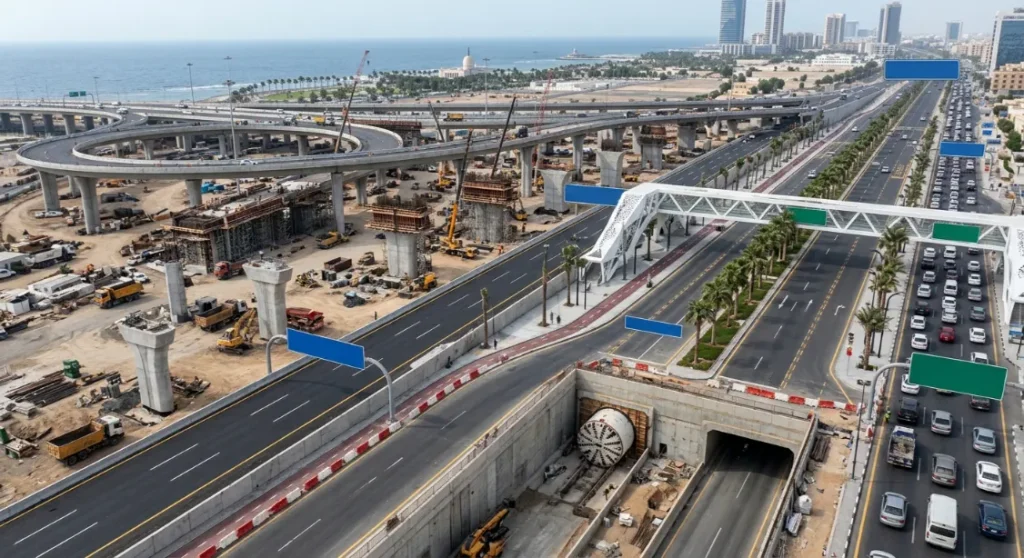
1. Road Widening and Extra Lanes
Widening means adding one or more lanes to a road that is already in use. The crew cuts back the edge, digs out the new strip, builds the base layers and joins the new asphalt to the old surface.
That joint between old and new asphalt is a common weak spot. If it is not cut straight, coated and compacted well, water gets in and the edge breaks up within a year or two. Experienced crews spend extra time here.
Main machines used: excavators, motor graders, road rollers, asphalt pavers and dump trucks.
2. Junction and Intersection Upgrades
Busy junctions are where most traffic jams start. Upgrades can include extra turning lanes, new traffic islands, better signals and, on bigger jobs, bridges or underpasses that separate traffic flows.
This work is normally done in stages, so the junction never fully closes. One side is rebuilt while traffic uses the other, then they switch.
3. Drainage and Stormwater Networks
Drainage is one of the largest parts of road work in Jeddah. It covers stormwater pipes, manholes, gully inlets, culverts under the road and channels that carry water away.
Drains should go in before the final road surface, so they are built early in the project. Our utility installation page explains the type of underground work this involves.
4. Resurfacing and Road Rehabilitation
Not every road needs a full rebuild. Many only need the top layer replaced. Crews mill off the old asphalt, repair weak patches below and lay a fresh top layer.
If the damage goes deeper, the base layers are dug out and rebuilt too. Resurfacing is faster and cheaper than full reconstruction, but only when the base underneath is still in good shape. Testing the base first tells you which option you need.
5. Sidewalks, Curbs and Walkable Streets
Many city upgrades now give more space to people on foot. That means wider sidewalks, new curbs, interlock paving, ramps for wheelchairs and prams, shade structures and planting.
This part of the job often runs alongside landscape works, since trees and irrigation lines need to be planned with the paving.
6. Utility Relocation
Before a road can be widened, the services under it may need to move. Water lines, sewer pipes, power cables and telecom ducts all have to be found, protected or shifted.
Hitting a live cable is dangerous and can stop the whole project for days. So the first step is always a careful survey, followed by trial pits dug by hand or small machines to confirm what is really in the ground.
7. Line Marking, Signs and Street Lighting
The final layer of any upgrade is what drivers actually see: road markings, reflective road studs, signs, barriers and lights. Clear marking and good lighting make the new road safer, especially at night.
How a Road Upgrade Project Works, Step by Step
Every project is different, but most city road upgrades follow the same basic order.
| Stage | What happens | Common equipment |
|---|---|---|
| 1. Survey and design | Measure the road, test the soil, locate underground services | Survey instruments, trial pits |
| 2. Traffic management | Set up diversions, barriers, signs and lighting | Barriers, cones, message boards |
| 3. Utility and drainage works | Move or protect pipes and cables, build drains | Excavators, backhoe loaders |
| 4. Earthworks and subgrade | Dig out, replace weak soil, compact the ground | Excavators, bulldozers, rollers, water tankers |
| 5. Base layers | Spread and compact the sub-base and base | Motor graders, road rollers |
| 6. Asphalt paving | Lay the asphalt layers at the right temperature | Asphalt pavers, rollers, dump trucks |
| 7. Finishing works | Curbs, sidewalks, marking, signs and lights | Small plant, marking machines |
| 8. Testing and handover | Check compaction, levels and thickness, hand over records | Field and lab tests |
Each stage depends on the one before it. A road paved over poorly compacted soil can look perfect on handover day and still crack within months. Skipping steps to save time almost always costs more later.
Contractor Requirements for Road Projects in Jeddah
Price matters, but it should not be the only thing you compare. Before you award a road upgrade job, check these points.
Valid Registration and the Right Classification
The contractor should hold a valid commercial registration and a contractor classification that matches the size and type of your project. Ask for copies and check the expiry dates.
Rules can change, so confirm the current requirements for your project with the relevant authority or your legal advisor.
Real Road Experience
Ask for road projects the contractor has actually finished. Good proof includes photos, the scope of work and, where possible, a client you can call.
Building a factory floor is not the same as rebuilding a city road. Look for experience with live traffic, buried utilities and drainage.
Machines They Own or Can Supply on Time
Road jobs stall when machines don’t arrive. Ask which equipment the contractor owns and which it rents.
For most upgrades you will need excavators, bulldozers, motor graders, road rollers, asphalt pavers, dump trucks and water tankers. Check that the machines are in working order and have current inspection records.
Trained Crews and a Supervisor on Site
Find out who will run the site every day. A reliable road contractor keeps a supervisor or site engineer on site during working hours, along with trained operators and labour.
If you also need extra workers for your own scope, ask whether the contractor offers manpower supply and which trades it covers.
A Written Safety and Traffic Management Plan
Every city road job needs a written safety plan and a traffic management plan. It should show how cars and people will move around the site, where barriers go, how the site is lit at night and how workers are protected from passing traffic.
Every worker should get a site safety induction before starting work.
Quality Testing and Clear Records
Ask how the contractor checks its own work. On road jobs, the main checks are soil compaction, layer thickness, levels and asphalt temperature when it is laid.
The contractor should give you the test results in writing. A simple ‘it passed’ is not enough.
Utility Coordination
The contractor should know how to work around existing services, get digging permissions and coordinate with the utility owners. On many urban jobs, this is what decides whether the project finishes on time.
Night Shifts and Phased Work
Many busy roads cannot close during the day. Ask whether the contractor can run night shifts and split the job into phases, so traffic keeps moving while work continues.
Quick Checklist Before You Hire a Road Contractor
Use this table in your next meeting with a contractor.
| Question to ask | Why it matters |
|---|---|
| Can you show valid registration and classification? | Confirms they can take on the job |
| Which similar road projects have you finished? | Shows real, relevant experience |
| Which machines do you own? | Lowers the risk of delays |
| Who will supervise the site every day? | One person is responsible for quality and safety |
| Can I see your safety and traffic plan? | Protects workers and the public |
| Which tests will you run, and will I get the results? | Gives you proof of quality |
| How will you handle utilities and drainage? | Avoids damage and redesign |
| Can you work at night or in phases? | Keeps the road open to traffic |
Common Problems in City Road Upgrades and How to Avoid Them
Most delays and early failures on Jeddah road jobs come from a short list of problems. The good news is that you can plan for nearly all of them.
- Hidden utilities. Old drawings are often wrong. Trial pits and ground scanning before digging save time and prevent accidents.
- Water in trenches. High groundwater can flood an excavation overnight. Plan dewatering from the first day, not after the trench fills up.
- Weak soil under the road. Paving over soft or salty ground leads to early cracking. Test and treat the subgrade before you build on it.
- Bad joints between old and new asphalt. Cut a clean edge, apply a tack coat and compact the joint well.
- Traffic complaints. Clear signs, phased work and night shifts cut down disruption for drivers and nearby shops.
- Late equipment. Pick a contractor with its own fleet or a firm equipment rental arrangement in place.
How FSAK Supports Urban Road Upgrades in Jeddah
FSAK Contracting has worked in construction and civil works in Saudi Arabia for more than 20 years. Our teams handle road work from earthworks and base layers to asphalt paving, drainage, curbs and line marking.
We run our own heavy equipment, including excavators, bulldozers, motor graders, road rollers, asphalt pavers, dump trucks and water tankers. A supervisor stays on site during working hours, every worker gets a safety induction, and we share compaction, level, thickness and asphalt temperature results with our clients. When a road can’t close in the daytime, we can work night shifts.
To see the full scope of what we do, visit our road construction company in Jeddah page. For larger works such as bridges and tunnels, see our road, bridges and tunnels service, and for projects in other cities, read about our road construction services across Saudi Arabia.
Frequently Asked Questions
What is an urban road upgrade?
It is work that improves a road that already exists inside a city. It can mean adding lanes, fixing junctions, adding drainage, resurfacing or rebuilding sidewalks. Because the work happens next to live traffic and buried utilities, it needs more planning than a new road on open land.
How long does a road upgrade take in Jeddah?
It depends on the scope. Resurfacing a short stretch can take a few days or weeks. Widening a busy road with new drainage and utility moves can take many months. Night only work and phased closures also add time.
Why is drainage so important for Jeddah roads?
Rain in Jeddah is not frequent, but it can be heavy when it comes. Without drains, water sits on the road, softens the layers underneath and causes potholes. Building drainage early protects the road and helps keep it open during storms.
Can road works in Jeddah be done at night?
Yes. Many city road jobs are done at night to reduce traffic problems. The site needs strong lighting, clear signs and a safety plan made for night work. Ask your contractor whether it has crews ready for night shifts.
Planning a Road Upgrade in Jeddah?
If you have a road widening, resurfacing, drainage or junction job coming up, talk to us early. The sooner we see the site and drawings, the easier it is to plan traffic, utilities and equipment properly.