Building on sabkha soil is one of the trickiest jobs in coastal construction. The ground looks flat and solid on the surface, but underneath it is often soft, wet and full of salt. If you build on it without a plan, you can end up with cracked walls, uneven floors and corroded steel within a few years.
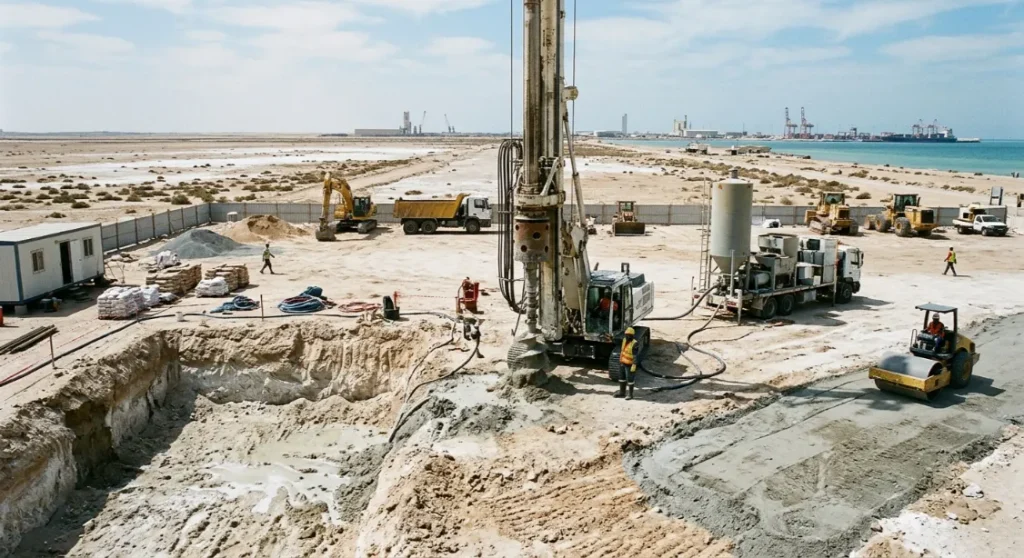
The good news is that sabkha soil can be treated. With the right tests, the right method and the right crew, it becomes a safe base for roads, warehouses, factories and buildings. This guide explains what sabkha soil is, why it causes problems, and which treatment methods work best.
What Is Sabkha Soil?
Sabkha is a flat, salty ground that forms along coasts and in dry low areas. It is a mix of sand, silt, clay and salt crystals. The water table sits very close to the surface, so the soil stays damp even when the weather is hot and dry.
Over time, seawater and groundwater leave salt behind as they evaporate. That is why sabkha often has a white crust on top and layers of chlorides and sulfates below. Some areas also have soft clay pockets or loose sand that has never been compacted.
Why Sabkha Soil Is a Problem for Construction
A site with sabkha soil can cause trouble in four main ways.
Low Bearing Capacity
The soil is loose and weak, especially near the surface. A heavy building can sink, and it often sinks more on one side than the other. This is called differential settlement, and it is the main reason for wall cracks and tilted floors.
Collapse When It Gets Wet
Some sabkha layers hold their shape when dry but lose strength fast once water gets in. A leaking pipe, heavy rain or a rising water table can make the ground drop under the load.
Salt Attack on Concrete and Steel
Chlorides push corrosion into reinforcement bars, and sulfates break down ordinary concrete from the inside. Foundations, slabs and underground pipes all suffer when they sit in salty soil and salty groundwater.
Salt Swelling and Surface Damage
As groundwater rises and dries again, salt crystals grow in the soil and in the pores of concrete. This can lift floors, flake the surface and cause paint and plaster to peel.
Start With a Proper Soil Investigation
No treatment plan should start before you know what is in the ground. A good soil investigation for sabkha includes:
- Boreholes at enough points to show how the layers change across the site
- Standard penetration tests or cone penetration tests to measure soil strength
- Water table readings taken over time, not just once
- Lab tests for chloride, sulfate and pH levels in both soil and groundwater
- Tests for collapse and settlement behavior
The results tell you how deep the weak layer goes, how salty the ground is, and how much the water level moves. Every choice after this depends on that report.
Sabkha Soil Treatment Methods That Work
There is no single fix for every site. Most projects use one method or a mix of two or three.
1. Remove and Replace the Weak Soil
If the weak layer is shallow, the simplest fix is to dig it out and fill the space with clean, well compacted granular material. This gives you a strong, predictable base. It works best for light and medium loads, and it is often used under roads, yards and small buildings.
The limit is depth. When the weak layer is thick, digging it all out costs too much and creates a lot of waste.
2. Dewatering and Water Table Control
Because sabkha is so close to groundwater, controlling the water is often the first job. Pumping systems such as well points or deep wells lower the water level so crews can dig, compact and pour concrete in dry conditions.
Dewatering is usually temporary during construction. For long term protection, drainage layers and cut off barriers can help keep water away from the structure after it is built.
3. Dynamic Compaction
A heavy weight is lifted and dropped again and again on the ground in a set pattern. The impact packs loose sand and silt into a denser layer. It is a good choice for large open sites where the weak soil is mostly granular and the water table is not too high.
4. Preloading With Drains
For soft, clayey layers, crews place a heavy fill on the site and leave it there for some time. Vertical drains speed up the process by letting water escape from the clay faster. The ground settles before the real building goes up, so there is much less movement later.
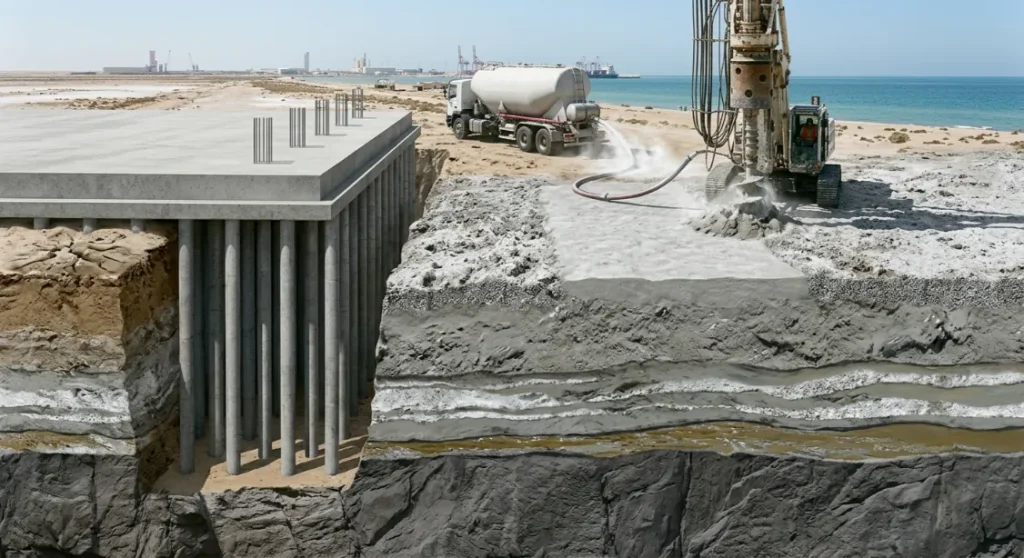
5. Stone Columns
Holes are drilled into the ground and filled with compacted crushed stone. These columns carry load and also help water drain. They are widely used for tanks, warehouses and factory floors where you need more strength without digging out everything.
6. Cement or Lime Stabilization
Mixing cement or other binders into the top layer of soil makes it harder and less likely to collapse. This works well for road bases and working platforms. One warning: in soil with a lot of sulfate, the wrong binder can cause swelling. Lab tests should always come first.
7. Piles for Heavy Structures
When the weak layer is deep and the structure is heavy, piles carry the load past the poor ground to a stronger layer below. This is common for tall buildings, bridges and heavy industrial plants. Piles in sabkha need protective coatings or sulfate resistant concrete to last.
Protecting the Structure After Treatment
Treating the ground is only half the job. The structure itself needs protection from salt.
- Use sulfate resistant cement and low permeability concrete
- Add enough concrete cover over reinforcement bars
- Apply waterproof membranes or protective coatings on foundations and basement walls
- Place a thick layer of clean gravel or a capillary break under slabs so salty water cannot rise through the floor
- Use geotextile layers to separate the treated soil from the fill above
How to Choose the Right Method
Ask these questions before deciding:
- How deep is the weak soil layer?
- How heavy will the structure be?
- How high is the water table, and does it change through the year?
- How much salt is in the soil and the groundwater?
- What are the time and budget limits?
A small warehouse on shallow weak soil may only need replacement and good drainage. A heavy plant on deep soft ground may need stone columns or piles. A good earthworks contractor will match the method to your soil report instead of using one approach everywhere.
Common Mistakes to Avoid
- Skipping the soil report to save time
- Testing the water level only once
- Using ordinary cement in salty ground
- Forgetting drainage around the finished structure
- Leaving the treated ground exposed to rain or leaks during construction
- Hiring a team with no experience in coastal soil
Work With a Team That Knows Coastal Ground
Sabkha sites need careful planning, the right equipment and crews who have handled this soil before. Our team offers earthworks and site preparation services that cover excavation, soil replacement, compaction, grading and dewatering support. If you need machines for your own crew, you can also check our equipment rental options.
Frequently Asked Questions
What is sabkha soil?
Sabkha soil is a salty, soft ground found near coasts and in low dry areas. It is made of sand, silt, clay and salt crystals, and the water table sits very close to the surface.
Can you build on sabkha soil?
Yes. It needs a soil investigation first, then a treatment method that fits the site, and finally concrete and coatings that can resist salt.
Why does sabkha soil damage foundations?
It has low strength, it can collapse when wet, and its salts attack concrete and steel. Together, these problems cause settlement, cracks and corrosion.
Is dewatering always needed on sabkha sites?
Most sabkha sites need some form of water control because the water table is so high. The system can be a temporary pump setup during work or a permanent drainage design.
What type of cement is best for salty ground?
Sulfate resistant cement is the usual choice, along with a dense, low permeability mix and enough concrete cover over the steel.