Crane Rental in Saudi Arabia for Construction and Industrial Lifts
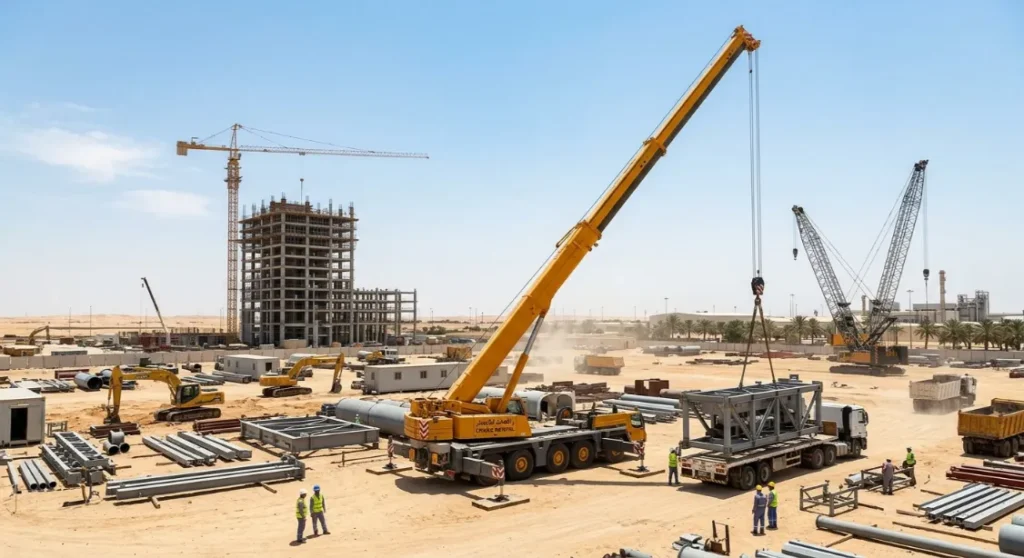
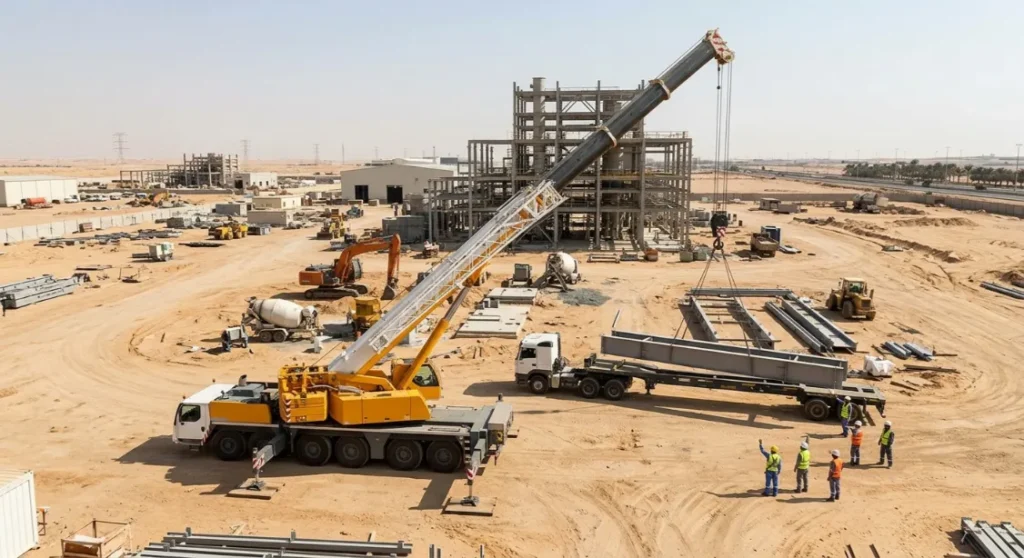
A crane that is too small for the lift, or too big for the access road, can stop a site for days. FSAK Contracting offers crane rental across the Kingdom from our head office in Riyadh. We match the crane to your load, your working radius and your ground before anything is booked.
As a working Riyadh construction contractor with more than 20 years on Saudi sites, we also understand the steel, precast or plant you are lifting
Which crane types can you rent?
Most construction lifts use one of four crane types. Each trades road speed, ground needs and lifting power differently. The right one depends on where the crane travels, what it stands on and how long it stays.
All terrain cranes
An all terrain crane drives on the highway at road speed and still copes with rough ground on site. Several steering axles help it turn in tight spaces.
Truck-mounted cranes
A truck-mounted crane is built on a commercial truck chassis. It sets up fast and is often the most economical choice for light to medium lifts, such as precast panels or generators, on firm ground.
Crawler cranes
A crawler crane moves on tracks, which spread its weight over a wide area. Many crawlers can travel short distances with a load on the hook. Large units arrive in parts and are assembled on site. They pay off on long projects with heavy, repeated lifts such as bridge girders.
Crane type | Best ground | Getting to site | Setup | Typical use |
Rough terrain | Unpaved and uneven | Usually on a trailer | Quick | Early site work, utilities |
All terrain | Paved and rough | Drives at road speed | Quick | Short jobs across several sites |
Truck-mounted | Firm and paved | Drives at road speed | Quickest | Light to medium lifts |
Crawler | Level, prepared pad | Transported in parts | Needs assembly | Long, heavy lifting programmes |
For high-rise work lasting many months, ask us whether a tower crane suits better. The wider machine list is in our equipment rental fleet.
How do you choose the right crane size?
Choose a crane by what it can lift at your working radius, not by its headline tonnage. The maximum rating only applies close to the crane, with a short, steep boom. Capacity falls quickly as the load moves out. A 100-tonne crane may lift only a small fraction of that at 20 metres. The load chart shows the real figure.
To size a crane properly, we need:
• Load weight, plus slings, shackles, spreader beam and hook block
• Radius from the crane’s centre to the set-down point
• Lift height and obstacles such as buildings or overhead lines
• Ground where the outriggers or tracks will sit
• Gate width, turning space and overhead clearance on the way in
• Number of lifts and length of hire
Send drawings or photos and we will recommend a crane with spare capacity.
Lift planning and operator support
Every lift needs a plan. It sets out the load, crane setup, rigging, ground preparation, exclusion zones and who is in charge. including the choice of operators, slingers and signallers. Many project specifications also refer to ASME B30.5, which covers the inspection, testing, maintenance and operation of mobile and crawler cranes.
What can come with a rented crane
• A crane operator
• A rigger and signaller
• Lift plan or method statement support
• Current inspection and load test certificates
• Crane pads built by our earthworks and site preparation team
Dry hire, operated hire or a managed lift?
The difference is who supplies the operator and who plans and controls the lift. Guidance from the Construction Plant-hire Association treats crane hire and contract lifts as separate arrangements, with different duties for each side.
Option | What you get | Who plans and controls the lift | Suits |
Dry hire | The crane only | Your team, with your own qualified operator | Firms with an in-house lifting team |
Operated hire | Crane plus operator | Your team. The operator follows your plan | Most routine site lifts |
Managed lift | Crane, crew and lift planning | The supplier’s lifting team | Complex or critical one-off lifts |
What affects the price?
The day rate is only part of the cost. A fair quote also shows:
• Crane size, extra counterweight or boom sections
• Hire length, since longer bookings usually cut the daily cost
• Operator and crew hours, including overtime
• Transport to and from site, including escorts for road moves
• Outrigger mats or crane pad works
• Standing time if the site is not ready
We list each item separately so you can compare quotes like for like.
How do Saudi site conditions affect a lift?
Heat and fine dust are hard on engines, hydraulics and filters, so operators should run pre-use checks every day.
Ground is the bigger risk. Sand and backfilled areas can settle under outrigger loads. Mats spread the load, and large cranes may need a compacted pad.
Wind matters too. Every load chart sets a maximum wind speed, and wide flat loads such as wall panels can become unsafe well below it. Plan critical lifts for a low-wind window.
Where do we deliver cranes?
We mobilise cranes from our Riyadh base to sites across Saudi Arabia. Local details are here:
• Heavy equipment hire in Riyadh for the capital and nearby sites
• Equipment rental in Jeddah for west coast projects
• Equipment rental in Dammam for Eastern Province industrial work
Why rent a crane from a contractor?
A rental company supplies a machine. A contractor can also prepare the ground and supply riggers and labour. FSAK Contracting has worked on Saudi projects for more than 20 years and owns its equipment fleet.
• Head office at An Nasr Rd, Al-Masani’, Riyadh 14714
• One contact for cranes, earthworks and skilled site manpower
• Arabic and English project communication
• Direct access to decision makers
How the rental works
1. Send your lift details. Load, radius, height, location, dates and photos.
2. Get a recommendation and quote. Crane type, size, support and every cost listed.
3. Prepare the site. You confirm access and ground, or we build the crane pad.
4. Mobilise and set up. The crane arrives with its load chart and current certificates.
5. Lift. Daily pre-use checks, then work to the agreed plan.
6. Demobilise. We remove the crane and hand over the lift records.
Frequently asked questions
What is the difference between a mobile crane and a crawler crane?
A mobile crane runs on tyres and sets up in hours. A crawler crane runs on tracks and is usually assembled on site. Crawlers suit long, heavy programmes, while mobile cranes suit shorter jobs that need the crane to move often.
How far ahead should I book a crane?
Book large cranes as early as you can, since they need transport planning and often assembly. Smaller truck-mounted cranes are usually easier to arrange at short notice.
Who is responsible for ground preparation?
The site owner or main contractor usually prepares the ground and confirms it can carry the outrigger or track loads. Our earthworks crews can build and compact a crane pad if you need one.
What documents should a rented crane have on site?
Expect the load chart, a current inspection certificate, a load test certificate, the operator’s qualification card and certificates for slings and shackles. Keep the lift plan or method statement on site too
Get Your Crane Rental Quote from FSAK Contracting
Whether you need a truck-mounted crane for one day of panel lifts or a crawler crane for a long heavy-lift programme, we can plan it with you. Send us the load, radius, site location and dates. We will recommend the right crane, itemise every cost and mobilise from our Riyadh base to sites across the Kingdom. Operated and bare hire are both available on daily, weekly or monthly terms, backed by more than 20 years on Saudi construction sites.