Asphalt performance in Jeddah comes down to three things: a binder that stays stiff in the heat, clean hard aggregate that holds on to that binder when it gets wet, and a mix that is laid and compacted the right way. Get one of these wrong and the road can show ruts, cracks or loose stones within a few summers.
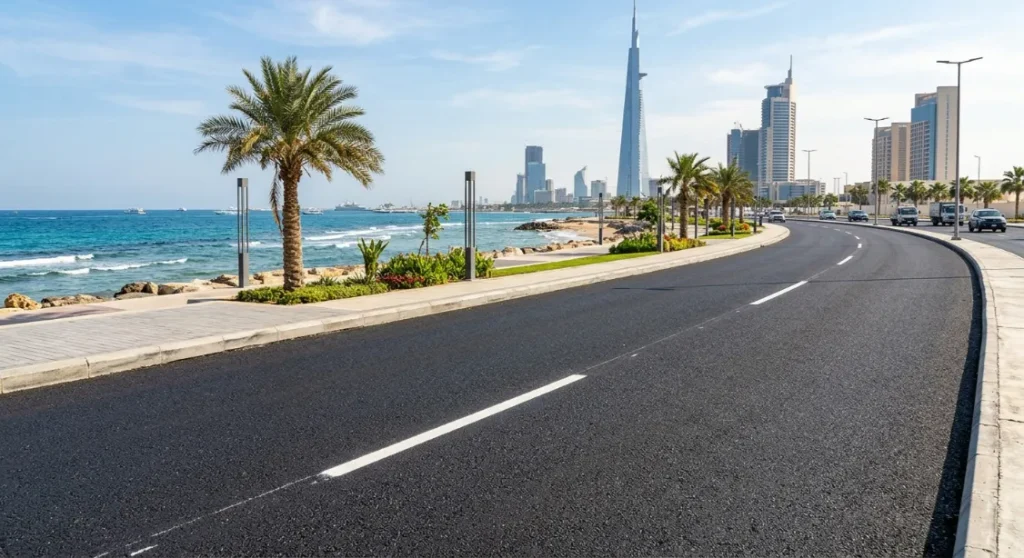
Jeddah is not an easy place for a road. The summers are long and hot. The air is humid most of the year. The ground near the coast often has salt and water close to the surface. All of this works against asphalt every single day.
This guide explains, in plain words, how each of these conditions affects asphalt and what materials hold up best. If you are planning road construction in Jeddah, use it to ask better questions before the mix design is signed off.
What Jeddah’s Climate Does to Asphalt
Asphalt is a mix of stone (aggregate) glued together by bitumen (the binder). Bitumen softens when it gets hot and gets brittle when it gets old. In Jeddah, the weather keeps pushing it in both directions.
Heat makes asphalt soft
In summer, the air in Jeddah often goes above 40°C. A black road surface gets much hotter than the air, and can pass 60°C in the afternoon. At that temperature a weak binder starts to soften.
When heavy trucks drive over soft asphalt again and again, the surface gets pushed down and sideways. This forms grooves in the wheel paths, called rutting. Rutting holds water, makes steering harder and is one of the most common road problems in hot cities.
Humidity and water strip the binder
Jeddah is humid, even when it does not rain. When it does rain, water can sit on roads where drainage is poor. Water slowly gets between the bitumen and the stone. Over time, the binder peels off the aggregate. This is called stripping, or moisture damage.
A stripped road looks fine at first. Then small stones start to come loose, the surface gets rough, and potholes appear. By the time you see it, the damage below is often worse.
Salt and high groundwater attack from below
Near the coast, the soil can be salty and the water table can be shallow. Salty water can rise into the road base by capillary action. When it dries, salt crystals form and push the layers apart. This weakens the base and the asphalt on top of it.
This is why good roads in coastal areas start with the ground. Proper earthworks and enabling works, treatment of weak sabkha soil, and dewatering where needed all protect the asphalt before it is even laid.
Heavy and slow traffic adds load
Roads that carry trucks, buses and slow traffic suffer more. A truck that stops at a junction in summer presses on the same spot for a long time. That is why ruts are often worst at traffic lights, bus stops and toll gates.]
Choosing the Right Binder
The binder is where most hot weather problems start, so it is the first choice to get right.
Plain 60/70 bitumen
60/70 penetration grade bitumen is the most common plain bitumen used in Saudi Arabia. It is easy to get and costs less. It can work well on low-traffic roads, car parks and internal streets. On busy roads in Jeddah’s summer heat, it can soften too much and rut early.
Performance graded (PG) binders
A PG binder is graded by the temperatures it can handle. For example, PG 76-10 means the binder is tested to resist rutting at a pavement temperature of 76°C and to resist cracking down to 10°C. For hot regions like Jeddah, high-grade binders such as PG 76 are often specified for main roads. Your project specification will set the exact grade.
Polymer modified bitumen
Polymer modified bitumen (PMB) is bitumen mixed with a polymer, often SBS, a type of rubber-like plastic. The polymer makes the binder stiffer in heat and more flexible when it bends. Roads built with PMB usually rut less and crack less under heavy traffic. It costs more up front, but it often pays back by needing less repair.
| Binder type | Best for | Watch out for |
|---|---|---|
| 60/70 bitumen | Low-traffic streets, car parks, temporary roads | Can rut on busy roads in summer |
| PG 76 grade binder | Main roads and heavy traffic in hot areas | Needs proper testing to confirm the grade |
| Polymer modified bitumen (SBS) | Highways, junctions, truck routes, bus lanes | Higher cost, needs higher mixing and laying temperatures |
Choosing the Right Aggregate
Aggregate makes up around 90 to 95 percent of asphalt by weight. Even the best binder cannot save a mix if the stone is weak or dirty.
Here is what to look for:
- Hard, crushed stone. Crushed stone has sharp edges that lock together. This helps the mix resist rutting. Round, smooth gravel slides more easily.
- Good shape. Too many flat or long pieces break under rollers and traffic. Cube-shaped pieces work better.
- Clean surface. Dust and clay on the stone stop the binder from sticking. Washed or screened aggregate is a good idea.
- Low water absorption. Stone that soaks up a lot of water also soaks up binder and is more likely to strip.
- Good bond with bitumen. Some stone types bond with bitumen better than others. A lab moisture test will show this.
In coastal areas, an anti-strip additive is often added to fight moisture damage. Hydrated lime is a common choice, usually about 1 to 2 percent of the aggregate weight. Liquid anti-strip agents are another option. Your lab results should decide which one is used.
Picking the Right Mix Type
A road is built in layers. Each layer has a different job, so each one can use a different mix.
| Layer or mix | What it does | Notes for Jeddah |
|---|---|---|
| Base course | Spreads the load over the ground | Thicker layer, larger stone, must be well compacted |
| Binder course | Links the base to the top layer | Stiff mix helps stop ruts from forming deeper down |
| Wearing course | The top layer cars drive on | Needs strong binder, good grip and low air voids |
| Stone mastic asphalt (SMA) | A tough top layer with lots of large stone in contact | Very good against rutting on heavy traffic roads, costs more |
Tests to Ask For Before and During Paving
Testing is the only way to know the mix will behave the way it should. Before you approve a mix, and while paving is going on, ask for these:
- Binder grade test. Confirms the bitumen or PMB is what was ordered.
- Bitumen content and gradation. Checks the mix has the right amount of binder and the right stone sizes.
- Marshall stability and flow. Shows how much load the mix can carry and how much it bends.
- Moisture sensitivity (TSR test). Compares the strength of wet and dry samples. A ratio of 80 percent or more is a common target. This test matters a lot in humid Jeddah.
- Wheel tracking test. Rolls a loaded wheel over a hot sample to see how deep a rut forms.
- Air voids. Too many voids let in water and air. Too few can cause bleeding and rutting. Lab mixes usually aim for about 3 to 5 percent.
- Core samples after paving. Cores taken from the finished road show the real thickness and how well it was compacted.
Always follow the limits in your project specification. The numbers above are common targets, not fixed rules for every job.
Laying Asphalt in Jeddah’s Heat
Good materials can still fail if the laying is rushed. A few habits make a big difference on site.
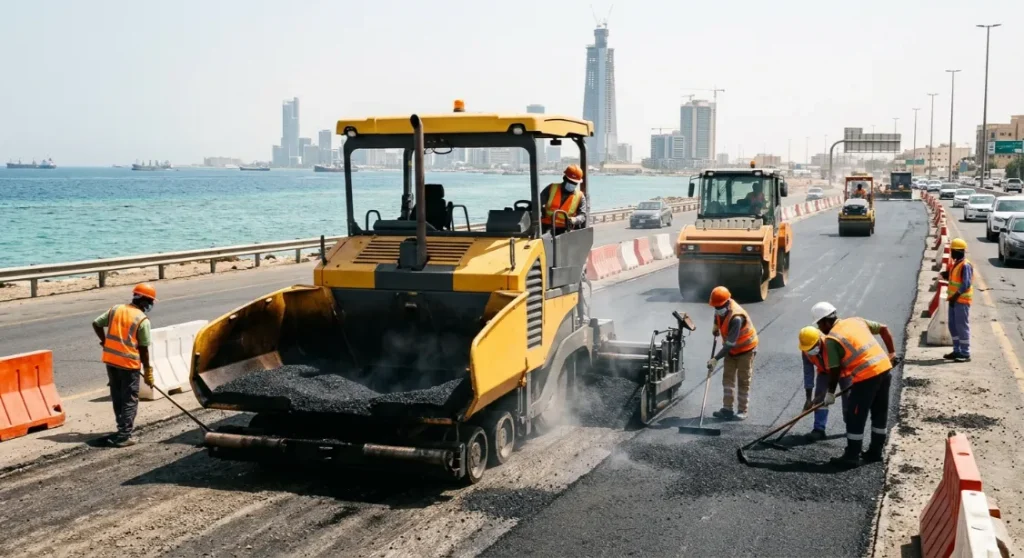
Pick the right time of day. Many crews in Jeddah pave at night or early in the morning during summer. It is safer for workers, and it gives more control over how fast the mat cools.
Watch the temperature. Hot mix is usually laid at roughly 140 to 160°C. Polymer modified mixes often need more heat. The binder supplier and mix design will set the exact range. Mix that arrives too cool will not compact properly.
Use prime and tack coats. A prime coat seals the base. A tack coat glues each asphalt layer to the one below. Skip them and the layers can slide apart under braking trucks.
Compact while it is hot. Rolling should start right behind the paver. Poor compaction leaves high air voids, and that lets in water and air. Having the right pavers, rollers and other road equipment on site, in good working order, keeps the work steady.
Get the joints right. The joint where two paving runs meet is a weak spot. Joints should be cut clean, tacked and compacted well.
Plan the drainage. Water is asphalt’s biggest enemy after heat. Correct cross slope, kerbs and drains should be part of the plan from day one.
Common Mistakes That Shorten Road Life
We see the same problems again and again on roads that fail early:
- Using plain bitumen on a road that carries heavy trucks.
- Skipping the moisture test because “it doesn’t rain much”.
- Laying asphalt on a weak or salty base that was not treated.
- Poor compaction, especially near kerbs and joints.
- No proper drainage, so water sits on the surface or soaks into the base.
- Choosing the mix only on price, without looking at traffic and heat.
Most of these cost very little to avoid at the start, and a lot to fix later. On larger road, bridge and tunnel works, the cost of a wrong choice grows even faster.
Quick Material Checklist for Jeddah Roads
Before you approve the asphalt for your project, check that:
- The binder grade matches the traffic level and summer pavement heat.
- Polymer modified bitumen has been considered for busy or heavy-load roads.
- The aggregate is crushed, clean, hard and tested for bond with bitumen.
- An anti-strip additive is included if the moisture test calls for it.
- The mix design has passed rutting and moisture tests.
- The base and subgrade are treated for salt and water where needed.
- Paving times, temperatures and compaction targets are written into the method statement.
- Cores will be taken to check thickness and compaction after paving.
Frequently Asked Questions
What is the best asphalt for Jeddah’s climate?
There is no single best mix for every road. For busy roads, a mix with a high-grade binder such as PG 76 or a polymer modified bitumen, hard crushed aggregate and an anti-strip additive usually performs best. Quiet streets can often use plain 60/70 bitumen.
Why does asphalt rut so fast in Jeddah?
The road surface gets very hot in summer, which softens the binder. Heavy, slow or stopping traffic then pushes the soft asphalt out of the wheel paths. A stiffer binder, strong aggregate and good compaction all help reduce rutting.
Does humidity really affect asphalt?
Yes. Moisture slowly breaks the bond between bitumen and stone. This is called stripping. It leads to loose stones and potholes. A moisture sensitivity test and an anti-strip additive help protect the road.
Is polymer modified bitumen worth the extra cost?
On roads with heavy traffic, it often is. It resists rutting and cracking better, so the road usually needs less repair over its life. On low-traffic roads, plain bitumen may be enough.
Planning a Road Project in Jeddah?
The right asphalt choice starts with knowing the site, the traffic and the climate. Our Jeddah road construction team can help you plan the layers, materials and testing for your project, from ground preparation to the final wearing course. We also handle road construction across Saudi Arabia.