Sustainable construction Saudi Arabia projects come down to one simple idea: build with less waste, less water and less fuel, and keep the records to prove it. In 2026, more clients and consultants ask contractors to show this at tender stage, especially when a building is going for a green rating such as Mostadam or LEED.
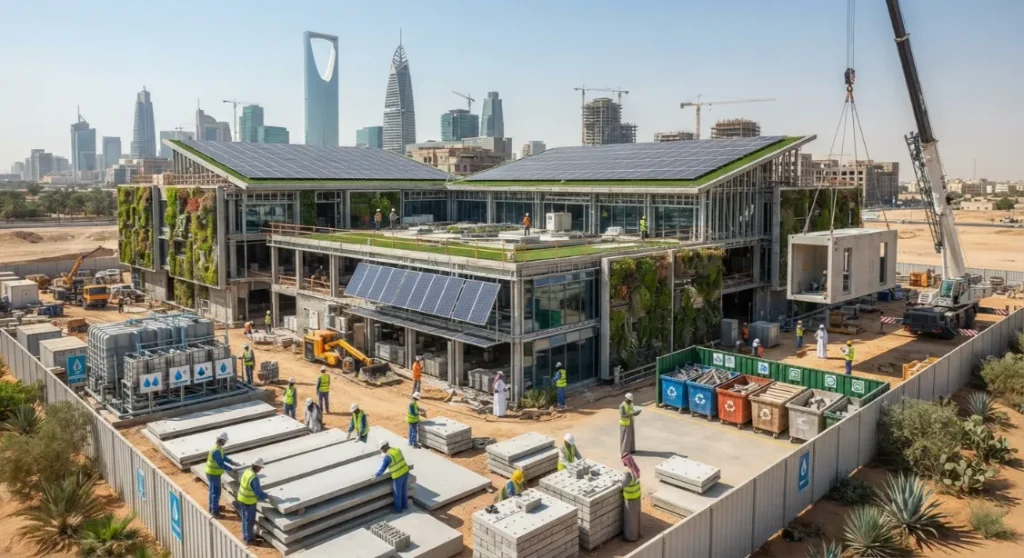
This guide is for contractors, project managers and procurement teams. You will see what the two main rating systems expect from the site team, seven practices that make a real difference, and a checklist you can use before your next project starts.
What Sustainable Construction Means on a Saudi Site
On paper, sustainability sounds like a design topic. On site, it is a set of daily decisions. Where does the excavated soil go? How long does a loader run with nobody in the cab? Is curing water drying off in the afternoon sun? Is waste sorted, or thrown into one skip?
Local conditions shape every one of these choices. Summer heat speeds up evaporation. Water has to be trucked to many sites. Haul distances are long, so every extra trip burns diesel. A method that works well in a mild climate often needs changes here. Curing concrete in July, for example, needs far more planning than curing it in January.
Why It Matters More in 2026
Green building in KSA has moved from a nice extra to a contract term on many projects. Here is what that means for contractors:
- Ratings are written into contracts. When a building targets a rating, your site records feed straight into the score. Missing paperwork can cost credits, and sometimes money.
- Costs add up fast. Fuel, water and waste disposal are all paid for. Cutting waste is often the quickest saving on a job.
- Clients report on it. Large developers and industrial owners track environmental performance and pass that duty down to their contractors.
- Prequalification asks about it. Many clients now ask for your environmental procedures during vendor registration.
Environmental construction standards in Saudi Arabia keep tightening, so building these habits now is easier than catching up later. Always check the exact requirements in your contract and project specification.
7 Sustainable Construction Practices Contractors Can Use Now
1. Balance Cut and Fill Before You Dig
A lot of earthworks waste starts at the planning stage. If the cut and fill plan does not account for soil reuse, good material leaves site on trucks while new fill comes in on other trucks.
Test the excavated soil early. If it meets the fill specification, reuse it on the same site. You save haul trips, diesel and tipping fees. Our earth and enabling works team plans this balance before the first excavator arrives.
2. Use Recycled Asphalt Where the Spec Allows
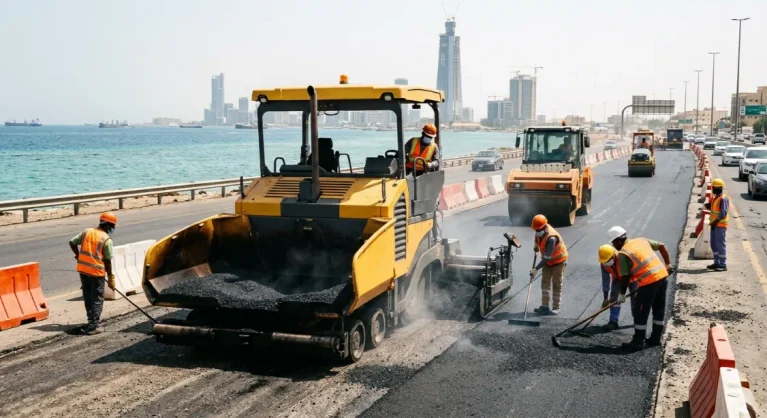
Reclaimed asphalt pavement, often called RAP, is old asphalt milled off a road, crushed and mixed back into new asphalt. It cuts the need for fresh aggregate and bitumen.
How much RAP you can use depends on the layer and the project specification. Base layers usually accept more than the surface course. Agree the mix design with the asphalt plant and run the required tests before laying it. If you are planning asphalt paving work, raise RAP at the design review, not after the contract is signed.
3. Sort Waste on Site
Put out separate skips for concrete, steel, timber, packaging and general waste, and label them in the languages your crew speaks. Clean concrete can be crushed and reused as sub-base where the engineer approves it. Steel offcuts can go to scrap dealers.
Keep a waste log with the ticket from every disposal or recycling trip. Rating assessors ask for these, and they are hard to rebuild months later.
4. Control Water Use
Water planning matters more here than almost anywhere else. A few habits help:
- Pour concrete early in the morning and use curing compounds or covered wet hessian to slow evaporation.
- Use treated wastewater for dust control where the project allows it.
- Test groundwater from dewatering to see if it can be reused for dust control or compaction.
- Fit a meter on the main supply and check tanks and hoses for leaks each week.
5. Cut Equipment Idle Time
An idling excavator burns fuel and does no work. Set a no idle rule for operators and track it through fuel logs. Match the machine to the job, because an oversized machine burns more fuel than the task needs. Keep services on schedule, as a well maintained engine runs cleaner.
Renting the right size of machine for each phase, instead of keeping a large fleet on standby, also helps. Our equipment rental team can match machines to each stage of the work.
6. Choose Low Water Landscaping
Landscaping can use more water than the building itself over its life. Native and salt-tolerant plants, drip irrigation, mulch and treated water for irrigation all cut demand. A good landscape contractor in Riyadh will plan irrigation zones by plant type, so lawns and shrubs are not watered on the same timer.
7. Buy Materials With Paperwork
Ask suppliers for Environmental Product Declarations EPDs, recycled content statements and low data for paints, sealants and adhesives. Buying from local plants shortens transport and makes delivery easier to schedule. Create one folder per project on day one and file every certificate as it arrives.
Contractor Checklist for Green-Rated Projects
| Stage | What to do |
|---|---|
| Tender | Read the rating target. List the credits the contractor is responsible for. Price testing, record keeping and extra skips. |
| Mobilisation | Prepare a site environmental plan. Set up waste skips, a water meter and a fuel log. Add sustainability to the site induction. |
| During works | Collect waste, water and fuel data every month. Take dated photos. File supplier documents as they arrive. Brief subcontractors. |
| Handover | Put together the evidence pack for the assessor. Record lessons learned for the next project. |
Common Mistakes That Cost Credits
- Collecting records at the end of the job instead of every month.
- Not briefing subcontractors, so their waste ends up in the wrong skip.
- Treating the rating as the consultant’s problem.
- Swapping a specified material for a cheaper one without checking its green documents.
- Losing disposal tickets because nobody owns the file.
How FSAK Supports Sustainable Projects
FSAK delivers earthworks, roads, utilities, landscaping and equipment rental across Saudi Arabia from our base in Riyadh. On projects with environmental targets, we help with soil reuse planning, fuel and equipment logs, waste sorting in our work areas and water conscious landscaping.
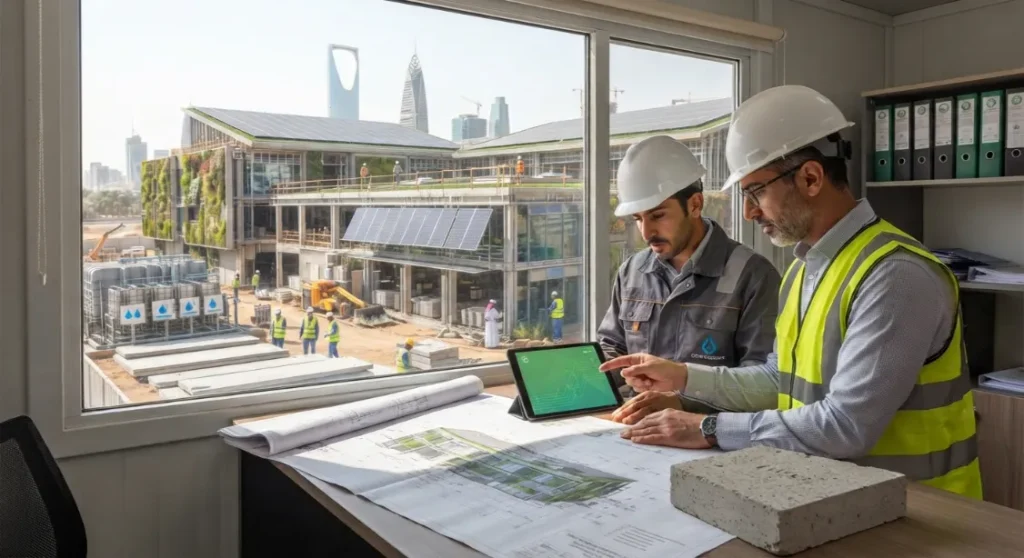
For sustainable construction practices in Riyadh, Jeddah, Dammam and beyond, you need a team that keeps good records as well as good quality. If you are looking for an infrastructure contractor in Saudi Arabia for large national development projects, you can read more about FSAK and our experience.
Frequently Asked Questions
What is sustainable construction in Saudi Arabia?
It means planning and building projects with less waste, water, fuel and emissions, using materials and methods that suit the local climate. On site, it covers soil reuse, waste sorting, water control, fuel management and keeping records for green ratings.
Can recycled asphalt be used on Saudi roads?
It can, where the project specification allows it. The amount depends on the layer, and the mix must pass the required design and quality tests before use.
Does sustainable construction cost more?
Some items cost more up front, such as testing and extra record keeping. Others save money, such as reusing soil, cutting idle time and selling scrap steel. On many sites the savings cover a good part of the extra cost.
Is LEED used in Saudi Arabia?
Yes. LEED is common on international, corporate and hotel projects in the Kingdom. The client or consultant usually decides between LEED and Mostadam before the contractor is appointed.
How can contractors reduce construction waste on site?
Plan cut and fill to reuse soil, order materials to size, sort waste into separate skips, crush clean concrete for reuse where approved and brief every subcontractor during induction.