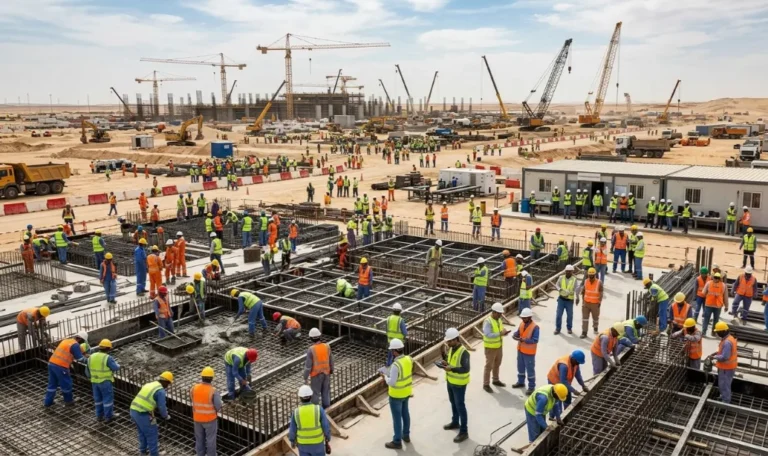
If you need to hire manpower in Dammam, start by writing down the trades you need, the headcount per trade, the start date and how long the job will run. Then pick a contract type that fits the work, agree on housing and transport in the quote, and trade-test the workers before they start.
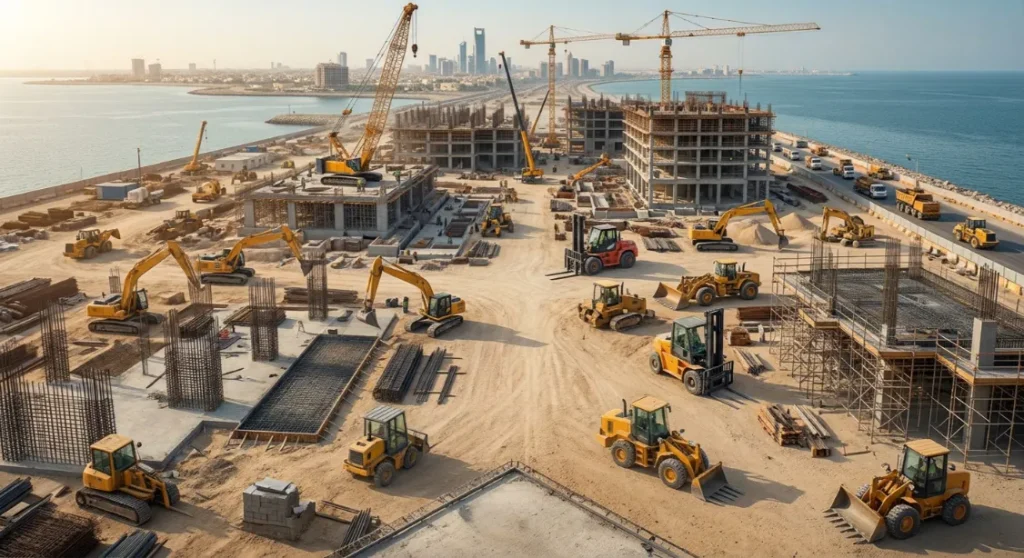
That’s the short answer. Below we go through each step and the questions our clients ask most. We supply workers to building sites, plant shutdowns and warehouses in Dammam and Al Khobar, and we run our own earthworks, road and utility jobs. Most of what follows comes from what we’ve seen go right, and wrong, on real sites.
Start With the Job, Not the Headcount
A request like “send me 20 workers” usually leads to the wrong mix. Two weeks in, the site has too many helpers and not enough steel fixers.
Begin with the work itself.
Break the Work Into Trades
List each task and who does it. For a small concrete building, the list might look like this:
- Shuttering carpenters for formwork
- Steel fixers for rebar
- Masons for blockwork
- Helpers to move material and keep the site clean
- One foreman to run the crew
A plant shutdown needs a different list: welders, pipe fitters, riggers, a scaffolding team and a safety officer.
Once the list is clear, put a number against each trade. Your engineer or planner knows the output per person on your job better than anyone, so ask them before you call a supplier.
Count Shifts, Not Just People
If the job runs two shifts, you need two crews, not one crew working longer hours. The same goes for a seven day schedule. Plan rest days, or the team will be worn out by the third week. In summer this matters even more.
Which Workers Are in Demand in Dammam
Dammam and Al Khobar have a mix of building sites, factories, workshops and logistics yards. That shapes the requests we get.
| Type of work | Workers usually requested |
|---|---|
| Building and civil sites | Masons, steel fixers, shuttering carpenters, painters, helpers |
| Plant shutdowns and maintenance | Welders, pipe fitters, electricians, HVAC technicians, riggers |
| Warehouses and logistics yards | Loaders, forklift operators, storekeepers, general labour |
| Earthworks and road jobs | Excavator and loader operators, heavy drivers, labourers |
| MEP and utility work | Electricians, plumbers, pipe and duct installation crews |
If your job fits one of these, our page on manpower supply in Dammam lists the trades we cover and how we mobilise a crew.
Pick the Right Contract Type
The contract you choose decides who handles the paperwork, who supervises, and how easy it is to change numbers later.
| Contract type | Best for | Usual length | Who manages the workers day to day |
|---|---|---|---|
| Temporary labour supply | Peak periods, urgent gaps, short shutdowns | Days to a few weeks | Your site team, with supplier support |
| Project-based contract staffing | A full project with a known end date | The length of the project | Your site team; the supplier handles replacements |
| Manpower outsourcing | Ongoing work like warehouses or maintenance | Monthly or yearly | The supplier handles hiring, documents and supervision |
A simple rule: if you can’t say when the job ends, look at outsourcing. If you can, a temporary or project contract is usually simpler to manage.
Plan for Summer Heat Before Work Starts
Dammam summers are hot and humid. From around June to September, outdoor output drops in the middle of the day, and the summer working-hour rules for outdoor work apply to every site.
Here’s what works on our jobs:
- Start early, around first light, and finish outdoor work before the hottest hours
- Move indoor or shaded tasks to the afternoon
- Keep cold water and shaded rest points close to the work area
- Build slower summer output into the schedule from the start, instead of trying to fix it with overtime later
If your job runs through summer, give your supplier the shift times up front. Transport and meal times need to match them.
Settle Housing, Transport and Food in the Quote
These three items cause most of the arguments after a contract starts. Ask for each one as a separate line in the quote:
- Accommodation: who provides it, and how far is it from site?
- Transport: what are the pickup times, and do they match the shift start?
- Food: is it included, paid as an allowance, or arranged by the workers?
Distance matters more than people expect. A camp 40 minutes from site means workers spend well over an hour a day on a bus. On a tight schedule, you’ll see that in your daily output.
What Changes the Cost per Worker
There’s no single price that fits every job, so be careful of anyone who quotes one without asking questions. These are the things that move the monthly rate:
- Trade and skill level a certified welder costs more than a helper
- Contract length longer contracts often bring the monthly rate down
- Working hours, overtime and night shifts
- Housing, transport and food
- Medical checks, site inductions and special safety tests
- PPE and tools, and who provides them
- Crew size
If two quotes are far apart, check which of these items each one includes. Very often, the cheaper quote leaves out transport or housing.
How Much Notice Do You Need?
It depends on the type of worker:
- General labour: often a few days
- Skilled trades and operators: allow more time, depending on the trade
- Shutdown teams: a few weeks, especially for larger jobs
Shutdowns are where people get caught out. Dates get fixed late, and then several plants in the area want welders in the same week. Book early, even if you need to adjust the numbers later.
Check the Supplier Before You Sign
A supplier can look good on paper and still let you down on day one. A few direct questions will tell you a lot.
Questions to Ask
- Are these your own workers, or will you pass the order to another supplier?
- Can we trade-test workers at our site before they start?
- What happens if a worker doesn’t meet the standard, and how fast is a replacement?
- Who is my single contact once the job starts?
- Are workers checked for medical fitness and valid documents?
- Are transport and housing included, and where is the camp?
- Can you supply operators together with equipment if we need it?
Common Mistakes When You Hire Manpower in Dammam
We see the same problems come up again and again:
- Asking for a total headcount without a breakdown by trade
- Leaving shutdown bookings until the last week
- Not putting replacement terms in writing
- Comparing quotes without checking what each one includes
- Forgetting summer shift times when planning transport
- Sending a new crew to work without a site induction
None of these are hard to fix. They just need to be sorted before the crew arrives, not after.
Workers and Machines From One Supplier
Many jobs need labour and equipment at the same time. An earthworks package, for example, needs excavator operators, dump truck drivers and labourers on the same day. When workers and machines come from different companies, you end up chasing two suppliers every time something goes wrong.
We supply both. You can rent machines with operators through our equipment rental service. We also run our own earthworks and enabling works and utility installation jobs, so many of our workers already know these sites. You can see some of that work on our projects page.
If you also have work in the capital, our manpower supply team in Riyadh works the same way.
Frequently Asked Questions
What is the difference between manpower supply and recruitment?
the worker joins your company and you handle their documents and salary. With manpower supply, the worker stays with the supplier and you pay a rate for the time they work on your site. Supply suits short jobs and projects. Recruitment suits long-term roles you want on your own payroll.
Can I start with a small crew and add workers later?
Yes. Many jobs start small and grow as more of the site opens up. We usually supply crews of five workers or more, and adding people mid-job is much easier when you tell us early.
Who supervises the workers on site?
On temporary and project contracts, your site team usually directs the daily work. On outsourcing contracts, the supplier can provide foremen or supervisors. Write this into the contract so there’s no confusion on the first day.
What happens if a worker isn’t suitable?
Agree replacement terms in writing before you sign. At FSAK, we replace a worker free of charge if they don’t meet the agreed standard.
Planning a Crew in Dammam?
Send us the trades you need, the headcount for each trade, your start date, site location and shift pattern. We’ll come back with a clear quote that shows what’s included and what isn’t.