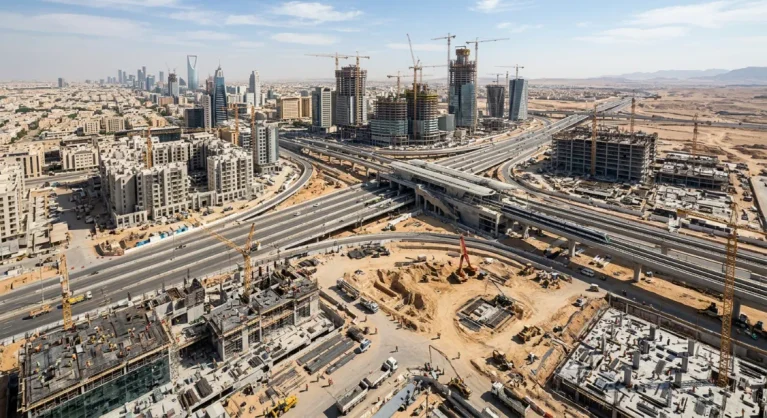
Road and utility networks for giga projects have to be built first. Before a single theme park, stadium or hotel goes up, trucks need roads to drive on, rainwater needs a place to go, and every building needs power, water and data lines waiting for it. Qiddiya shows this clearly. The early work on that site was not the big attractions. It was access roads, bridges and stormwater drainage.
In this guide, we look at what Qiddiya teaches about planning and building roads and utilities on a very large site. These lessons are useful for any developer, main contractor or project manager working on big projects in Saudi Arabia. If you want to know how a contractor supports this kind of work, you can also read our page on the Qiddiya construction contractor role.
What makes a giga project different?
A normal project has one site and one main building. A giga project is more like building a small city from empty land. Qiddiya covers about 334 square kilometres. That is bigger than many towns.
On a site this size, you cannot just bring in materials and start. There are no roads yet. There are no water pipes or power lines. The ground is often rocky and uneven. So the first years of work are about getting the land ready to be built on.
Why roads and utilities come first
Think of roads and utilities as the skeleton of the whole project. Every other team depends on them.
Concrete trucks, cranes and steel deliveries all need a solid road. Without one, trucks get stuck, deliveries run late and costs go up. The same goes for water and power. A building can be finished on time and still not open because its utility connection is not ready.
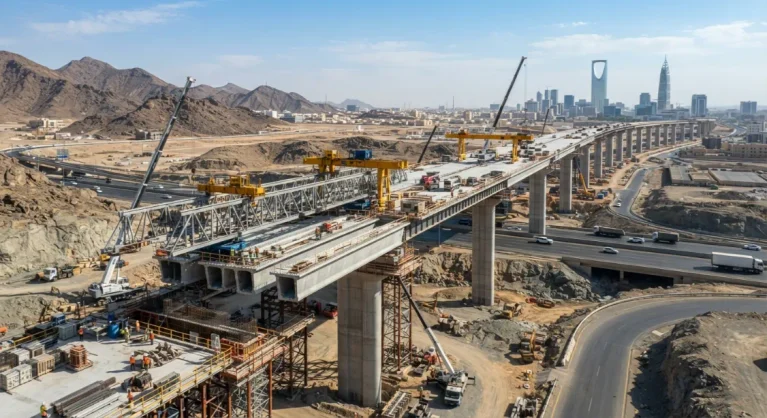
That is why big developers often give out road, bridge and drainage work in the very first round of contracts. At Qiddiya, roads, bridges and stormwater drainage on the lower part of the site were among the early packages. They gave trucks a way to carry materials deep into the site, where the main attractions would be built later.
7 lessons from Qiddiya for road and utility networks
1. Build access roads before anything else
The first roads on a giga project are not just for the public. They are working roads for the build. They carry heavy trucks every day for years.
Good access roads save money on every job that follows. A truck that can reach the work face in 10 minutes instead of 40 does four times more trips. Over thousands of loads, that adds up fast.
So plan these roads early, build them strong enough for heavy loads, and keep them in good shape. A road construction company in Saudi Arabia with its own machines can open these routes quickly and keep them working.
2. Plan roads and utilities as one network
One of the most common problems on large sites is digging up a new road to lay a pipe. It happens when the road team and the utility team plan separately.
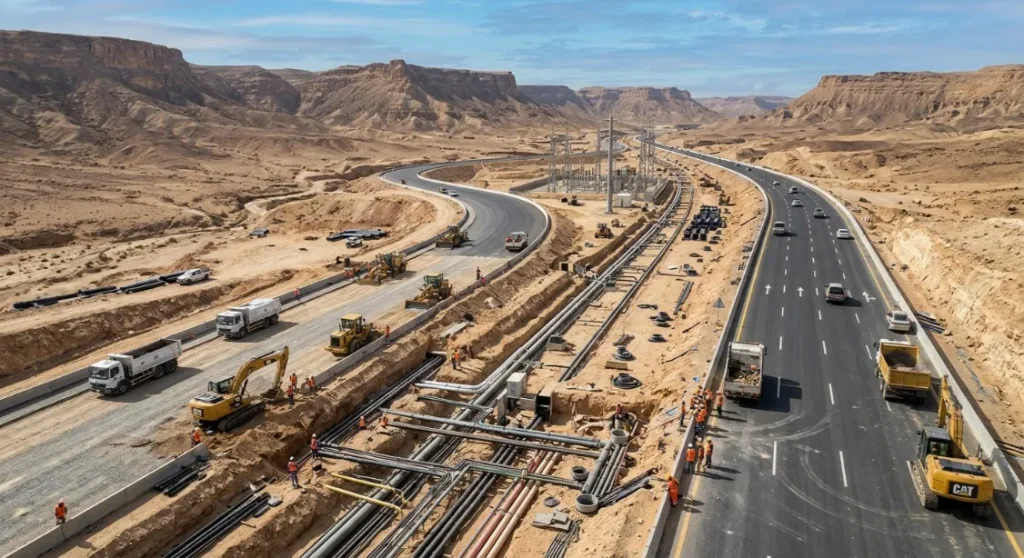
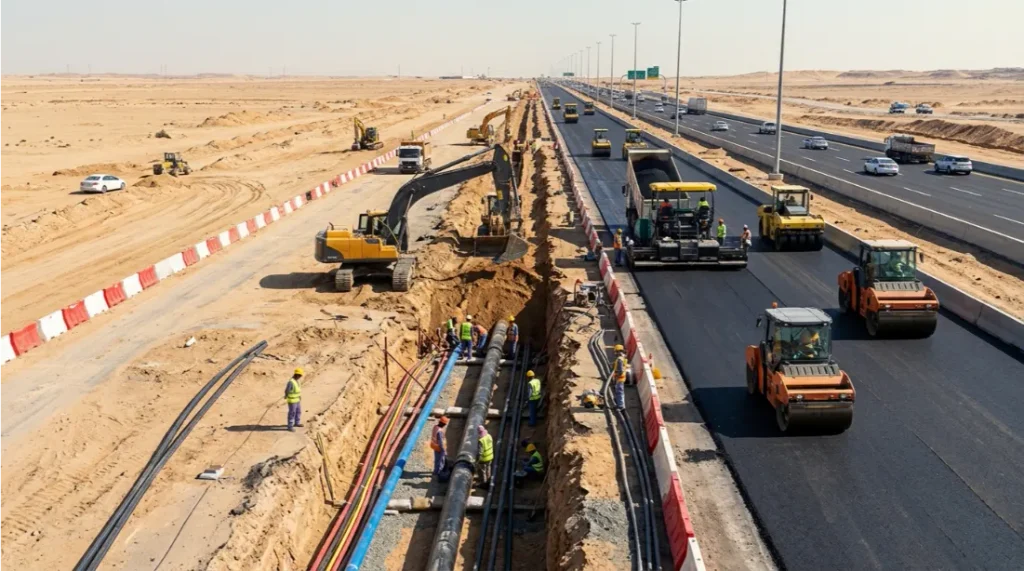
The fix is simple. Plan them together. Many big projects use a utility corridor. This is a fixed strip of land, usually beside or under the road, where all the pipes and cables go. Water, sewer, power, telecom and drainage each get their own space in that strip.
When you plan this way:
- You dig the trench once, not five times.
- Crews know where every line is.
- Future repairs don’t mean breaking the road.
It also helps to lay spare ducts while the ground is open. A spare empty pipe costs very little today. Adding a new cable later without one can mean cutting through finished asphalt. This is a big part of good utility installation work.
3. Treat stormwater drainage as a main job
It does not rain often in central Saudi Arabia. But when it does, the water can come fast. Dry valleys can fill in minutes, and that water will find the lowest point on your site.
On a large project, poor drainage can wash out a new road, flood a trench or damage a slope. That is why Qiddiya put stormwater drainage in the same early contracts as its roads and bridges.
Good drainage planning looks at:
- Where water naturally flows across the land
- Culverts under roads so water can pass without flooding them
- Channels and outfalls that carry water away safely
- Protecting open trenches during the rainy months
4. Let the land shape the route
Qiddiya sits on a plateau with an upper level and a lower level, and steep cliffs between them. That kind of ground changes how you build.
Roads that climb between levels need careful grading. Some places need bridges. Rock may need breaking before a trench can go in. Every metre of height a road climbs adds work.
The lesson is to study the ground before drawing the final route. Surveys, soil tests and a good earthworks plan help you avoid surprises. Site grading and cut and fill come under earth and enabling works, and they set the base for every road and pipe that follows. Where the ground drops sharply, the job may also call for roads, bridges and tunnels built as one package.
5. Build in phases that match opening dates
A giga project does not open all at once. Parts open first, and the rest follow over years.
Your road and utility network should follow the same order. Build what the first phase needs, but plan for what later phases will add. For example:
- Size the main water line for the full project, even if only one area uses it now.
- Leave road junctions ready for future connections.
- Keep utility corridors clear for lines that will come later.
6. Keep site traffic organised
In its early stage, Qiddiya reported hundreds of heavy machines working on site. On any large project, that many trucks, loaders and graders can block each other quickly.
A simple traffic plan helps a lot:
- Separate haul roads from finished public roads
- Mark one-way routes where space is tight
- Plan wash-down areas so mud does not spread onto new asphalt
- Keep spare machines nearby for breakdowns
Having the right machines on time also matters. Many contractors use heavy equipment rental in Riyadh to add excavators, rollers or graders when work picks up, instead of buying machines for one phase.
7. Record everything as you build
Once a pipe is buried, nobody can see it. If the drawings are wrong, the next crew may hit a live cable.
That is why as-built records matter. Every line should be surveyed and recorded before the trench is closed. Warning tape above buried lines, clear markers and accurate drawings protect people and save money for the life of the project.
These records also help the facility teams who will run the site for the next 30 or 40 years.
Typical order of road and utility work on a large site
Every project is different, but most follow a similar order.
| Stage | What happens | Why it matters |
|---|---|---|
| 1. Survey and soil tests | Map the land, test the ground | Avoids surprises later |
| 2. Site clearing and grading | Remove debris, level the land, cut and fill | Gives a stable base |
| 3. Temporary access roads | Build working roads for trucks | Lets every other team start |
| 4. Drainage | Culverts, channels, outfalls | Protects roads and trenches from floods |
| 5. Utility corridors | Dig trenches, lay pipes, cables and spare ducts | All services go in once |
| 6. Road base and paving | Sub-base, base course, asphalt | Builds the final road |
| 7. Testing and as-built records | Pressure tests, surveys, drawings | Proves it works and shows where it is |
Common mistakes on large road and utility jobs
We see the same problems again and again on big sites:
- Laying the asphalt first, then the pipes. This leads to cutting new roads.
- Ignoring drainage until the first storm. One heavy rain can undo months of work.
- No spare ducts. Adding a cable later becomes a big job.
- Poor records. Crews dig blind and hit existing lines.
- Too few machines at peak times. Work slows down and the whole program slips.
Quick checklist before you start
Use this list before road and utility work begins on your project:
- Is the land surveyed and are soil reports ready?
- Do road and utility drawings match each other?
- Is there a set utility corridor with space for future lines?
- Has natural water flow been checked?
- Are working roads planned separately from final roads?
- Do you have the machines and crew for peak months?
- Is there a plan for recording buried lines?
How FSAK supports road and utility work
FSAK Contracting works as an infrastructure contractor on projects across Saudi Arabia. Our teams handle earthworks and site preparation, road construction, utility installation, and heavy equipment rental from our own fleet. We can also supply site manpower when your project needs more hands.
For main contractors working on large developments, this means one partner can cover several early-stage jobs. That cuts down on handovers between teams, which is where many delays start.
Frequently asked questions
What are road and utility networks on a giga project?
They are the roads, bridges, drainage, water pipes, sewer lines, power cables and telecom ducts that serve the whole site. They are built before most buildings, because every other part of the project depends on them.
Why are roads built first on large projects?
Trucks and machines need solid roads to bring in materials. Early roads let every other team start work and cut travel time across the site. Without them, deliveries slow down and costs go up.
What is a utility corridor?
A utility corridor is a set strip of land, usually beside or under a road, where all pipes and cables are placed. It keeps services organised, avoids digging up roads later and makes repairs easier.
Why is stormwater drainage so important in Saudi Arabia?
Rain is rare, but it can be heavy and sudden. Water can flood dry valleys and wash out roads or open trenches. Building culverts and channels early protects the work already done.
How long does road and utility work take on a giga project?
It depends on the size of the site and the ground conditions. Early road and drainage packages on large sites often run for two to three years, and more work follows as each phase opens.
Final thoughts
Giga projects are judged by their big attractions. But they stand on work most visitors never see. The roads, drainage and buried utility lines decide how fast the rest of the project can move.
The main lessons from Qiddiya are easy to remember. Build access first. Plan roads and utilities together. Respect the rain and the ground. Build in phases, and record every buried line.