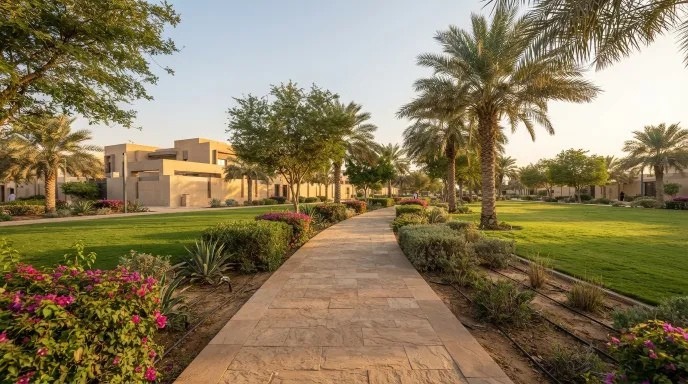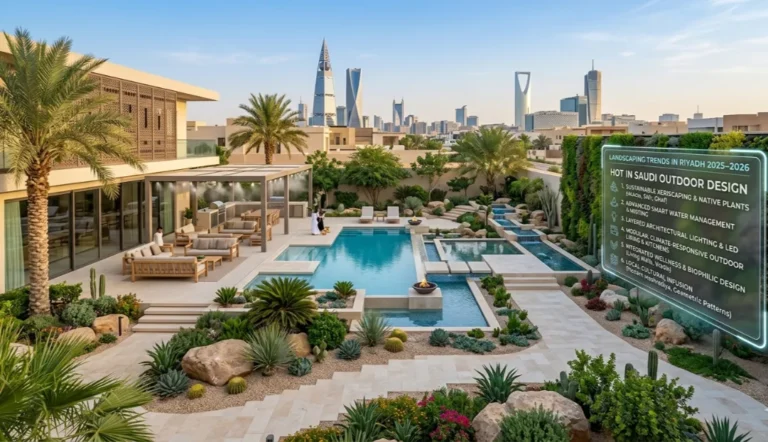
Saudi Arabia’s outdoor spaces are being transformed at a pace rarely seen before. Under Vision 2030, parks, villa gardens, and business districts are being reshaped with landscaping meant to last for decades rather than a single season. Before a plant is placed in the ground, however, the land beneath it must be prepared with care. This is the role of landscape earthworks.
Landscape earthworks Saudi Arabia projects involve reshaping, treating and stabilising soil so that gardens, parks and green spaces can perform well within the Kingdom’s demanding climate. Skip this stage, and even a beautifully designed garden can suffer from waterlogged beds, cracked pathways or dying plants within a year.
This guide explains what earthworks landscape services involve, how Riyadh’s soil affects outdoor projects, and what a reliable earthworks company landscape team should deliver.
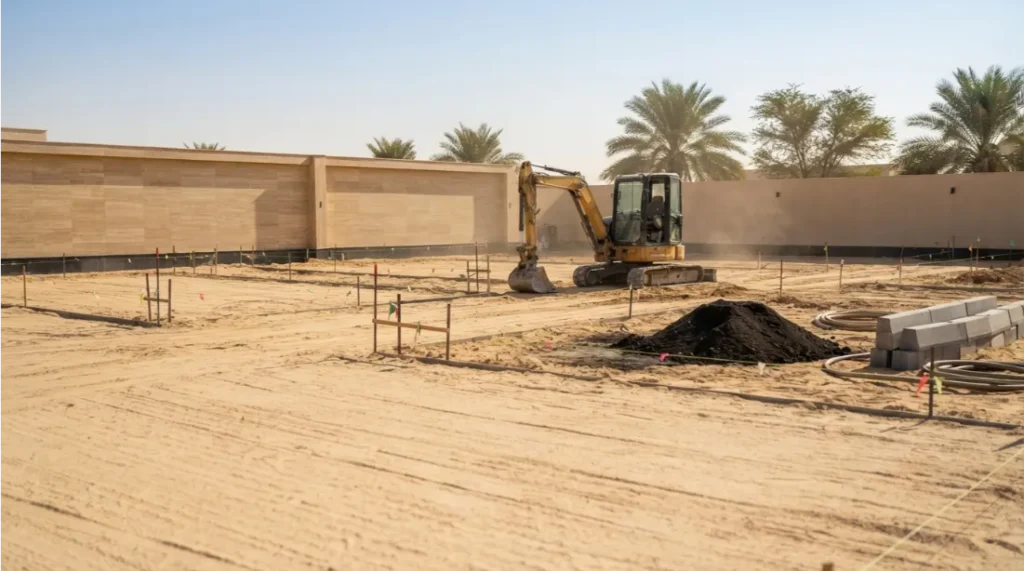
Table of Contents
What Does Landscape Earthworks Involve?
Landscape earthworks differ slightly from general civil earthworks, although the two are closely related. Civil earthworks concentrate on preparing ground for buildings, roads and infrastructure, whereas landscape earthworks focus on the surface layers of soil that lawns, planting beds and hardscaping will sit upon. Even so, many outdoor projects benefit from a single contractor managing both stages, since levels, falls and drainage need to remain consistent across an entire site. FSAK’s wider earth and enabling works service, for instance, is often coordinated directly with later landscape phases so that nothing is duplicated or left inconsistent between the two.
A typical landscape earthworks process, then, covers several linked tasks:
- Clearing existing vegetation, rubble and surface debris
- Grading land to the correct falls and levels
- Removing or treating unsuitable fill material
- Importing and blending topsoil suited to planting
- Laying sub base layers beneath paths, patios and driveways
- Building drainage in before turf or planting begins
Site Preparation Landscaping KSA: The Process Step by Step
The table below sets out how a typical landscape earthworks process unfolds, from the first site visit through to the final layer of topsoil.
| Step | What Happens | Why It Matters |
| 1. Site survey and soil testing | Ground conditions, soil composition and drainage patterns are assessed | Identifies caliche layers or poor permeability before work starts |
| 2. Clearing and stripping | Vegetation, roots, rubble and unsuitable topsoil are removed | Prevents future settlement caused by decomposing organic material |
| 3. Grading and levelling | Land is reshaped to the levels and falls set out in the design | Ensures water moves away from buildings rather than pooling |
| 4. Soil treatment | Compacted or alkaline soil is broken up, amended or replaced | Allows roots to establish and nutrients to remain available |
| 5. Drainage installation | Pipes, gravel channels or soakaways are placed | Protects planting and hardscaping after rare heavy rain |
| 6. Sub base and compaction | A stable base layer is compacted beneath paved areas | Stops paths, patios and driveways from cracking or sinking |
| 7. Final topsoil placement | Treated topsoil is spread to the correct depth | Gives plants and turf the best chance of healthy growth |
Soil Types in Riyadh and How They Affect Landscaping
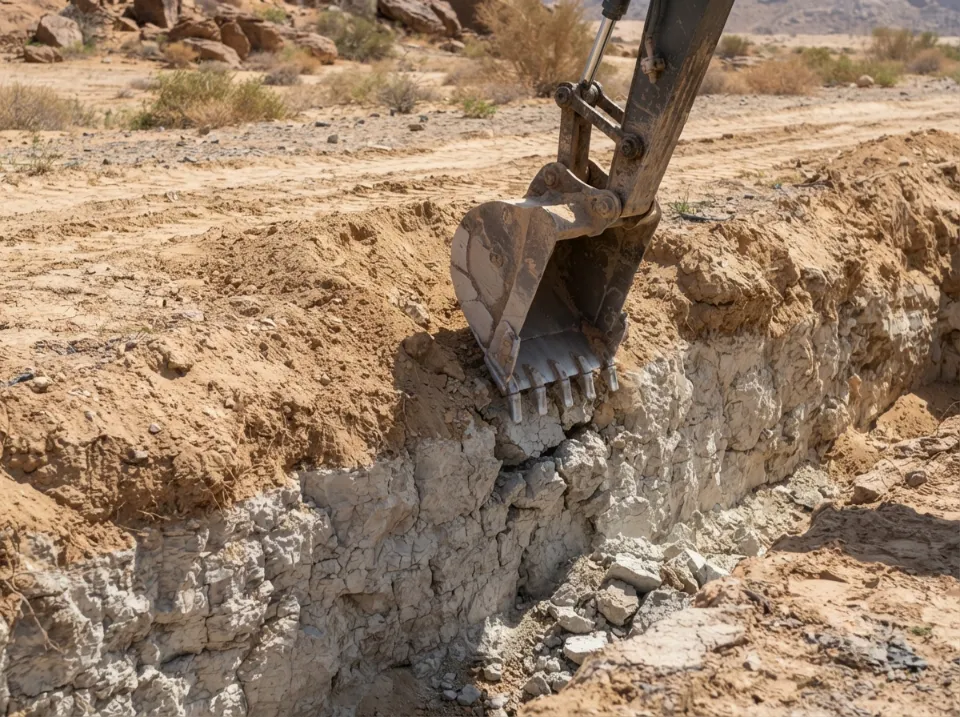
Riyadh sits on a mix of wind blown sandy deposits and calcareous, or limestone-rich, bedrock. In many parts of the city, a hard crust known as caliche forms just below the surface, created over time as calcium carbonate cements loose particles together. This layer can sit only a few centimetres down, and it causes real problems for landscaping.
Sandy topsoil, on its own, holds very little organic matter and drains too quickly for most ornamental planting. Beneath it, caliche restricts root penetration almost completely and can trap water above it after irrigation, leading to root rot even in a generally dry climate. Calcareous soil is also naturally alkaline, which limits how well plants absorb iron and other nutrients, often showing up as yellowing leaves, known as chlorosis, on species that are not suited to high pH conditions.
In parts of the wider Kingdom, gypsiferous and sabkha-type soils pose further complications, including high salt content and low bearing strength, which are well documented across arid regions of the Gulf.
Because of these conditions, ground preparation for garden Riyadh work usually involves mechanically breaking or removing caliche layers, importing quality topsoil, and correcting alkalinity with gypsum or organic amendment. A soil test at the survey stage, rather than relying on assumptions from nearby projects, remains the only reliable way to plan this correctly.
Drainage Solutions for Saudi Garden Projects: An Earthworks Perspective
Rainfall in Riyadh is infrequent, yet when it arrives it can be intense, and flash flooding across low-lying streets and sites is a familiar sight during the winter months. Combined with the poor natural permeability of calcareous soil, gardens without proper drainage face a genuine risk of waterlogging, plant loss and damage to nearby structures.
A landscape earthworks process usually addresses drainage in several ways. Land is graded so that water falls away from building foundations, working in tandem with the broader earth and enabling works already completed on a site. French drains, formed from perforated pipe wrapped in gravel and geotextile fabric, carry excess water away from beds and lawns. Permeable sub base layers are laid beneath paving so that water passes through rather than pooling on the surface. On larger sites, gravel-filled soakaways or connections to municipal storm drainage may also be required.
Drainage is far cheaper to install correctly at the earthworks stage than to retrofit once planting, turf and hardscaping are complete. For this reason, any garden design contractor working in Saudi Arabia should involve an earthworks specialist early, rather than treating drainage as an afterthought once the softer, more visible elements of the project are underway.
Ground Preparation Needs by Project Type
Not every landscape project faces the same ground conditions, and the table below compares the priorities typically seen across residential, public and commercial work.
| Project Type | Typical Ground Challenge | Earthworks Priority |
| Residential villa garden | Shallow caliche, limited access for machinery | Compact equipment, targeted soil replacement |
| Public park or open space | Large surface area, mixed soil conditions | Bulk grading, wide-scale drainage networks |
| Commercial or hospitality landscape | High footfall, heavier hardscaping loads | Reinforced sub-base, engineered falls to storm drainage |
What Affects the Cost of Landscape Earthworks in KSA
Several factors influence the price of a landscape earthworks project:
- Depth and hardness of the caliche layer, since breaking it takes more time and heavier machinery
- Site size and access, as larger or restricted sites require different equipment combinations
- Volume of topsoil that needs to be imported and blended
- Complexity of the drainage design, particularly on sloped or low-lying sites
- Whether hardscaping such as patios or driveways forms part of the same project
Because machinery selection has such a direct effect on both cost and timeline, many clients ask their contractor which excavators, compactors or graders will be used before work begins. FSAK’s own heavy equipment rental fleet is used across its landscape earthworks projects, which keeps scheduling in-house rather than dependent on third-party hire companies.
Choosing an Earthworks Company for Landscape Projects
A dependable earthworks company landscape team should be able to show the following:
- A genuine soil testing process rather than a generic quote
- Direct ownership of grading, compaction and drainage equipment
- Experience coordinating with landscape designers and irrigation contractors
- Clear grading and drainage plans agreed before any planting begins
- A track record across residential, public and commercial sites in the Kingdom
FSAK Contracting brings its earthworks and enabling works experience directly into its role as a landscape contractor in Riyadh, meaning that ground preparation and planting are managed by one coordinated team rather than being split across separate suppliers.
Frequently Asked Questions
What is the difference between earthworks and landscape earthworks?
Earthworks generally prepares ground for buildings, roads and infrastructure, while landscape earthworks focuses on the surface layers of soil that support planting, lawns and outdoor hardscaping. The two overlap on many sites and are often delivered by the same contractor.
How deep does soil preparation need to go for a Saudi garden?
This depends on the site, but caliche removal alone can require excavation to 300 to 600 millimetres in parts of Riyadh, followed by topsoil replacement to a similar depth for healthy root development.
Why does Riyadh soil need extra treatment before planting?
Riyadh’s calcareous, alkaline soil and shallow caliche layers restrict drainage and root growth and can limit nutrient uptake, so amendment or replacement is usually needed before planting is likely to succeed long-term.
How long does landscape earthworks take for an average villa garden?
A typical villa garden of moderate size is usually completed within one to two weeks, depending on caliche depth, drainage requirements and site access, though larger public or commercial sites take considerably longer.
Can drainage be added after landscaping is finished?
It can, but retrofitting drainage after turf, planting and paving are in place is more disruptive and expensive than installing it during the earthworks stage, so early planning is strongly recommended.
Book a Landscape Site Assessment
Ready to give your outdoor project the foundation it needs. FSAK Contracting combines two decades of earthworks experience with a dedicated landscape team across Riyadh and the wider Kingdom. Contact us today to book a site assessment and receive a clear plan for grading, soil treatment and drainage before a single plant goes into the ground.