Saudi Arabia is building stadiums, airports, museums, and giga project landmarks that ordinary frames cannot carry. These ambitious forms rely on a specialist discipline that most buyers rarely hear of. That discipline has special structures.
Special structures are engineered buildings or elements that fall outside standard beam and column construction. They include long span roofs, shells, domes, space frames, tensile membranes, and bespoke industrial forms. In Saudi Arabia, they matter because Vision 2030 projects demand large, column-free, and architecturally distinct spaces.
This guide explains what special structures are, where they appear, and why they matter in the Kingdom. For readers ready to commission one, FSAK sets out its capability on the special structures contractor page. This article stays focused on the what and the why.
Table of Contents
What are special structures in construction?
Special structures are non-standard forms that need bespoke engineering rather than repeatable frames. They carry load through shape, tension, or curvature instead of simple beams and columns. Common examples are stadium roofs, airport terminals, domes, silos, cooling towers, and exhibition halls with wide open interiors.
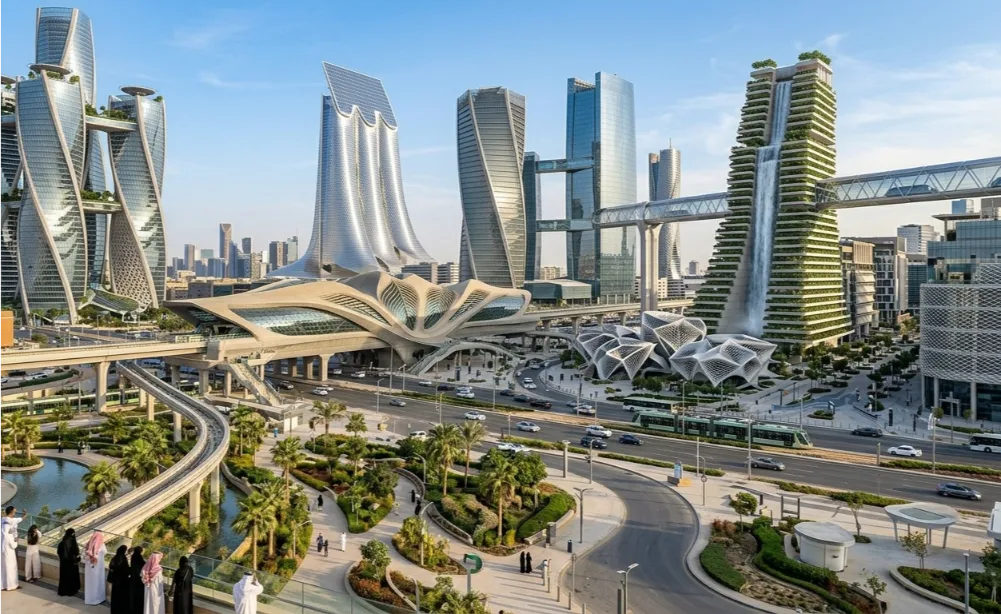
A standard building stacks floors on a grid of columns. A special structure does something a grid cannot. It might span hundreds of metres without an internal column, or hold a shape that a normal frame could never support.
The defining trait is intent. Each one is designed for a single purpose and site. There is no catalogue part to order, so the engineering, the materials, and the build method are all worked out for that project alone.
How do special structures differ from standard buildings?
| Feature | Standard building | Special structure |
| Load path | Beams and columns | Shape, curvature, or tension |
| Internal columns | Frequent grid | Few or none, open space |
| Design | Repeatable layout | Bespoke, one-off |
| Typical use | Offices, homes, shops | Stadiums, terminals, domes |
| Engineering input | Standard | Specialist and intensive |
What are the main types of special structures?
The main types are shell structures, long span roofs, space frames, tensile membrane structures, and bespoke industrial forms. Each solves a different problem. Shells and long span roofs create wide column-free space. Membranes give lightweight cover. Industrial forms hold or process materials at scale.
Shell structures
A shell is a thin curved surface that carries load across its whole skin rather than through separate beams. Domes, vaults, and saddle-shaped roofs are shells. They cover large spaces with very little material, which is why arenas and exhibition halls often use them.
Long span roofs
Long span roofs cross wide distances with no internal support. Steel trusses, space frames, and cable-supported systems all fall in this group. Airports, stadiums, and aircraft hangars depend on them for clear, unobstructed floor area.
Tensile membrane structures
Tensile membranes use tensioned fabric stretched over cables and masts. They are light, fast to erect, and well-suited to shaded outdoor areas. In the Saudi climate, they are widely used for canopies, walkways, and event spaces.
Bespoke industrial structures
Silos, tanks, cooling towers, and process frames are special structures built for industry. They store or handle materials under loads that standard buildings never face. Oil, gas, water, and manufacturing projects rely on them across the Kingdom.
Why do special structures matter in Saudi Arabia?
Special structures matter in Saudi Arabia because Vision 2030 is built around landmark venues, transport hubs, and giga projects. These need large column-free spaces and bold architecture that standard frames cannot deliver. They also create the shaded, climate-suited spaces the Saudi environment demands.
The Kingdom is investing in stadiums, museums, airports, and entertainment districts at a pace. Each of these calls for spaces that draw crowds and make a visual statement. That is a special structure territory.
Much of this demand flows from national strategy. The FSAK overview of Vision 2030 and the Saudi construction boom sets out how giga projects such as NEOM and Qiddiya are reshaping what gets built.
Where special structures appear in Vision 2030 projects
- Sports stadiums and arenas with long-span, column-free roofs
- Airport and transport terminals with wide, clear spans
- Museums and cultural venues with bespoke architectural forms
- Entertainment and exhibition halls need open interiors
- Industrial and energy plants with silos, tanks, and process frames
- Shaded public realm using tensile membranes and canopies
What makes special structures harder to build?
Special structures are harder because each one is engineered from scratch, often with materials and methods that standard sites never use. They demand precise fabrication, careful sequencing, and tight tolerances. A small error in a bespoke form can affect the whole structure, so quality control is critical.
Standard buildings benefit from repetition. A team that has built one office floor can build the next quickly. A special structure offers no such head start, because every element is unique.
Saudi conditions add a further layer. High heat, wind exposure, and, in some regions, aggressive ground all shape how a bespoke structure is designed and installed. Local knowledge is not optional here; it is the difference between a structure that lasts and one that fails early.
The skills a special structures contractor needs
- Specialist structural engineering for one-off forms
- Precise fabrication and on-site assembly control
- Heavy lifting and mobilisation capability
- Strict HSE management for complex, high-risk work
- Compliance with the Saudi Building Code and municipal rules
How does FSAK deliver special structures?
FSAK delivers special structures by combining specialist engineering with its own fleet, in-house crews, and more than twenty years of Saudi experience. The firm handles complex forms, from design support and fabrication to installation, all under a single accountable contract from its Riyadh base.
FSAK approaches each special structure as a single engineered problem. The team confirms the form, the loads, and the method before any work starts, then mobilises the plant and crews to build it safely.
| FSAK strength | Why it matters for special structures |
| 20+ years in KSA | Proven delivery of complex Saudi projects |
| Own equipment fleet | Heavy lifting and plant on call, no hire delays |
| In house crews | Trained and supervised teams for precision work |
| Riyadh headquartered | Fast mobilisation across the Kingdom |
| Full contracting bundle | Structures plus earthworks, utilities and civil works |
| Single point of contact | One accountable team, not a chain of subcontractors |
FSAK is, at its core, a full-service builder. Buyers comparing structural specialists with an established contractor often review the firm’s position among construction contractors in Riyadh before awarding a bespoke package.
The scale of delivered work tells its own story. The FSAK project portfolio shows the range of structures and surfaces the team has handled across Saudi Arabia.
Frequently asked questions
What is the difference between a special structure and a normal building?
A normal building uses a standard grid of beams and columns. A special structure uses shape, curvature or tension to carry load, often spanning wide spaces with few or no internal columns. Each special structure is engineered for one specific purpose and site.
What are examples of special structures in Saudi Arabia?
Examples include stadium and arena roofs, airport terminals, exhibition halls, domes, tensile membrane canopies, and industrial forms such as silos, tanks, and cooling towers. Many appear in Vision 2030 venues and giga projects across the Kingdom.
Why are special structures important for Vision 2030?
Vision 2030 centres on landmark stadiums, cultural venues, and transport hubs. These need large, column-free and architecturally bold spaces that standard frames cannot deliver. Special structures make those spaces possible.
Are special structures more expensive to build?
They usually cost more per unit than standard construction, because each one is bespoke and engineering-intensive. The value lies in what they enable, such as wide open interiors and distinctive architecture that a standard building cannot achieve.
Does FSAK build special structures across the Kingdom?
Yes. FSAK is headquartered in Riyadh and mobilises engineering, crews, and plant to special structures projects across Saudi Arabia. Work outside the capital is delivered on a service area basis from the Riyadh base.
Enquire about your special structure
Call +966 50 248 5888 or +966 55 056 4888, or email Info@fsakcontracting.com to discuss a bespoke structure, request a quotation, or book a consultation.
Have a complex form in mind? Contact the FSAK project team to talk through the engineering and the build.