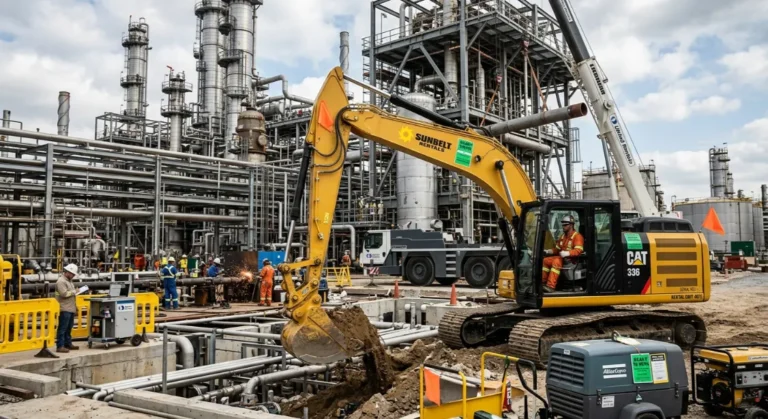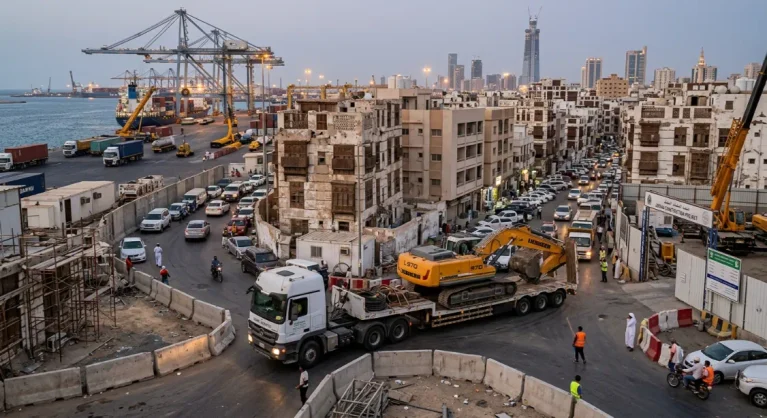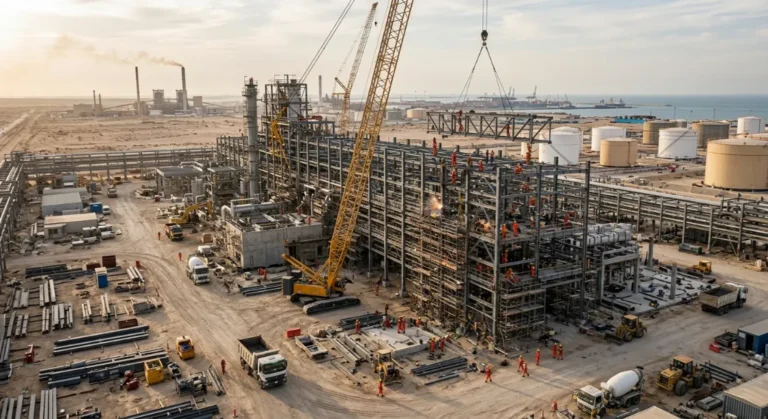
The utility installation process in Saudi Arabia is the structured sequence used to plan, excavate, lay, test, and commission underground service networks such as water, sewage, gas, electrical, and telecom lines. The work is delivered in eight clear stages and is fully governed by MOMRAH, SEC, NWC, and Saudi Aramco standards.
Across the Kingdom, infrastructure investment is being driven by Vision 2030, with megaprojects such as NEOM, Diriyah, and the Red Sea Project all underway. Behind every successful tower, factory, or smart city is a utility network that has been installed correctly. Furthermore, when the process is rushed, projects are hit with delays, fines, and rework. This guide walks you through every step so you know what to expect on your next project.
Table of Contents
What Is the Utility Installation Process in Saudi Arabia?
The utility installation process in Saudi Arabia is the planned method through which essential service networks are laid underground or integrated within civil infrastructure. The following utilities are typically covered:
- Water supply pipelines
- Sewage and drainage networks
- Electrical conduits and cabling
- Gas pipelines (LPG and natural gas)
- Stormwater management systems
- Telecom and fibre optic ducts
Each utility is installed in line with the Saudi Building Code (SBC), SASO standards, and authority-specific requirements set by MOMRAH, the Saudi Electricity Company (SEC), the National Water Company (NWC), and Saudi Aramco for industrial projects.
How Utility Installation Works in KSA: Why the Process Matters
Saudi Arabia’s terrain brings unique challenges. Sabkha soils, high water tables in coastal zones, and extreme heat all influence how utilities are laid. Moreover, Vision 2030 megaprojects demand world-class delivery from day one. A structured process is therefore essential because:
- Public safety is protected when pipelines are tested before commissioning.
- Authority approvals are issued only when documents match SBC standards.
- Costly rework is avoided when buried services are mapped correctly.
- Project schedules are kept on track when sequencing is respected.
- Long service life is achieved when materials match the local soil and climate.
Step-by-Step Utility Installation Process in Saudi Arabia
The full process is broken down into eight stages. Importantly, each stage must be signed off on before the next is started.
Step 1: Site Survey and Utility Mapping
A detailed site survey is carried out first. Existing buried services are located using ground penetrating radar (GPR) and electromagnetic detection. In addition, soil tests are performed to assess bearing capacity, salinity, and groundwater level. The findings are recorded in a utility map that guides every later stage.
Step 2: Design and Permit Approval
Once the site is mapped, design drawings are prepared and submitted to MOMRAH through the Balady portal. Approvals from SEC, NWC, and the relevant municipality must also be secured before any digging is allowed. Method statements and risk assessments are then lodged with the project consultant for sign-off.
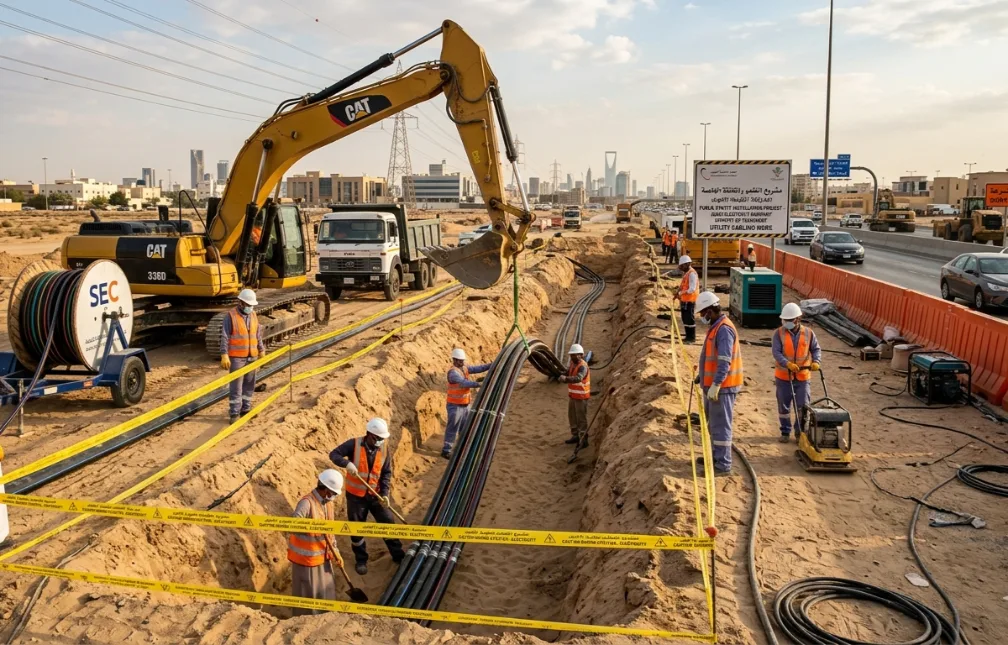
Step 3: Excavation and Trenching (Earth Works)
Trenches are then excavated to the depth and width set out in the design. In Saudi Arabia, water and sewer lines are usually laid between 0.9 metres and 1.5 metres deep. Shoring and trench boxes are installed to prevent cave-ins.
Step 4: Pipeline Process Saudi Arabia: Pipe and Conduit Installation
Pipes are then lowered into the prepared trench. The most commonly used materials are listed below:
- HDPE for water and gas pipelines
- GRP for sewage and pressure mains
- Ductile iron for high-pressure water mains
- uPVC for drainage and stormwater
- PVC and HDPE conduits for electrical and telecom
Each joint is welded, bolted, or fused as set out in the material specification. Furthermore, marker tape and warning mesh are placed above the line to protect it from future excavation.
Step 5: MEP Installation Guide for KSA Sites
Mechanical, Electrical, and Plumbing (MEP) integration is then carried out. Cable trays are installed within electrical ducts, and water and gas lines are linked to building risers. Coordination with the structural and architectural teams is critical so that clashes inside service rooms and risers are avoided.
Step 6: Backfilling and Compaction
Approved backfill is placed in layers of 200 to 300 millimetres. Each layer is then compacted to a minimum of 95 percent Standard Proctor Density. Sand bedding is used directly around the pipe so that point loads are avoided. Native soil may be used for upper layers if it meets SBC specifications.
Step 7: Pressure Testing and Commissioning
Before the system is fully buried, every line is tested. Water and gas pipelines are pressure tested for at least 24 hours. Sewer lines are inspected by CCTV to check slope and joint quality. Additionally, electrical conduits are continuity tested. All test results are recorded and signed off by the consultant.
Step 8: Handover and As-Built Documentation
Finally, as built drawings are prepared and submitted along with test certificates, material certificates, and warranty documents. The system is then handed over to the operator or end user. FSAK provides a full digital handover pack on every project, which makes future maintenance straightforward.
Common Utility Materials Used in KSA Projects
The table below sets out the materials, depths, and standards that are most commonly applied across Saudi Arabia.
| Utility | Preferred Material | Typical Depth | Standard |
| Potable Water | HDPE / Ductile Iron | 1.0 to 1.5 m | NWC, SASO |
| Sewage | GRP / uPVC | 1.2 to 3.0 m | MOMRAH |
| Stormwater | Reinforced Concrete | 1.2 to 2.5 m | MOMRAH |
| Gas | HDPE PE100 | 0.9 to 1.2 m | Aramco, SASO |
| Electrical | PVC Conduit | 0.6 to 1.0 m | SEC |
| Telecom | HDPE Subduct | 0.6 to 0.9 m | CITC |
Underground Utility Steps Riyadh: Local Considerations
Riyadh’s clay-rich soils and rapid urban growth bring specific challenges. Trenches in the city centre often run alongside live services, so potholing is mandatory before any excavation. Permits from Riyadh Municipality must also be in place, and night works are common in busy districts, so that traffic disruption is reduced.
Our Utility Installation Service is fully tailored to these conditions, and our teams are mobilised across the city within 48 hours of award.
For larger contracts that need a vetted utility installation contractor in Saudi Arabia, FSAK offers nationwide mobilisation with Vision 2030-ready teams.
Quality Control Checks Across the Pipeline Process
Quality is protected at each step through a structured Inspection and Test Plan (ITP). The following checks are normally applied:
- Material inspection at delivery, with batch certificates verified
- Welding qualification tests for HDPE and steel pipework
- Trench geometry checks before the pipe is lowered
- Compaction tests after each backfill lift
- Pressure and leak tests before final handover
These checks are signed off by the project engineer and the consultant, and the records form part of the final handover pack.
Why Choose FSAK for Your Utility Installation in KSA
FSAK has delivered utility networks across Riyadh, Jeddah, Dammam, and NEOM for more than two decades. Our teams are trained on MOMRAH, SEC, and Saudi Aramco standards, and every project is supported by:
- Licensed civil and MEP engineers with KSA experience
- A modern equipment fleet for trenching, fusion, and compaction
- ISO 9001 and ISO 45001 aligned QHSE systems
- Transparent reporting and weekly progress meetings
- Full digital handover documentation on every project
Whether your scope is a single pipeline run in Olaya or a multi-utility city block in NEOM, FSAK is built to deliver.
Frequently Asked Questions about the Utility Installation Process in Saudi Arabia
What is the utility installation process in Saudi Arabia?
It is the planned eight-stage sequence used to install underground service networks such as water, sewage, gas, electrical, and telecom lines. The process runs from site survey to final handover, and is fully governed by MOMRAH, SEC, NWC, and SBC standards.
How long does the utility installation process in Saudi Arabia take?
A residential plot of 600 to 1,000 square metres is usually completed in two to four weeks. Larger industrial or megaproject scopes can run from three months to over a year, depending on size, depth, and authority approvals.
What permits are needed for underground utility steps in Riyadh?
A municipal permit is required from Riyadh Municipality through the Balady portal. In addition, SEC approval is needed for electrical works, NWC approval for water and sewer, and MOMRAH approval for any road crossings.
What is the difference between earthworks and the utility installation process?
Earth works cover excavation, grading, and ground preparation. The utility installation process follows on and covers the laying of pipes, conduits, and cables. FSAK delivers both as one coordinated package.
Which materials are used during the pipeline process in Saudi Arabia?
HDPE, GRP, ductile iron, and uPVC are the most commonly used pipeline materials. The choice depends on the fluid carried, the pressure rating required, and the soil conditions on site.
How is the utility installation tested before handover in KSA?
Water and gas pipelines are pressure tested for at least 24 hours. Sewer lines are inspected by CCTV. Electrical conduits are continuity tested. All results are documented, signed off by the consultant, and included in the final handover pack.