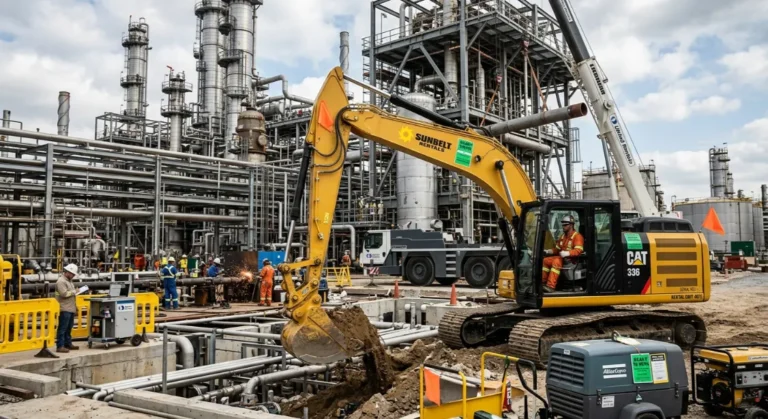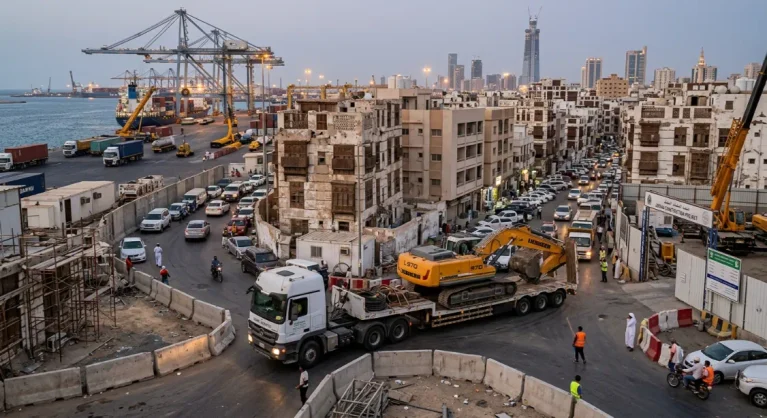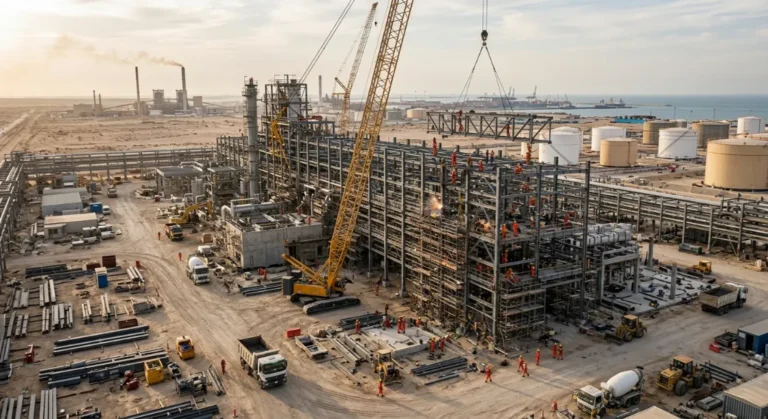
The road construction sector in Saudi Arabia has entered a period of rapid transformation. Driven by Vision 2030 and sustained government investment in infrastructure, the standards expected of road contractors across KSA have risen considerably. Whether the project involves an urban access road in Riyadh or a strategic interurban corridor connecting key economic cities, the approach to planning, materials, and delivery must be aligned with current best practices.
At FSAK Contracting, we have delivered road projects across Saudi Arabia to the Ministry of Transport specifications. This guide shares the core road construction best practices we apply on every project, covering ground preparation, asphalt selection, compliance frameworks, and quality assurance. It is intended to be useful for project owners, procurement teams, and anyone evaluating a road contractor in KSA.
Table of Contents
Why Road Building Standards Matter More Than Ever in KSA
Saudi Arabia is investing hundreds of billions of riyals in transport infrastructure. Projects under the National Transport and Logistics Strategy, as well as giga-projects such as NEOM, require contractors to demonstrate full compliance with national and international standards. Falling short of specification carries significant financial and reputational risk.
Beyond regulatory compliance, applying consistent best practices reduces lifecycle costs. Roads that are built correctly from the outset require less maintenance, perform better under extreme heat, and deliver longer service lives. For public sector clients and private developers alike, this translates directly to value.
Ground Assessment and Site Preparation
All road construction projects in Saudi Arabia should begin with a thorough geotechnical survey. Saudi terrain varies considerably, from expansive clay soils in the Eastern Province to sandy substrates in the Rub al Khali and rocky conditions in the Hejaz highlands. Each ground type requires a tailored approach to subgrade preparation and compaction.
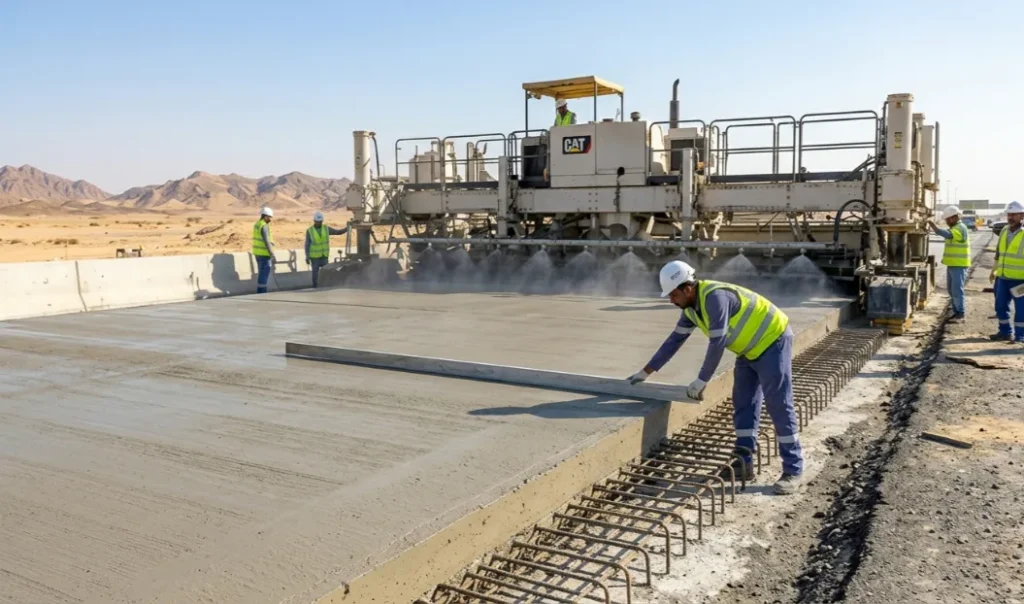
Key steps in site preparation include:
- Geotechnical investigation to determine California Bearing Ratio (CBR) values
- Removal of topsoil, vegetation, and unsuitable material to the specified depth
- Subgrade compaction to achieve the minimum 95% Modified Proctor Density
- Stabilisation using lime or cement where weak soils are encountered
- Drainage design to manage surface water and prevent subbase saturation
Proper ground preparation is the single most important factor in long-term road performance. At FSAK Contracting, every road project begins with a full geotechnical review before any earthworks commence. Shortcuts at this stage lead to premature cracking, rutting, and settlement.
Asphalt Paving Methods in Riyadh and Across Saudi Arabia
Selecting the right asphalt specification is critical in the Saudi climate. Temperatures in Riyadh and much of central KSA regularly exceed 45 degrees Celsius in summer, which places severe demands on binder performance. The choice of mix and laying method directly affects resistance to rutting, fatigue cracking, and surface deformation. FSAK Contracting’s road and bridge construction team applies specification-matched mixes on every project.
The principal asphalt paving methods applied in Saudi Arabia are:
- Hot Mix Asphalt (HMA): the standard method for most road types, mixed and laid at elevated temperatures for full compaction
- Stone Mastic Asphalt (SMA): preferred on high-traffic arterial roads due to its resistance to deformation under heavy loads
- Polymer-Modified Bitumen (PMB) Mixes: used on heavily trafficked routes and where long-term rut resistance is specified
- Recycled Asphalt Pavement (RAP) Mixes: increasingly used to reduce material costs and align with sustainability targets under Vision 2030
Compaction during laying is equally important. A minimum of three passes with a steel drum roller, followed by pneumatic tyre rolling and a finishing pass, is the accepted practice for achieving the target air void content.
Compliance with Saudi Road Building Standards
Contractors are required to work within a framework of national and regional specifications. The key standards governing road construction in KSA include:
- Ministry of Transport and Logistics Services General Specifications for Road and Bridge Construction
- SASO standards for construction aggregates, bitumen binder, and pavement materials
- MOMRA municipal road specifications applicable within urban boundaries
- ASTM and AASHTO standards, which are commonly referenced alongside Saudi specifications on international-standard projects
Contractors engaged by government entities are also expected to maintain current MOMRA classification and to provide material test certificates at each stage of construction. FSAK Contracting maintains full documentation and submits all compliance records in line with client and regulatory requirements.
Safety and Quality Control on Road Projects
Effective safety and quality management are non-negotiable on road construction sites in Saudi Arabia. The Saudi Occupational Safety and Health Administration (OSHA-KSA) framework sets out obligations for site access control, traffic management, PPE, and working-at-height procedures.
Quality control processes that should be in place on every road project include:
- Material testing at source, including aggregate grading, binder viscosity, and moisture content
- In-situ density testing following each compaction layer
- Core samples taken from finished asphalt layers to verify thickness and density
- Profilograph surveys on completed surfaces to confirm ride quality against IRI targets
A dedicated quality team, separate from the production crew, is essential for maintaining independence and catching defects before they are buried under subsequent layers.
Aligning Road Projects with Vision 2030 Infrastructure Goals
Saudi Arabia’s Vision 2030 programme has placed infrastructure development at the centre of the national economic strategy. Road projects that are designed and delivered in alignment with Vision 2030 principles benefit from smoother approvals, stronger client relationships, and access to a broader pool of public tenders. Key themes relevant to road construction include sustainability, digital project delivery, local content requirements (Iktva and Nitaqat), and economic diversification.
FSAK Contracting actively supports these targets. The use of recycled aggregates, solar-powered site facilities, and BIM-enabled project management are all practices embedded within our delivery model and aligned with Vision 2030 expectations.
Working with a Qualified Road Contractor in Saudi Arabia
Selecting the right partner is as important as any technical specification. FSAK Contracting brings a proven track record across road projects in Saudi Arabia, with appropriate plant and equipment, and the administrative infrastructure to manage compliance across the project lifecycle. Heavy equipment availability, experienced site supervision, and robust subcontractor management are among the indicators of a contractor capable of delivering to standard.
When evaluating road contractors in KSA, consider the following:
- Current MOMRA classification at the appropriate grade for the project value
- Direct experience with the road type and terrain relevant to your project
- In-house quality control capability and laboratory access
- Demonstrated safety record and active HSE management system
- Financial capacity to sustain mobilisation and material procurement
| Ready to Start Your Road Project in Saudi Arabia? Our experienced team delivers compliant, high-quality road construction across KSA. Contact us today for a tailored project assessment. |
Frequently Asked Questions
Q1: What are the key road-building standards followed in Saudi Arabia?
Road construction in Saudi Arabia is governed primarily by the Saudi Arabian General Investment Authority (SAGIA) frameworks and the Ministry of Transport and Logistics Services specifications. Projects are required to meet structural design standards, material quality thresholds, and environmental compliance requirements. Contractors must align with SASO (Saudi Standards, Metrology and Quality Organisation) specifications for aggregates, bitumen grades, and base course compaction.
Q2: Which asphalt paving methods are commonly used in Riyadh and across KSA?
The most widely used method in Riyadh and major KSA cities is hot mix asphalt (HMA) paving, which is suited to the region’s high-temperature climate. Stone mastic asphalt (SMA) is increasingly specified on high-traffic corridors due to its resistance to rutting. Modified bitumen mixes are also gaining ground on projects with heavy axle loads, particularly in industrial and logistics zones.
Q3: How does Vision 2030 affect road construction projects in Saudi Arabia?
Vision 2030 has significantly increased infrastructure investment across the Kingdom, with road and highway development forming a core pillar of the programme. Projects linked to NEOM, the Red Sea development, Diriyah, and expanded urban corridors in Riyadh and Jeddah all require contractors to meet elevated quality, sustainability, and delivery standards. Compliance with Vision 2030 road frameworks is now a baseline expectation for major tenders.
Q4: What should I look for when selecting a road contractor in Saudi Arabia?
A qualified road contractor in Saudi Arabia should hold a current MOMRA (Ministry of Municipal and Rural Affairs) classification, demonstrate a track record on comparable road projects within the Kingdom, and maintain adequate equipment capacity. Experience with local soil conditions, asphalt plant access, and familiarity with Saudi Aramco or NEOM-aligned specifications may also be relevant depending on the project location.
Q5: How long does a standard road construction project take in KSA?
Timelines vary considerably based on road length, complexity, and site conditions. A straightforward access road of up to 2 kilometres can typically be completed within six to twelve weeks, subject to approvals. Larger arterial or interurban roads may require twelve to thirty-six months, particularly where enabling works, utility diversions, and bridge or culvert construction are involved.