NEOM Construction Contractor for Site Work, Workers, and Equipment
FSAK is a factory and a construction company. We work as a subcontractor and support main contractors with construction services, skilled workers, and equipment. This page explains what we offer, what main contractors usually ask from a subcontractor, and how to start a conversation with us.
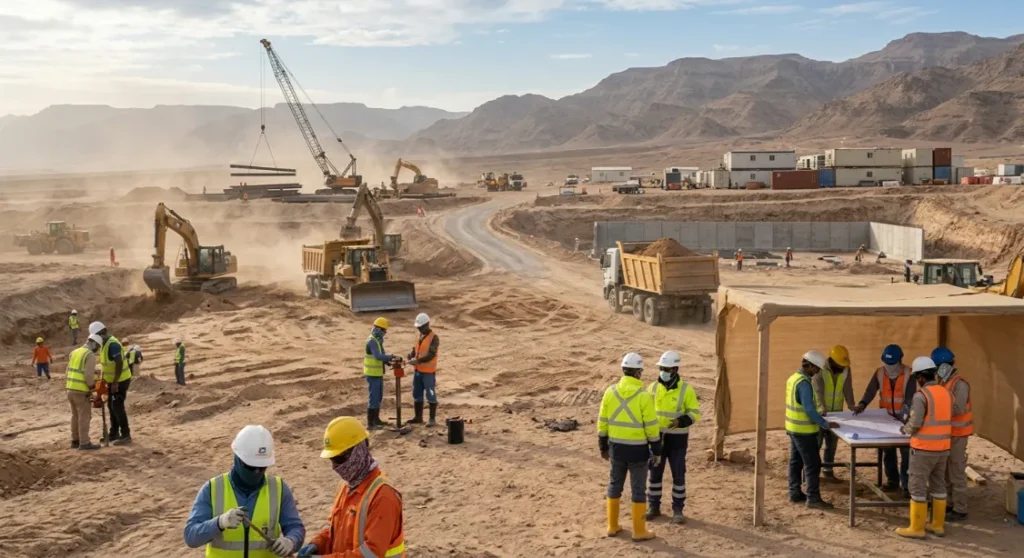
Building at NEOM is not like building in a normal city. The sites are far apart, the schedules are tight, and the rules are strict. A main contractor needs a NEOM construction contractor who can show up prepared, work safely, and finish on time.
Who We Are
FSAK is a factory and a construction company that provides construction side services. We do not try to be everything. We focus on the parts of a project where a good subcontractor can save the main contractor time and stress.
What this means for a main contractor
When you hire us as a NEOM subcontractor, you work with one company that understands both making and building. That helps when a project needs parts made to size, or when work on site has to match what was planned on paper.
Why NEOM Projects Need a Different Kind of Subcontractor
Large projects like this ask more from every company on the team. Here is what makes them different:
- Remote sites. Materials, workers, and machines must travel a long way before work can start.
- Strict rules. Every subcontractor must follow the main contractor’s safety, quality, and reporting rules.
- Tight schedules. One late delivery can hold back many other crews.
- Many companies on one site. Good talking and clear records keep everyone safe and on track.
A contractor for NEOM has to plan these things before the first day, not after problems show up. That is how we look at every package we are invited to join.
Our Services for NEOM Projects
We support main contractors in three main ways.
Construction support
We take on construction side work under the main contractor’s plan. Our supervisors follow your drawings, your method statements, and your quality checks. We report progress in the way you ask for it, whether that is daily, weekly, or by work package.
Workers
Many projects fall behind because they do not have enough trained people. Through our manpower service page, we can supply workers for different trades. Each person is matched to the job, briefed on the site rules, and supervised by a team leader.
Heavy work needs the right machines on time. Our Equipment Rental Page shows the equipment we can supply. We plan transport and delivery with you so the machines arrive ready to work, not stuck at a gate waiting for paperwork.
Prequalification: What Main Contractors Ask For
Before a main contractor lets a subcontractor start, there is a checking stage called prequalification. Think of it like a job interview for a company. Every project has its own list, but most ask for the same four things.
1. Company documents
You will be asked to show that your company is real, registered, and allowed to do the work. This includes licenses, tax papers, insurance and bank letters. Keep these files current, because an expired paper can stop the whole process.
2. Safety records
Main contractors want to see how you protect people. They look at your safety plan, your training records, and how you report accidents and near misses. A clean record with clear rules gives them confidence.
3. Work experience and people
They also check what you have built before and who will lead the job. photos and letters from past clients help here. Be honest in this part. Main contractors check and a claim that cannot be proven hurts your chances.
4. Quality and method
You may need to share how you check your own work, how you handle mistakes and how you plan each task step by step. Short, clear documents are better than long ones nobody reads.
Safety and Health on Remote Sites
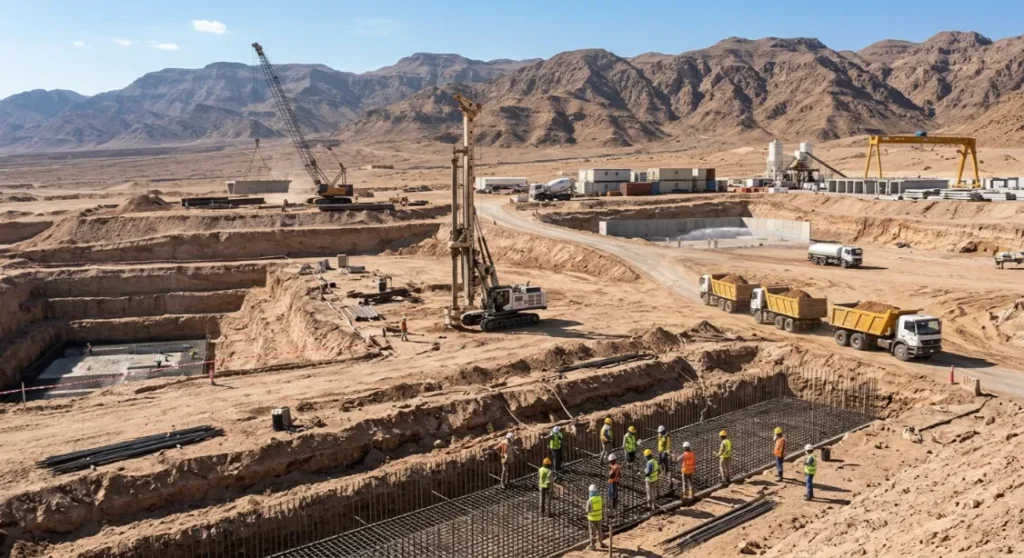
Safety comes first on every job. On a remote site, it matters even more because help can be far away.
Here are the basics we plan around:
- A safety briefing for every worker before work starts
- Proper protective gear for every task
- Clear steps for lifting, digging, working at height, and using machines
- First aid ready on site and a plan for calling for help
- Rest, water, and shade planned for hot weather
- Daily talks with the crew about the risks of the day
We follow the main contractor’s safety rules first. If our own rules are stricter, we keep ours too.
Moving Workers and Equipment to a Remote Site
Getting people and machines to the work area is often the hardest part. This is called mobilisation, and it needs a plan.
Mobilisation plan
A good plan lists what moves, when it moves, who moves it, and what papers are needed. We build this plan with the main contractor so nothing is missed. We also plan the order of arrival, so the right crew and the right machine reach the site at the right time.
Worker housing and food
Workers on remote projects need a safe place to sleep, clean water, meals, and a way to rest between shifts. Some main contractors provide a camp. Others ask the subcontractor to arrange it. We discuss this early so there are no surprises and the crew stays healthy and focused.
Transport and delivery
Heavy machines often need special trailers, escorts, and permits. We plan the route, check the load, and confirm delivery times in advance. If you want to learn more about hiring machines.
How We Work With Main Contractors
Here is a simple path from first call to first day on site:
- First talk. You share the package, the schedule, and your prequalification list.
- Review. We check what you need against what we can supply and tell you plainly where we fit.
- Documents. We send the papers you ask for.
- Planning. We agree on the work plan, safety plan, and mobilisation plan together.
- Start. Our crew and equipment arrive ready, and we report progress as agreed.
We answer questions fast and we say when something cannot be done. That honesty saves time for everyone.
Frequently Asked Questions
What does a NEOM construction contractor do?
A NEOM construction contractor builds or supports building work on projects in this region. A main contractor leads the whole project. A subcontractor, like FSAK, takes on a part of the work and supports the main contractor.
Can FSAK work as a subcontractor for NEOM projects?
Yes. FSAK is a factory and a construction company that provides construction side services. Send us your package details and we will tell you how we can help.
What documents do I need to become a subcontractor?
Most main contractors ask for company registration, licenses, tax papers, insurance, a safety plan, staff resumes, and proof of past work. Each project has its own list, so always check it first.
How does prequalification work?
The main contractor reviews your documents, safety records, experience, and quality process. If you pass, you are added to their approved list and can be invited to bid or work.
Can you supply both workers and equipment?
Yes. You can find details on our Manpower Service Page and our Equipment Rental Page. We can plan both together so they arrive in step with your schedule.
Start Your NEOM Project With FSAK Contracting
Whether your package needs a small crew for a few weeks or workers and machines for a long project, FSAK Contracting is ready to help. We bring over 20 years of construction experience, a strong fleet of equipment, and trained operators who know how to work safely. We plan fast mobilisation to remote sites, and we can supply equipment with an operator or without one. Rental terms are flexible, with daily, weekly, and monthly plans. Tell us what your package needs, and we will reply with a clear plan and quote.