Entertainment infrastructure construction means building the roads, foundations, utilities and support structures that theme parks, water parks, stadiums and race tracks need to run. At Qiddiya, this work is harder than usual. The site mixes many project types on rocky ground, and the rides put loads on their foundations that normal buildings never see.
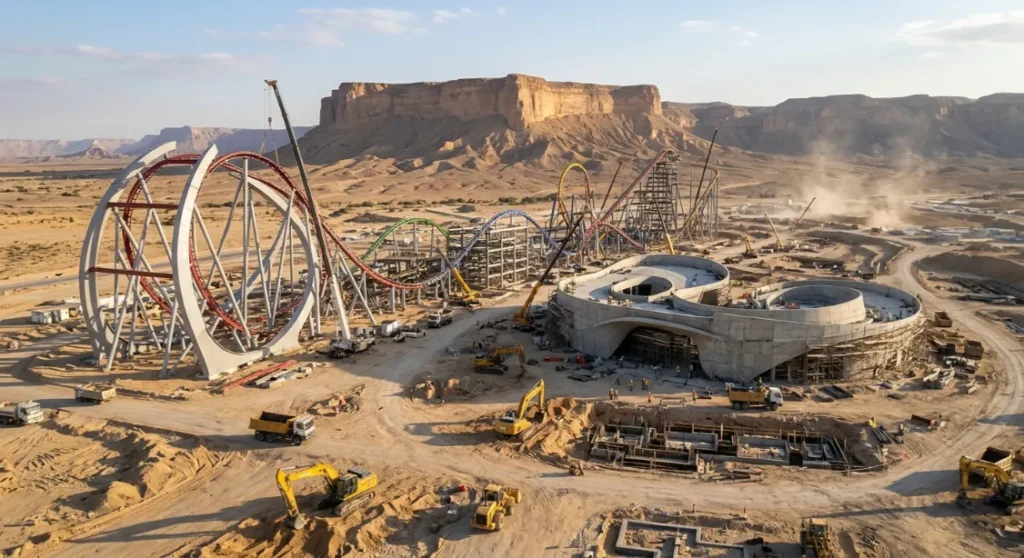
Most construction sites have one main job. A housing project builds homes. An office project builds offices. Qiddiya is a whole city built around fun, sport and culture, and each part of it has its own rules.
Below, we explain what makes entertainment projects different, what that means for contractors, and what to check before you start work on a site like this.
What Is Entertainment Infrastructure?
Entertainment infrastructure construction covers everything that sits under and around the attractions. Visitors see the roller coaster. They don’t see the deep base holding it down, the power cables feeding it, or the drains that stop the queue area from flooding after rain.
It usually includes:
- Access roads, internal roads, bus lanes and car parks
- Water, sewer, power and telecom networks
- Foundations for rides, stadiums and large roofs
- Walkways, plazas and shaded seating areas
- Planting, irrigation and outdoor lighting
If one of these is late or built wrong, the attraction can’t open on time. Guests never notice good infrastructure. They notice right away when it fails.
Why Entertainment Infrastructure Construction Is Different
A normal building mostly carries still loads, such as walls, floors, people and furniture. An entertainment site deals with moving loads, huge crowds and fixed opening dates. Here is a simple side by side look.
| Factor | Typical commercial project | Entertainment project |
|---|---|---|
| Loads | Mostly still (static) loads | Rides add moving loads that repeat all day |
| Accuracy | Normal building tolerances | Ride bases often need very tight tolerances set by the ride maker |
| Crowds | Steady daily use | Big peaks on weekends, holidays and event nights |
| Utilities | Sized for one building | Sized for rides, shows, pools and thousands of visitors at once |
| Teams on site | The usual trades | Usual trades plus ride makers, theming artists and show-system installers |
| Finish | Plain and practical | The look is part of what visitors pay for |
What Makes Qiddiya Different
Qiddiya brings all of the points above together on one very large site. Here is where the extra difficulty comes from.
Many Different Projects on One Site
The plan includes theme parks, a water park, a motorsport track, a large stadium, a gaming and esports area, hotels, shops and homes. Each one needs different skills. A race track needs a very smooth, even surface. A stadium needs deep foundations and long-span roofs. A water park needs pools that don’t leak.
Much of this is built at the same time, often side by side. Crews from many companies share access roads, storage areas and utility corridors. On a site like this, planning between teams decides how fast everyone moves.
Rides That Move, Shake and Drop
A roller coaster pushes and pulls on its supports every few minutes, all day, for years. Engineers call this a dynamic or cyclic load. Over time it can tire steel parts and slowly move the ground if the foundation was not designed for it.
So ride foundations are often bigger and deeper than they look like they need to be. The anchor bolts that hold the ride must sit in exactly the right spot. The ride maker gives the positions and levels, and the civil team often has to hit them within a few millimetres. A bolt set in the wrong place can mean breaking out concrete and pouring again.
Rocky Ground and a Cliff-Edge Site
Qiddiya sits on high, rocky ground close to the edge of a long cliff line. That gives great views, but it makes digging slower. Hard rock may need hydraulic breakers instead of a normal bucket. Some areas need cut and fill to create level platforms. Slopes near the edge need checks before heavy machines work close to them.
Picking the right machine size saves a lot of time here. A machine that is too small stalls on rock, and one that is too big burns fuel and damages finished areas. Our excavator size guide explains how to match the machine to the job, and our earthworks and enabling works page covers site preparation.
Water Parks Need a Different Approach
Water is heavy, and it always finds a way out. Pools, slides and lazy rivers need:
- Watertight concrete with proper joints and waterstops
- Strong waterproofing under and behind the concrete
- Large pump rooms and pipe runs to filter and move water
- Drainage that carries away overflow without flooding nearby areas.
A small leak in an office is a nuisance. A leak under a wave pool can wash out the ground beneath the slab.
Roads and Utilities Built for Crowd Peaks
A shopping mall gets busy on weekends. An entertainment city can have thousands of visitors arrive at once before a concert or a match, then try to leave within the same hour. Roads, junctions, bus drop off points and car parks have to handle that rush.
The same goes for what is under the ground. Power demand jumps when rides, lights and shows run together. Water and sewer use spikes around restaurants and toilet blocks. Fixing an undersized pipe after the paving is done costs a lot, so utilities are usually laid early and sized for future growth. Our road and bridge construction and utility installation pages show how we approach this work.
Heat, Dust and Long Summer Days
Summer heat changes how the work gets done. Concrete sets faster in high temperatures, so big pours are often moved to night or early morning, with chilled water in the mix and careful curing afterwards. Workers need shade, cold water and rest breaks. Machines need more cooling and more frequent filter changes because of dust.
None of this is optional. It decides whether the concrete reaches its full strength and whether crews go home safe.
Opening in Phases While Work Continues
Some parts of Qiddiya open to visitors while other parts are still under construction. That means public roads running next to work zones, guests walking near site fences, and utilities that must stay live while new connections are made.
Contractors working in these areas need clear traffic plans, solid fencing, and tie-in work booked for quiet hours. Noise and dust control matter more when paying visitors are only a few hundred metres away.
How It Looks Matters
On an office project, a plain retaining wall is fine. In a theme park, that same wall may be shaped and coloured to look like natural rock. Paths, planting, lighting and seating are all part of the visitor’s day out.
Civil crews often work right beside theming artists and landscape teams, and each team depends on the one before it finishing on time and on level. Our landscape works team builds hardscape, softscape and irrigation for settings like this.
What This Means for Main Contractors and Subcontractors
For main contractors, the hardest part is usually coordination. For subcontractors, it is fitting into someone else’s schedule while meeting tight specs. On an entertainment infrastructure construction job, these habits make a real difference:
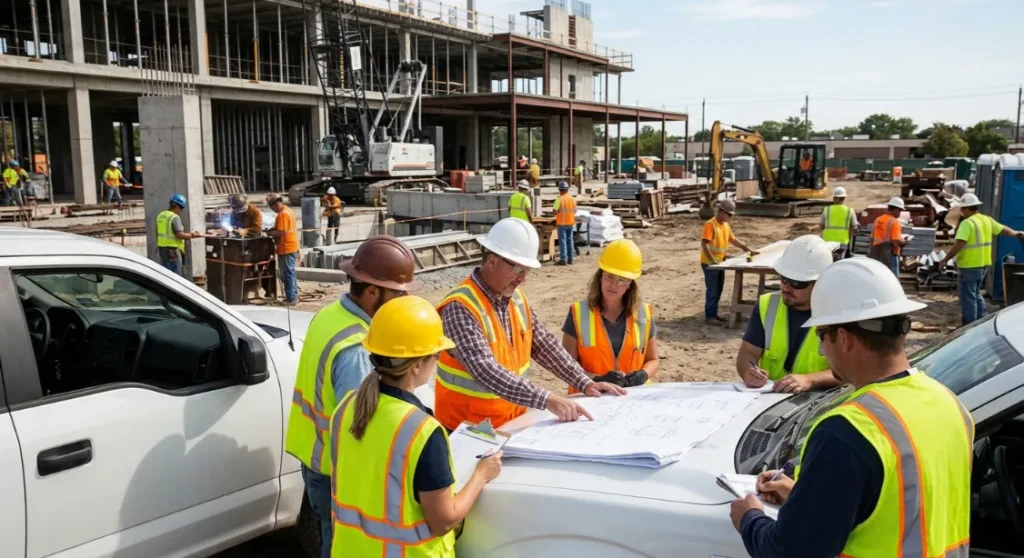
- Mobilise fast. Plans change often, and short travel times help you react.
- Have your own machines and operators. Waiting for hired equipment can hold up the next trade. See our equipment rental options.
- Keep extra crews ready. Busy periods come with little warning. Our manpower supply service can add skilled workers when needed.
- Check each stage before handing over. Fixing a mistake after the next trade starts costs far more.
- Report clearly. Photos and simple schedules keep the main contractor informed without extra meetings.
Quick Checklist Before You Start Work on an Entertainment Site
- Get the latest approved drawings, including the ride maker’s interface details.
- Ask for the ground investigation report and check for rock and soft spots.
- Confirm site access routes, storage space and allowed working hours.
- Plan concrete pours around the heat.
- Agree survey control points and tolerance checks with the main contractor.
- Mark live utilities and any visitor areas near your zone.
- Prepare the safety plan, worker induction and permits to work.
- Agree how often you will report progress, and in what format.
How FSAK Supports Qiddiya Projects
FSAK works as a subcontractor for main contractors and developers on large sites. Our head office is about 45 minutes from Qiddiya, so our crews and machines can reach the site quickly. We bring our own equipment and trained workers, backed by more than 20 years in construction.
We focus on the parts every attraction depends on: earthworks, foundations, roads, drainage and underground utilities. If you want to see how we plan and deliver this kind of entertainment infrastructure construction, visit our Qiddiya construction contractor page or browse our past projects.
Frequently Asked Questions
What is entertainment infrastructure construction?
Entertainment infrastructure construction is the building of roads, utilities, foundations and public spaces that support theme parks, water parks, stadiums and similar venues. It is the base layer that lets the attractions open and run safely.
Why do theme park rides need special foundations?
Rides move, spin and drop many times a day. This creates repeating loads that push and pull on the ground. The foundation must hold firm for years without moving, and the anchor bolts must sit exactly where the ride maker says.
How is building a water park different from a normal building?
A water park holds large amounts of water in pools and channels. It needs watertight concrete, strong waterproofing, big pump systems and good drainage. A leak can damage the ground under the structure, so quality checks are strict.
Can subcontractors work on Qiddiya projects?
Yes. Large projects like this use many subcontractors working under main contractors. Each subcontractor usually has to pass the main contractor’s approval process and follow its site rules before starting work.